The drug crisis in Iran…. Citizens’ health truns into a card in the hands of influence networks
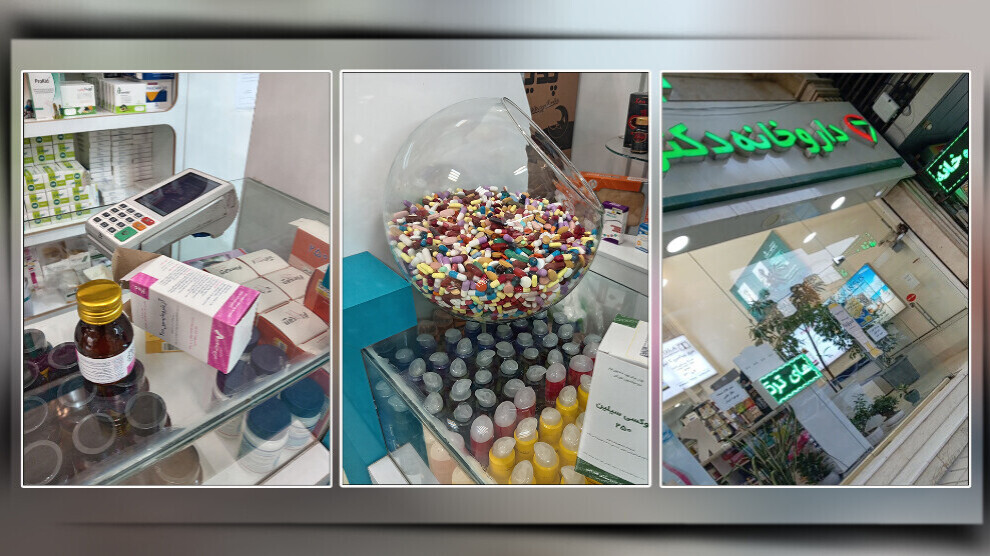
Iran currently faces one of the most dangerous health crises as drug shortages, now a structural phenomenon, threaten the lives of millions of citizens, especially children and chronic disease patients.
Sara Bourkhezri
Kermanshah – Iran is facing one of the most dangerous health crises in decades, as drug shortages are no longer just a result of sanctions or economic crises; they have become a structural phenomenon fueled by influence and monopoly networks linked to power centers.
In economics, the substitution effect means that when the price of a certain good rises and purchasing power declines, families tend to shift toward a cheaper alternative to alleviate the financial burden. For example, when meat prices rise, many families turn to chicken or soy instead.
In recent years, Iran has witnessed this behavior on a large scale, to the point where a large part of society depends almost permanently on cheaper alternatives. However, this "substitution chain" is not endless; it can only continue if alternatives actually exist to replace more expensive goods.
In the food sector, people can switch from meat to soy, from Iranian rice to imported rice, or from dairy products to lower‑quality alternatives. But medicine is not a commodity for which a cheap or artificial substitute can be found. Unlike food, medicine is a vital commodity, and its absence can directly endanger many lives – a fact that the Iranian system has exploited for its own interests.
In recent years, the drug shortage in Iran has reached a level that cannot be explained by economic crises or external sanctions alone. Drug distribution networks, import operations, pricing mechanisms, and even the prescription of medicines have all become trapped within layers of government interests, organized privileges, and quasi‑monopoly networks. As a result, citizens have been deprived of the right to choose between a good medicine and a bad one.
Following the recent war and the severe restrictions on imports that accompanied it, many vital drugs have completely disappeared from the market. The shortage has reached a point where patients are forced to pay double to obtain the simplest medical supplies. In some cases, even drugs that were previously readily available are now only sold through intermediaries and brokers at exorbitant prices – as if the drug market has turned into a hidden auction arena where human life is given no value.
What lies behind this widespread shortage and the crushing cost of obtaining medicine is an organized network of mafias linked to influence centers – groups that know very well that people may give up many of their daily needs, but they cannot do without medicine and treatment. This realization has driven these greedy entities to conclude that playing with people's lives is an inexhaustible source of wealth; wealth that can only be reaped by deepening shortages, creating monopolies, and artificially raising prices.
These mafias, relying on their political and security influence, control the import and distribution of medicine, deliberately creating bottlenecks that push the market toward crisis. The result is that medicine has turned from a therapeutic commodity into a tool for making obscene profits – profits that flow directly into the pockets of brokers and networks close to power centers, while patients and their families are crushed under the weight of exorbitant costs.
Instant price changes add new suffering to cancer patients
"Khatereh S.," a woman from Kermanshah battling breast cancer, says she is ready to pay any amount to secure her medication, but the problem is that the medicine is not available even when she can afford it. Pharmacies, she says, only dispense medicine to those who offer a higher price, as if patients' lives are being auctioned off.
She noted that last week, after much pleading and agreeing to pay a large amount, she managed to reserve two medicines from a pharmacy. But on the day of pickup, everything changed: the dollar rate had reached 190,000 tomans, so the pharmacy exploited that and demanded an additional amount, despite her having paid a deposit and a clear agreement.
Khatereh S. affirms that this scenario repeats itself with her and many other patients. Whenever the exchange rate rises, pharmacies refuse to deliver the medicine or impose a new price. Now, the pretext of war and drug shortages is being used to raise prices to unimaginable levels. "It seems our illness has become an opportunity for some to profit. We patients fight pain and anxiety every day, yet we have to face a market that cares about nothing but profit."
A network of influence and monopoly
Over the past years, Iran's drug sector has turned from a public health system into an arena where groups linked to the authorities compete, reaping huge profits through monopoly and privileges. While the drug crisis is ostensibly attributed to sanctions, the facts reveal that a large part of it results from deliberate decisions by entities that control the import, production, and distribution of medicine.
These entities, by creating artificial shortages, monopolies, moving medicine to the free or black market, and even producing low‑quality drugs, have not only endangered people's health but have also exploited crises to increase their profits.
The roots of this rent‑seeking system are directly linked to power policies. The allocation of foreign currency for drug imports has become a means of plundering public resources, as companies close to the regime have received millions of dollars in preferential currency without importing medicine, or imported it and then sold it at double the price on the free or black market. Meanwhile, patients stood in queues for the simplest medicines or were forced to pay amounts beyond the capacity of average families.
One cannot ignore the role of the Food and Drug Administration, which is supposed to be a regulatory body but has become a center for decisions that serve political and economic interests. Import permits, price setting, currency allocation, and selection of manufacturing companies are all in the hands of a narrow circle within the administration, making decisions based on special interests rather than society's needs.
This broad power has opened the way for companies affiliated with government institutions and eliminated any fair competition. In the end, children – as the most vulnerable and most in need of medicine – are the biggest victims of a system that puts profit above human health.
Iranian children… the first victims of these decisions
A pharmacy student, "Mohaddeseh M.," says: "In every country in the world, children are treated as a priority in healthcare and access to treatment. But in our country, they have always been the first to bear the consequences of the authorities' decisions. Before the war broke out, the main problem was the shortage of good raw materials for drug production, making available drugs inherently low‑quality, yet families were forced to pay large amounts even for these low‑quality medicines."
She added: "Since the war started, the crisis has entered a more dangerous stage. In addition to the decline in raw material quality and rising prices, today we face the absence of the medicine itself, and its transformation into a commodity sold to the highest bidder. In this situation, children are the first to suffer; they cannot tolerate medicine shortages, and any slight delay in their treatment may leave irreversible effects."
In recent months, the shortage of pediatric medicines in Iran has reached an alarming level. Field reports from pharmacies and families indicate that several categories of vital, life‑saving drugs for children have become rare or completely absent from the market.
A mother's experience with infant formula shortage
"Roudabeh K.," a mother whose child needs a type of powdered milk that is rarely available, says: "I feed my child powdered milk that is not available in almost any pharmacy. Only two pharmacies said they could provide it, but they asked for a price five times its real value – between five and eight million tomans per can. After much trouble, I managed to find it in the city of Kellar and bought it at a reasonable price. But when I arrived at the border, they told me that bringing infant formula is prohibited. They confiscated the cans and prevented me from crossing. We are unable to find what we need inside the country, and they do not allow us to bring it from abroad. It is as if they are pushing us to buy our innocent child's food from the black market at exorbitant prices."
Roudabeh K.'s story reveals that the authorities, through deliberate pressures, artificial shortages, and calculated restrictions, have built a pharmaceutical siege around people, forcing them to buy drugs and vital products at high prices under strict surveillance. In the end, the drug crisis in Iran is a direct result of an authoritarian structure that has sacrificed people's health for years for its own interests – a structure built on the lives of a people who find themselves daily victims of new methods of the Iranian regime's frantic pursuit of power.