
Yazidi Women Journalists: Media Was Absent Before the Genocide, Women Leading Its Reconstruction
Yazidi Media Union conference affirms media was absent before genocide; Shingal institutions enabled media organization and transmitted community suffering and resilience, highlighting women's role.
Shingal — The Yazidi community in Shingal has faced successive waves of violence and displacement over many years, leaving deep marks on its social structure and its ability to protect itself, in the absence of institutions capable of conveying its suffering to the world and documenting the violations it has endured.
The first conference of the Yazidi Media Union was held with the participation of fifty delegates and representatives from the People's Assembly, the Yazidi Women's Freedom Movement (TAJÊ), the Free Women's Media (RAJÊ), the Diplomatic Committee, Yazidi Media, and the Abdullah Öcalan Academy of Social Sciences in Shingal, in the Kars Valley.
The women journalists affirmed that they presented important visions and assessments, noting that before the genocide, there was no media within the Yazidi community and no women journalists. With the establishment of institutions in Shingal, media began to organize and was able to convey to the world, through images and footage, the brutality of the ISIS attacks and the resilience of the Yazidi community.
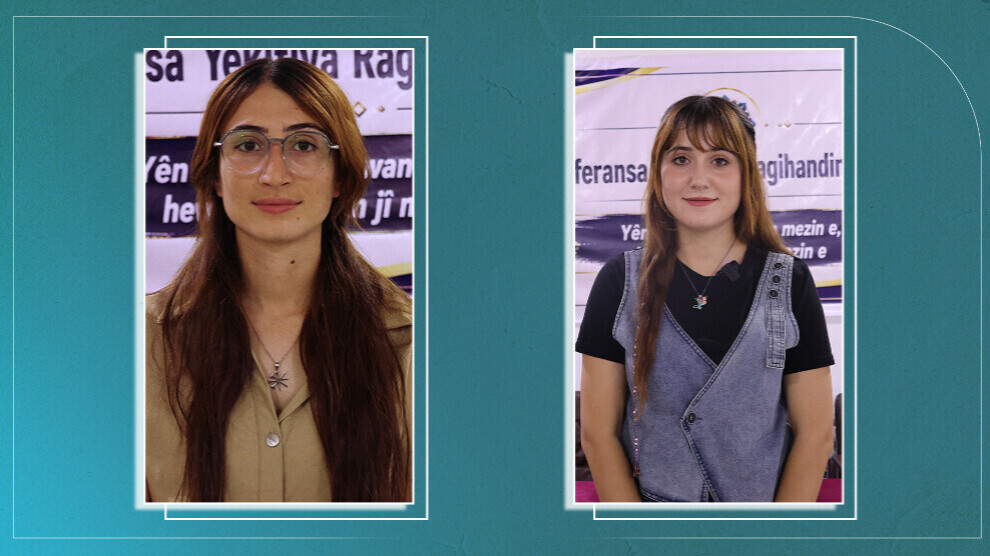
Journalist Hevidar Shingali emphasized during her speech about the conference the importance of remembering Yazidi martyrs and honoring their sacrifices, noting that leader Abdullah Öcalan's directives were read during the conference proceedings, and that discussions addressed pivotal issues.
She explained that the absence of media in the past allowed 73 genocides to occur without the Yazidi voice reaching the world, while the 74th genocide revealed which parties helped the community and which exposed it to danger. "Media work continues with the spirit and thought of leader Abdullah Öcalan and the martyrs of free media, and Yazidi women are consolidating their presence in feminist media," she affirmed, expressing their readiness to carry out whatever is asked of them.
Journalist Amira Simo shared her vision of the first conference of the Yazidi Media Union, saying: "We congratulate this conference to our entire community. Our goal in Shingal is to strengthen our media. There are many media institutions, but external media does not convey the Yazidi voice. Therefore, through Shingal's media, we seek to clearly present social problems. Previously, women did not hold their place in media within our community. Today, we are the children of the genocide and we lead media work. Our goal is for Yazidi women to unite around shared values and to distance the effects of the special war imposed on us."
Regarding the establishment of media in Shingal, Amira Simo said that this project was born through the efforts of martyred journalist Nujin Erhan, explaining that she came to Shingal and conveyed the suffering of the Yazidi community. Therefore, the responsibility to continue this path today falls on journalists. "Nujin Erhan's departure does not erase the duty she left behind. They must rise to that responsibility, carry the pens and cameras of the martyrs, with the aim of conveying community issues with awareness and showing the truth to the people." After the discussions concluded, ten council members were elected, including four women.