
Writer and Journalist: The Struggle of Kurdish Women Transcends Geographic and Party Boundaries
Writer Taban Sheikh Abdullah Al-Karmiani confirmed Kurdish women were always essential to the struggle in all four parts of Kurdistan, their role extending beyond armed struggle to politics, civil work, media, and education.
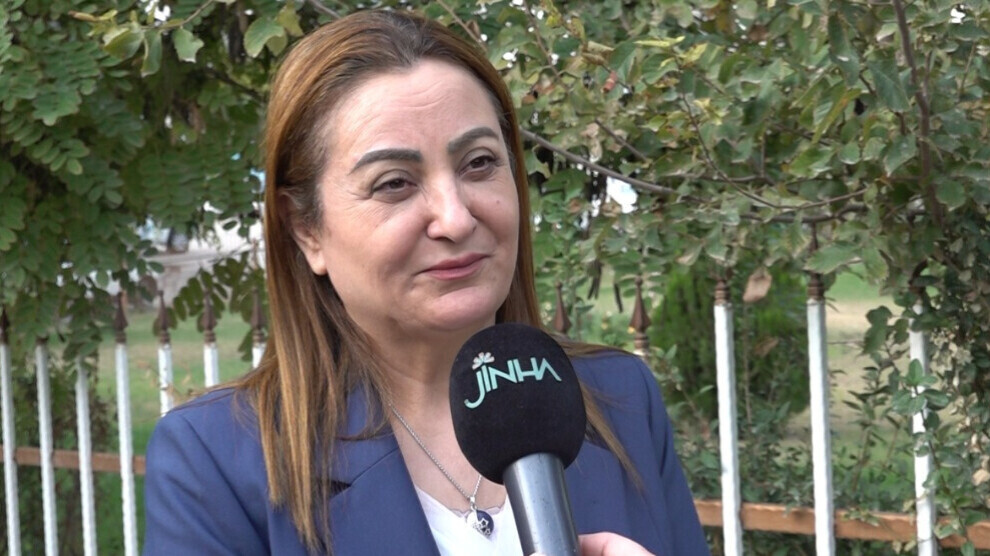
HELEN AHMED
SULAYMANIYAH_Kurdish women have constituted, throughout the history of the Kurdish people's struggle, an effective force in the march of resistance and liberation, and have contributed to defending rights and enhancing political and social participation, despite political and cultural challenges and societal restrictions.
Women's experiences in the four parts of Kurdistan have varied according to the specificity and conditions of each part, which makes exchanging these experiences and benefiting from them an important step for enhancing solidarity and entrenching women's role in the paths of change.
Kurdish Women and the Paths of Struggle and Change
In light of her reading of the experiences of women's struggle in the four parts of Kurdistan, the different dimensions of this struggle, and the political, legal, and social transformations women have achieved, writer and journalist Taban Sheikh Abdullah Al-Karmiani confirmed that Kurdish women have proven that their struggle is not limited by geography or confined by parties and organizations, but is a continuous path of resistance and change.
She pointed out that political traditions and customs in the different parts of Kurdistan were formed by the cultures of the forces that controlled those areas, which made women face multiple forms of political and social violence.
She explained that in the Kurdistan Region, after the 1991 uprising, women did not retreat from their struggle, but moved it to new arenas. After their goal in the mountains revolved around freedom and victory in battles, they moved to the cities to wage the battle of actual change, by founding civil society organizations, launching newspapers and radio stations concerned with women's issues, and working to amend the laws that entrenched discrimination against them.
They also waged a political and legal struggle to confront the proposed amendments to the Iraqi Personal Status Law, and succeeded in enhancing their presence within the legislative and executive institutions, where their participation rate in the government, parliament, and official institutions reached about 25%, after women's presence in ministerial and parliamentary positions had been absent under the previous regime in the Kurdistan Region.
As for northern Kurdistan, women continued their struggle alongside men for peace, and were strongly present in the arenas of resistance and political and military work, whether inside parliament or in the mountains, in the face of the authority's policies.
"Women of Eastern Kurdistan Have Transcended the Patriarchal Mentality"
Taban Sheikh Abdullah Al-Karmiani said that women of eastern Kurdistan continue their struggle in various fields, just like women in the rest of the parts of Kurdistan. She noted that she lived for several years in eastern Kurdistan and noticed that many women were heading to the mountains to continue the struggle after completing their university studies.
She explained that this matter drew her attention, especially when compared to the reality of women in the Kurdistan Region, where family customs and traditions imposed restrictions on their freedom, even in visiting Peshmerga headquarters, as she was not allowed to go alone without being accompanied by a male family member.
She added that the women of eastern Kurdistan were able to transcend this patriarchal mentality, and had a presence in the ranks of the Peshmerga since the founding of political parties there. They still play an active role within institutions and military formations, alongside their organizational and political activities, which reflects women's will to continue the struggle and confront restrictions, despite the nature of the regime in eastern Kurdistan.
"Resistance Experiences Must Be Turned into a Source of Learning and Exchange of Expertise"
Taban Sheikh Abdullah Al-Karmiani stressed that the experience of women's struggle in the Kurdistan Region, especially after the armed struggle phase in 1992, produced a new reality and experiences rich in lessons, linked to the specificity of the cultural, social, and political conditions under which women waged their struggle.
She stressed the necessity that the experiences of resistance in the four parts of Kurdistan turn into a source of learning and exchange of expertise, allowing women to benefit from each other's experiences, develop their methods of struggle, and avoid repeating previous mistakes.
She explained that the experience of women in the Kurdistan Region in transitioning from the armed struggle phase to civil life differs from the reality of the current phase, in light of the political transformations and peace paths existing in the region. She expressed her hope that these paths, especially the peace process in northern Kurdistan, will lead to achieving the aspirations of the Kurdish people in the various parts of Kurdistan.
She also expressed her aspiration for the establishment of peace in eastern Kurdistan and for its people to attain their freedom, stressing the importance that women there enjoy an advanced status and an active presence in various fields.
She concluded her interview by emphasizing the necessity that women be able to keep pace with the political, economic, and military transformations in all parts of Kurdistan, and interact with them in a way that enhances their role and preserves the continuity of their struggle.