
UNRWA: Thousands of Displaced Families Affected by Floods and Rain in Gaza
UNRWA announced that over 2000 displaced families were affected by heavy rains flooding tents and shelters across Gaza, amid warnings conditions will worsen as more rain is expected.
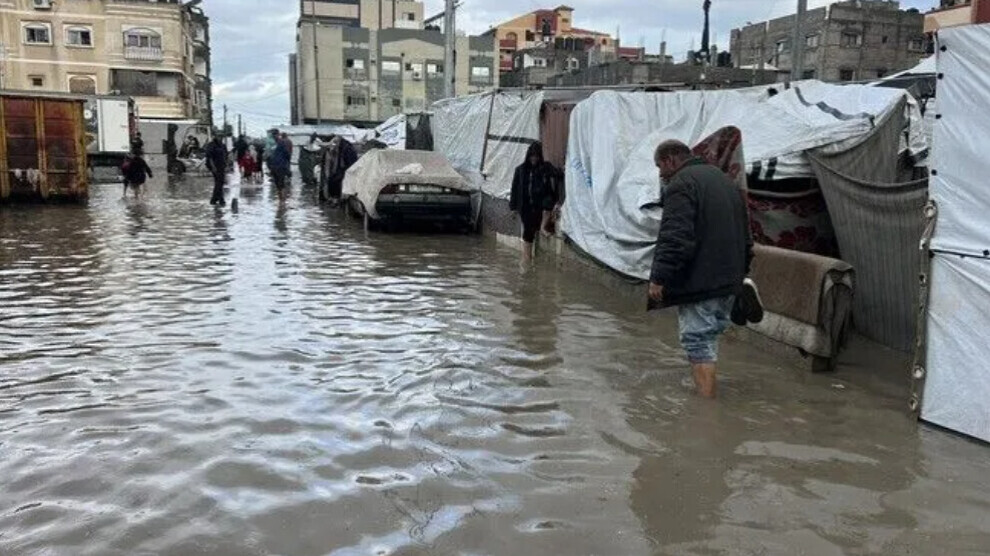
NEWS CENTER_ The winter tragedy in the Gaza Strip is renewed with every weather depression, as heavy rains and strong winds turn the dilapidated tents of the displaced into pools of mud, threatening the lives of hundreds of thousands of residents who face biting cold without safe shelter or heating means.
The United Nations Relief and Works Agency for Palestine Refugees (UNRWA) said yesterday, Monday, 9 November, that heavy rains caused floods that swept through tents and shelters across the Strip and negatively affected more than 2000 displaced families inside 113 of its emergency shelter centers. It added that the floods exacerbated the already deteriorating living conditions of the displaced, many of whom live in tents and temporary shelter centers.
The UN agency warned that forecasts of further rain increase the urgent need to provide safe shelter for displaced families, alongside blankets, mattresses, and other winter supplies.
According to medical sources, a number of civilians were injured yesterday when the wall of a cracked building fell on a tent sheltering displaced persons in the Ard Al-Mufti area of the Nuseirat camp in the central Strip. The exact toll of the injured and the nature of their injuries have not yet become clear, and no information is available regarding the causes of the wall's collapse.
Earlier this week, two women and three children lost their lives and others were injured when sand and rocks collapsed onto tents of displaced persons in the central Strip as a result of the weather depression, according to Gaza's Civil Defense.
More Than 70,000 Tents Flooded and Dozens of Walls Collapsed
According to the Government Media Office, the depression caused the flooding of more than 70,000 tents and the collapse of dozens of walls, in addition to injuries and material and human losses. The United Nations Office for the Coordination of Humanitarian Affairs had warned in mid-October that about 950,000 Palestinians live in displacement sites exposed to medium or high flood risks.
The Israeli war on Gaza left widespread destruction in homes and infrastructure, forcing hundreds of thousands to displace and live in tents and shelter centers lacking the minimum requirements of protection. Despite the ceasefire agreement being in effect, shelter and reconstruction needs still exceed the volume of available aid, due to the continuation of Israeli restrictions on the entry of materials needed to repair homes and secure temporary housing.