
Jineology Center for Thought and Studies in Egypt Discusses the Foundations of Legal and Human Rights Writing
Egypt's Jineology Center held its third legal writing workshop within "Women's Pens," addressing judicial memorandum drafting, human rights article methodology, and employing constitutional texts to support and spread awareness of women's issues.
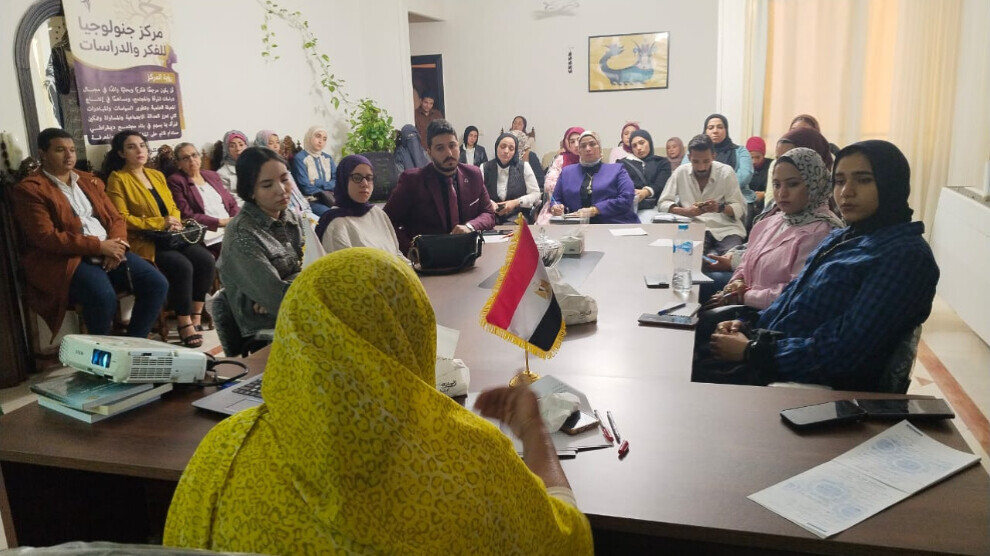
EGYPT – Within the "Women's Pens" campaign, the third training workshop of the Jineology Center shed light on empowering participants in legal and human rights writing, where participants and experts reviewed the drafting of parallel reports and mechanisms for relying on texts defending women's rights.
The Jineology Center for Thought and Studies held its third training workshop on legal and human rights writing yesterday evening, Monday, 9 November, within the "Women's Pens" campaign, with the participation of the president of the Jineology Center for Thought and Studies, Dr. Dina Mohsen, and the center's executive director, Nujin Youssef, and in the presence of a number of specialists, including Sudanese lawyer and human rights defender Salwa Absam, Dr. Karima Al-Hefnawi, and Counselor Hossam Allam.
During the first lecture, Sudanese lawyer and human rights defender Salwa Absam addressed the foundations of legal and human rights writing, explaining the diversity of legal and human rights memoranda according to the entity to which they are directed and the purpose of preparing them, whether they are memoranda submitted to courts, correspondences directed to human rights bodies and international organizations, or papers related to draft laws and the presentation of opinions and legal consultations, in addition to shadow reports and parallel reports prepared by civil society organizations.
She also reviewed the role of parallel human rights reports in international accountability mechanisms, foremost among them the Universal Periodic Review, in which states submit reports on human rights conditions, in parallel with shadow reports prepared by civil society organizations and stakeholders, to present independent assessments of the extent of states' compliance with human rights standards and covenants.
Salwa Absam addressed the professional controls for drafting legal memoranda, stressing the importance of clarity of language and precision of terminology, taking into account the nature of the entity being addressed and its jurisdiction, alongside relying on relevant legal references and judicial rulings, and understanding judicial jurisdiction before drafting requests and legal arguments.
Preparation Steps
In the second lecture, Dr. Karima Al-Hefnawi addressed the methodology of preparing a human rights article, and how to employ legal knowledge in journalistic writing, confirming the importance of the writer's familiarity with laws, legislation, and international covenants related to the issue being addressed, ensuring the accuracy of information and enhancing the ability of writing to spread awareness of human rights issues and defend rights and freedoms.
She reviewed the importance of relying on constitutional texts when addressing women's issues, pointing to Article 11 of the Egyptian Constitution and its inclusion of the state's obligation to achieve equality between women and men in various fields, and to guarantee women's right to hold public office and leadership positions and to be appointed in judicial bodies and authorities.
She also explained the methodological steps for preparing a human rights article, starting from defining the issue, the goal of addressing it, and the target audience, passing through research and information gathering and choosing an expressive and attractive title, reaching the construction of the article from an introduction that paves the way for the issue, a body that presents information and analysis, and a conclusion that includes a summary of the treatment or recommendations and demands.
The workshop aims to provide participants with practical skills in preparing legal and human rights memoranda and writing specialized articles, and to enhance their ability to employ writing tools in addressing societal issues, and to shed light on women's rights and spread awareness of them.