

ELIF AKGÜL
ISTANBUL_After the Turkish state declared 2025 the "Year of the Family" and decided to extend its family policies for an additional ten years, during the period 2026–2035, under the name "Family and Population Decade," the file of care burdens has returned to the forefront of discussion, as one of the most prominent issues linked to women's economic and social conditions.
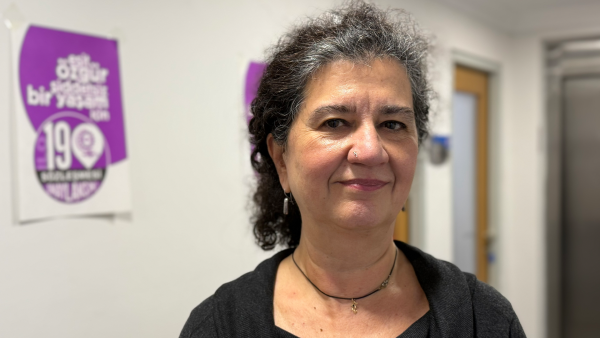
In this context, Professor Ferial Saygılıgil addressed, in her assessment for our agency, the potential repercussions of the "Year of the Family" policies on women's lives and financial conditions, pointing to their role in entrenching inequality in the distribution of care burdens within the family and society.
She affirmed that declaring the "Year of the Family" and extending these policies for an additional ten years practically mean entrenching care work responsibilities as a burden borne primarily by women, in an extension of the issue of invisible, domestic, and unpaid labor, which has today become more complex and dangerous. She added that portraying family solidarity and mutual support as a sufficient means of bearing care responsibilities does not reflect reality and does not offer a real solution to this problem.
"Women Retreat into Their Homes"
Ferial Saygılıgil explained that these policies are not limited to entrenching traditional gender-based roles, but also contribute to gradually pushing women away from the labor market as a result of burdening them with primary responsibility for care work. She noted that this reinforces the unequal division of labor between women and men, whether through population policies or employment policies.
She added that women bearing the largest share of care burdens drives many, especially those with low and middle incomes, to reduce their participation in the labor market or withdraw from it and return home. These conditions worsen amid weak social security and the forced resort of many to flexible work patterns lacking sufficient stability and protection.
She also pointed to the acute shortage of public nurseries and elderly care institutions, affirming that the absence of these services—which the state is supposed to provide—increases the burdens placed on women and deepens inequality in the distribution of care responsibilities within the family and society.
"The Budget Increase Does Not Exceed 1%"
Ferial Saygılıgil pointed to the limited financial allocations earmarked for these policies, affirming that the budget increase, although it may appear large when compared to the 2026 budget, does not in the final analysis exceed 1% of the total budget.
Regarding the stark disparity in the distribution of household labor burdens between women and men, she relied on Turkish Statistical Institute data, explaining that the gap is not limited to the nature of household responsibilities but also extends to the time each party devotes to performing them. "When looking at Turkish Statistical Institute data on the volume of work performed by women and men within the family, the extent of inequality in the distribution of this work becomes clear. According to the latest data, women working in paid jobs spend, as I recall, 211 minutes daily performing household work, compared to only 46 minutes for men."
"The Motherhood Penalty" Versus "The Fatherhood Bonus"
Ferial Saygılıgil linked this disparity to what is known in academic literature as the concept of the "motherhood penalty," noting that motherhood turns, in the absence of supportive policies, into a factor that exacerbates economic and professional burdens on women, while fatherhood may represent an additional advantage for men.
She explained: "These figures also reveal another phenomenon known as the 'motherhood penalty,' a concept present in academic literature, indicating that having children may turn into a kind of punishment for women. While fatherhood represents something like a reward for men, motherhood becomes a source of punishment and marginalization for women."
She attributed the reason for this to the absence of a real and equal parental leave system in Turkey. "We are talking about equally paid leave that is non-transferable and non-waivable, allowing the father also to obtain leave after birth, just as is the case for the mother. We have repeatedly affirmed this demand, but the state has so far not taken any serious step toward achieving it. As we know, paternity leave does not exceed five days."
Care Burdens Pass from One Woman to Another
Regarding the nursery crisis, Ferial Saygılıgil criticized subjecting the provision of these services to market mechanisms, considering that the absence of public care institutions does not lighten women's burdens but transfers them from one generation to another, amid the continued absence of men from bearing care responsibilities.
She explained that a woman bears care burdens for a period that may reach five or six years before her child enrolls in school, which pushes families, given the shortage of nurseries, to rely on grandmothers to care for children. She criticized the proposal to grant grandmothers wages for this task, given the small amounts and the lack of clarity on whether they receive them as independent income.
She affirmed that the care system practically rests on arrangements and understandings between women and at their expense, while men remain absent from bearing their share of this responsibility.
"We Must Continue to Raise Our Demands Persistently"
Ferial Saygılıgil warned of the continued low rates of women's employment in Turkey compared to other countries, noting that they are heading toward further decline amid the absence of effective care and social protection policies. She affirmed that continuing to deal with women's issues from the perspective of the "Year of the Family" and burdening the family alone with care responsibilities will lead to the exacerbation of this problem.
She identified four fundamental aspects of the crisis: considering burdening women with care responsibilities as natural, the decline in their participation in the labor market due to the shortage of care services, the entrenchment of stereotypical roles and the unequal division of labor between the sexes, in addition to the acute shortage of public nurseries that the state is supposed to provide.
She stressed the necessity of pausing before these issues and discussing them seriously, and working to raise demands related to them and defend them continuously.


