
Kid Fluencer"... The new form of child exploitation
Instead of growing through play, some children have become profit-driven content creators known as "kidfluencers" on social media, raising serious concerns about their rights and mental health.
SARA POURKHAZI
Kermanshah _The child stands with a gaze mixing fear and hesitation, dancing or reciting a poem, while his eyes never leave his parents, searching for their approval and validation. Behind his innocent smile hides a fear and trembling of making a mistake in front of the camera, thereby losing his parents' love or satisfaction.
This is the reality lived by children referred to today as "kidfluencers," whose parents display them on virtual social media platforms. Instead of living their childhood freely and enjoying play and exploration, they have become mini-performers required to execute repetitive scenes in front of the camera. It is as if they are actors in a never-ending circus, forced to perform acts they may not want at all, solely in response to their parents' desires or the pressure of the camera lens.
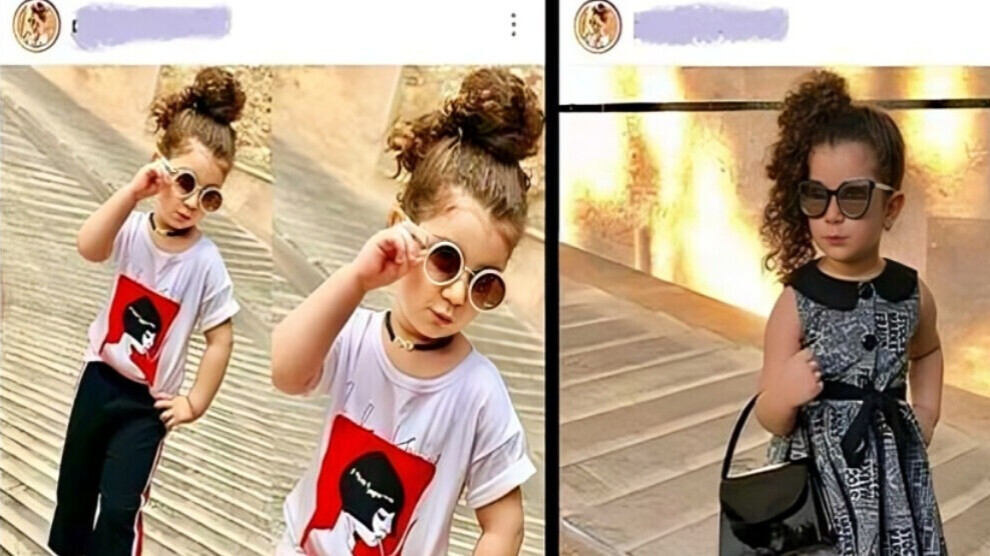
In recent years, with the rising obsession with visibility and fame on virtual social media, a troubling phenomenon has spread rapidly, turning children into one of the most prominent tools for content creation. Alongside showcasing empty displays of luxury and contrived lifestyles, many pages today feature children forced by their parents to behave in front of the camera in ways completely detached from the true world of childhood or their natural needs.
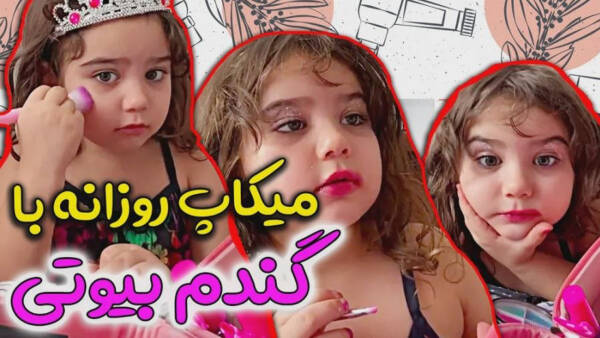
A large number of these parents force their children to wear age-inappropriate makeup, emulate adult behaviors, or repeat pre-written phrases whose style and vocabulary make it clear that the child does not comprehend their meaning. Thus, the child turns into a minor actor, living out roles drawn for them by others, instead of undergoing a natural developmental experience based on playing, discovering the world, making mistakes, and learning from them.
Children Turned into Tools for Content Creation
"Imagine a child standing every day, every hour, in front of the camera; the simplest word they say, the smallest move they make, and even the way they play, are all predetermined," says Mitra H., a resident of Kermanshah in Eastern Kurdistan and a child rights activist. "Instead of living a normal life, their daily life becomes subject to constant surveillance, as if a hidden camera is chasing them at every moment and never leaving them alone."
These children, who live inside a never-ending movie, carry this feeling with them even after they grow up. As it turns out, they constantly monitor what they say and how they behave because they "believe that someone might be watching them at that very moment, and they must act cautiously. Over time, this permanent surveillance turns into internal fear and chronic self-censorship."
The pressure these children face is not limited to being forced to perform a certain activity or repeat a specific sentence. Rather, "many of them are forced to follow dangerous diets or engage in hazardous activities to look more attractive or to attract a larger number of followers," thereby increasing their parents' profits. In this process, "the child's body and psyche become the victims, without anyone asking them what they want or what they feel is safe for them."
Mitra H. laments the expansion of this phenomenon day after day, blaming the absence of a legal deterrent: "In the absence of clear laws limiting child exploitation, many of them remain unprotected and unsupported. Furthermore, society has not yet realized the magnitude of the psychological and physical damage caused by this type of display, which leaves the door wide open for these practices to recur and worsen."
She also believes that when the audience supports this type of content, it encourages its creators to continue, thereby contributing to the entrenchment and reinforcement of the phenomenon.
When the Parents Themselves Are the Source of Pressure on the Child
Although child exploitation is ostensibly prohibited under Iranian laws, and it is impermissible to support child labor or any other form of exploitation, this exploitation gains a kind of social legitimacy when the perpetrators are the parents.
In the absence of clear protection laws that guarantee the child's safety even from their parents, many mothers and fathers consider themselves absolute authorities over their children. They rely on loose phrases such as "I see this as being in their best interest" to force them into acts that actually satisfy their own personal desires or interests, rather than the child's true needs.
This issue is not merely a cultural problem; its roots extend into the legal structure of Iran. The prevailing law, instead of recognizing the child as an independent human being with clear rights, defines them within the framework of parental guardianship and authority. In practice, this perception has allowed wide latitude for various forms of child exploitation by their families. In fact, in some cases, the law itself has become a contributing factor to the worsening of this phenomenon.
In the legal system of the Islamic Republic, a father can marry off his young daughter to another man. The law also permits the marriage of a thirteen-year-old girl to a man significantly older than her, with an age gap that could reach forty years. Under this reality, it seems natural that the protection of children forced by their parents to appear and produce content on virtual social media does not enjoy any notable presence in legal texts.
If the law permits child marriage, how can it show sensitivity toward forcing them to produce online content?
Sahar Q., a specialist in child psychology, says: "For a long time, I have been following many parents on virtual social networks, particularly Instagram, who publish videos of their children under the banner of daily life content creation—a type of content that is highly popular at the moment. But if only it were limited to these superficial scenes that appear harmless."
She added: "I have repeatedly watched parents indirectly, and under the guise of seemingly ordinary content, place their children in situations carrying sexual overtones. The child does not understand the nature of these situations, but adult recipients might interpret them differently."
She believes it is impossible to deny the "painful truth" that there are individuals in society who possess sexual attractions toward children, a disorder known in psychology as pedophilia. "This reality means that publishing certain photos and videos of children actually exposes them to the eyes and attention of these individuals. I have seen parents intentionally publish content targeting this type of audience, as if turning their children into tools or bait to grab attention and increase follower counts by attracting them."
Regrettably, as she says, there are no effective mechanisms to halt such practices. "When parents become the content producers and place the child in the position of a tool, they are practically turning them into a form of modern-day slaves; a slave not displayed in the slave markets of old, but displayed today in a wider, more open space—the digital space, where it is difficult to control what is published, and where no laws exist to provide real protection for children against this type of exploitation."
Influencer Children... A New Form of Exploitation in the Digital Space
According to available statistics and sources, the Instagram application is the most popular virtual social platform in Iran, boasting around 40 million Iranian users. Published data indicates that Iran ranks second globally, after Brazil, in terms of the number of influencers, reflecting the vast scale of commercial, advertising, and lifestyle content activities on this platform.
These children, even if they appear in an environment that seems colorful and entertaining, may in reality be vulnerable to another pattern of exploitation, psychological pressures, privacy violations, and long-term psychological effects that may accompany them into the future.
In general, it can be said that the phenomenon of profiting from the innocence of children through the digital space represents a silent and hidden crisis. Due to weak societal awareness and widespread normalization, it is a crisis that has not yet transformed into an issue deemed worthy of attention and scrutiny by many. For a large segment of society, this behavior is not viewed as a form of child abuse or hidden violence; rather, it is seen merely as a beautiful display of family life.
However, the truth behind this glamorous scene carries a completely different face. Behind those forced smiles and colorful pictures live children trapped in a golden cage—a cage where obedience, silence, and performing roles written by adults have replaced the freedom, play, and spontaneity that should characterize childhood.
In the name of success and fame, some parents have crossed the boundaries of the child's world, reducing the natural joys of childhood and the child's right to live their childhood into rubble to achieve their personal ambitions and interests. Beneath this rubble, many children find themselves captives to adult interests, instead of running through alleys, or flying a colorful kite in the sky, and living a free and safe childhood as they truly deserve.