
A thousand days into the war on Gaza… the Strip faces total collapse
After 1,000 days of Gaza war, unprecedented destruction, displacement, and service collapse persist as political efforts fail amid escalating civilian suffering.
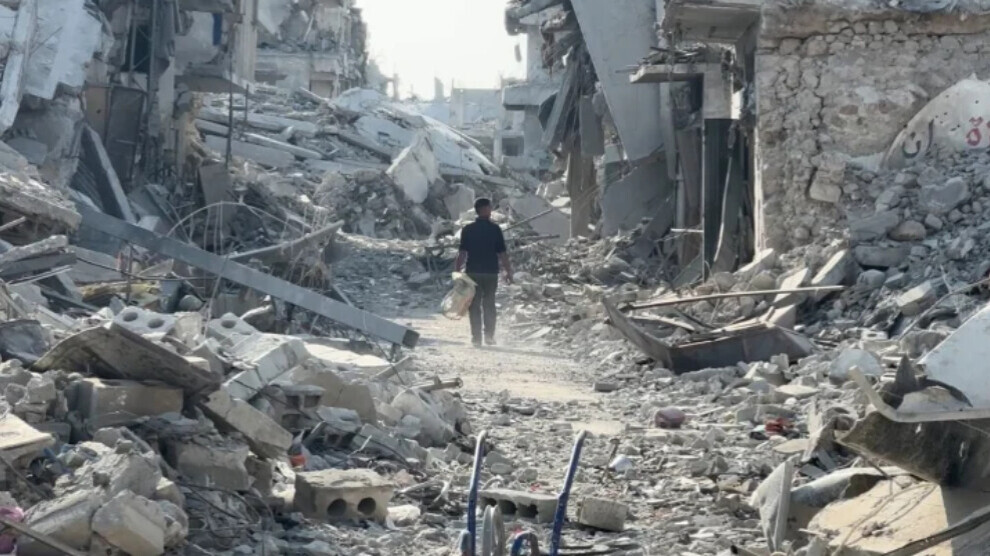
News Center – The war in the Gaza Strip has entered its thousandth day amidst a humanitarian crisis described as the most dire in the region's modern history. Signs of collapse are mounting across various vital sectors, coinciding with the continuation of military operations and the widening scope of destruction.
International and local reports confirm that the Strip is experiencing an unprecedented wave of mass displacement, shortages of food and medicine, and the collapse of its infrastructure. Meanwhile, political efforts aimed at achieving a ceasefire have yet to yield any tangible results.
Statistics from the media office show that children and women constitute more than half of the victims, and that thousands of families have been completely wiped out or left with only one survivor, reflecting the scale of the social tragedy that has struck the social fabric of the Gaza Strip.
In terms of destruction, reports confirm that more than 90% of Gaza's area has been damaged or destroyed, including residential neighborhoods, hospitals, schools, universities, places of worship, as well as water, electricity, and sewage networks and roads.
This has led to a near-total paralysis of basic services and the displacement of more than two million Palestinians, most of whom are living in tents and shelters lacking even the most basic necessities.
In the health sector, the remaining hospitals are operating at no more than 20% of their pre-war capacity, according to the media office, due to shortages of fuel, medicine, and medical supplies, and the destruction of dozens of health facilities and ambulances.
More than 22,000 injured and ill people urgently need to travel outside Gaza for treatment, but the closure of crossings and restrictions on patient movement prevent them from doing so. Thousands of amputations, paralysis, and vision loss have been recorded, in addition to the widespread outbreak of infectious diseases due to overcrowding and poor sanitation.
The food situation is deteriorating rapidly, with more than 1.1 million children suffering from having only one meal a day. Reports indicate that hundreds of people, including children and infants, have died from hunger and malnutrition. Local officials describe this situation as a systematic starvation policy targeting civilians and exacerbating the humanitarian collapse.
Economically, economic activity in Gaza has been almost completely damaged, according to the media office, and more than 80% of the population is now below the poverty line, while tens of thousands of families have lost their sources of income, and most of the population has become completely dependent on aid, which in turn faces major obstacles in entering the sector.
Despite ongoing regional and international efforts to reach a ceasefire agreement, facilitate the delivery of aid, and secure the release of detainees, these endeavors have not achieved decisive progress. Observers emphasize that the passage of a thousand days since the start of the war reflects the magnitude of the political and military complexities surrounding the conflict, while civilians remain the most affected by the continued fighting.
The government media office is preparing to issue a comprehensive report documenting the effects of a thousand days of war, including reconstruction estimates that include rebuilding more than 500 schools and universities, in addition to rehabilitating sewage networks, roads, infrastructure, and economic and service sectors.
Local officials warn that the continuation of the current situation will lead Gaza to an unprecedented humanitarian collapse, calling on the international community, the United Nations and the countries sponsoring the ceasefire agreements to take urgent action to stop the war, open the crossings, allow aid to enter, and begin the reconstruction process before it is too late.