
The struggle to find a roof… the story of women tenants
İnsane rent rises and the housing crisis in East Kurdistan and Iran have made female breadwinners vulnerable. Finding a safe roof is a Daily battle against poverty, discrimination, and insecurity.
Sara Bourkhezri
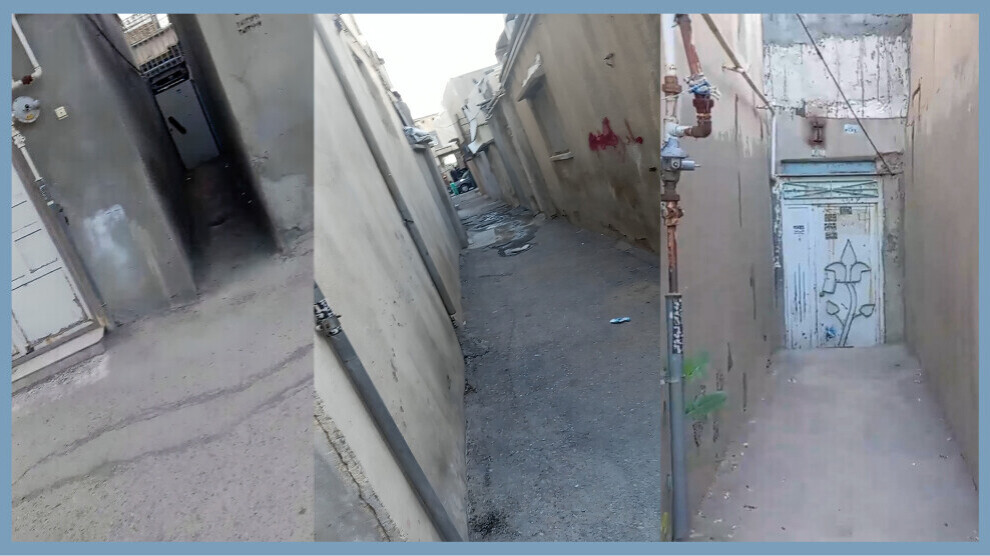
Kermanshah – In the most marginalized areas of Kermanshah city in East Kurdistan, where streets end in dead ends of impossible dreams and semi‑dead walls barely stand due to dilapidation, there are small rooms that resemble pieces of an incomplete puzzle more than they resemble houses.
These homes are built from primitive building materials, walls erected at minimal cost, and rooms stacked on top of each other in the tightest possible spaces – a collection of rigid structures colloquially called shacks or slums. Yet for many women, they are an elusive dream; a roof that requires paying prices disproportionate to their income and capabilities.
Women who wage an exhausting daily battle between inflation, insecurity, and instability – just to own a shelter. For these women, renting is not merely an economic situation but a psychological, social, and spiritual state. Every move from one home to another, every rent increase, every threat from the landlord, every approaching winter reminds them that the roof over their heads is not a right but a temporary privilege, and that the harshness of time for them is more severe than winter's cold.
"Small houses and exorbitant rents"
Leyla H., a woman living on the outskirts of Kermanshah, recounts how landlords rent out their small houses, ranging between 20 and 40 square meters, at exorbitant prices. She says that in their neighborhood, they ask for nearly five million tomans for a house of no more than 20 square meters – an amount completely disproportionate to the reality of this neighborhood, placing many families in dire straits.
She noted that many of these houses are so small that the toilet is built inside the kitchen itself – the place meant for cooking and storing food. According to her explanation, many women are forced to live in extremely cramped quarters lacking privacy and basic health standards, where the kitchen space overlaps with the toilet in one corner, making daily life more difficult due to the absence of any division or privacy within the home.
In recent years, the housing crisis in Iran has worsened with the sharp rise in property and rent prices. Inflation, currency devaluation, and declining household incomes have made obtaining decent housing extremely difficult for many people. This reality has pushed part of society into what is known as "reverse migration" – returning from major cities to smaller towns or villages in search of cheaper housing. However, this option is not suitable for everyone, especially female breadwinners who face double economic and social pressures.
Female breadwinners suffer not only from high rents but also from widespread discrimination by some landlords who refuse to rent their homes to them due to a male‑dominated social perspective or doubts about their ability to pay. With limited job opportunities for women and lower wages, the ability to pay high deposits or rising rents becomes nearly impossible. Consequently, this group becomes more vulnerable to constant moving, living in unsafe homes, or even homelessness, making the housing crisis for them harsher than ever.
"When being a woman becomes an obstacle to finding a home"
Mardiyya B., a mother of a young girl living in the Karnaji neighborhood of Kermanshah who spent many years as a tenant, recounts her story: "I have been divorced for three years, and since then I work to afford living and housing expenses. Rents have risen to the point that almost my entire salary goes to monthly rent, or I have to save it so I might secure the deposit for the next year. But my problem is not just crazy inflation; my biggest worry is finding a safe home – a place where I can live with my daughter without fear or disturbance."
She adds: "Every time I search for a home, and the landlord is a man, the moment he learns that I am a widow or a woman alone, it turns from a professional transaction into attempts at approaching and exploitation. On the other hand, some real estate agents expect some kind of 'favor' or that I tolerate behaviors unrelated to their work before they help me find a home."
Even if she overcomes all these stages and finds a home where neither the landlord nor the agency causes any trouble, a new problem begins with the neighbors. "After a while, when they discover that I am a woman living alone, some male neighbors start harassing me – from annoying looks to messages and behaviors that rob me and my daughter of peace of mind." She explains that "if I want to sum it all up, it seems for us women that the sky alone is our safe roof."
Examining the accounts of women like Mardiyya H., a breadwinning woman seeking to secure a safe home, reveals that a combination of economic, cultural, and legal factors makes the lives of female breadwinners significantly more difficult. This suffering is not merely individual experiences but the result of social structures that place women in vulnerable and exposed positions.
The sharp rise in rents has forced breadwinners to allocate most of their income to housing costs, reducing their ability to choose or negotiate with landlords and real estate agents. Under these circumstances, women are forced to face a series of pressures to maintain a roof over their heads, because losing their home means entering a spiral of instability and insecurity.
On the other hand, poverty and economic inequality practically place women in situations where some men see an opportunity for exploitation. In a society governed by a male‑dominated mentality, a lone woman is stereotypically viewed as unprotected, and thus accessible and controllable. This male perspective has produced behaviors ranging from "offers of friendship" from landlords, to inappropriate expectations from some brokers, to harassment by neighbors.
Yet these harassments should be seen as a form of power display – men who believe that a lone woman has no boundaries or personal inviolability, and that they can invade her private space as they wish.
In response, women know that filing complaints against verbal harassment, messages, or offensive behavior often yields no result. The lack of oversight over the conduct of landlords and real estate agencies reinforces this cycle, as harassment, in the absence of protection mechanisms, becomes a low‑cost, repeated behavior.
Moreover, women living alone face social judgments that hold them responsible for the harassment they experience. These judgments not only cause psychological pressure but also grant harassers a sense of legitimacy, leaving women defenseless.
This reality has led some real estate agents to treat a woman "without a man" as a major stigma, exploiting this classification to impose their terms or push breadwinners to accept unsafe homes at exorbitant costs.
An issue that goes beyond economics
The struggle of female breadwinners is rooted in a patriarchal social structure that views women's independence as a threat to the existing order, not a human right. In a society based on male superiority, a woman who possesses her own space is a woman "out of control," so she is met with gender stigma, harassment, and attempts at symbolic subjugation.
This same structure pushes women's attempts to live independently to the margins and deprives them, through economic, social, and cultural restrictions, of their most basic right – a safe home. Virginia Woolf reminds us in her famous work "A Room of One's Own" that a woman owning "money and a room of her own" is not merely a condition for writing but a symbol of possessing freedom and agency.
For this reason, patriarchal societies stand against independent women, because they realize that a woman who has her own space can begin to "write a new narrative" in which man is not the sole determinant of destiny. Thus, women, even in their search for a simple roof, collide with walls of discrimination and social judgments, because their independence is seen as a direct threat to the male power structure.