
European Court condemns Turkey in case of arrested Kurdish politician
European Court of Human Rights condemned Turkey for arresting Kurdish politician Ayla Akat Ata in 2016 without 'reasonable suspicion', violating her fundamental rights, including freedom of expression and liberty.
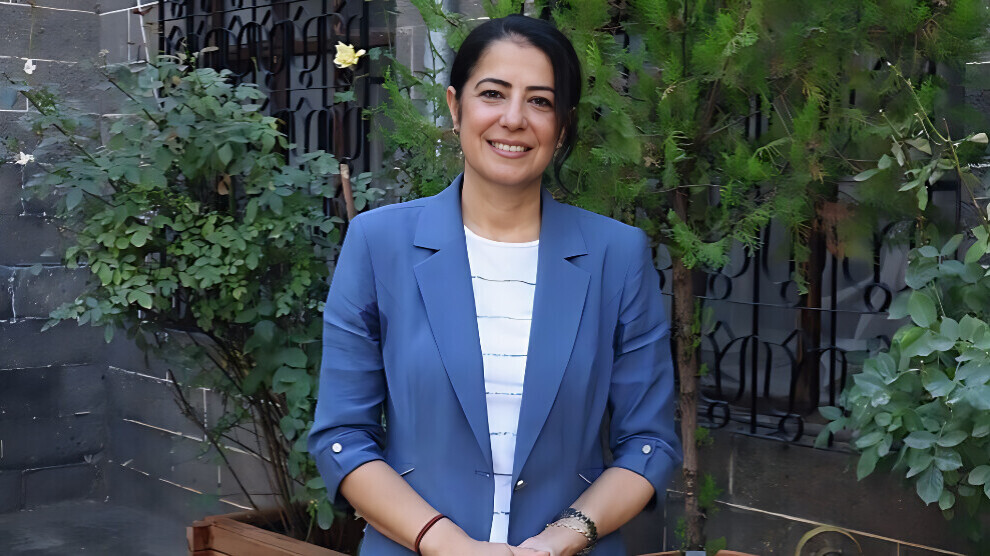
News Center – The ruling issued by the European Court of Human Rights regarding the arrest of Kurdish politician Ayla Akat Ata has once again highlighted growing international concerns over the decline of political freedoms and the increase in restrictions on civil activism in Turkey.
The European Court of Human Rights issued a new ruling yesterday, Tuesday, May 12, condemning Turkey over the arrest of Kurdish politician Ayla Akat Ata in 2016, considering that her detention was carried out without sufficient legal basis and that Turkish authorities violated her fundamental rights guaranteed under the European Convention on Human Rights.
This ruling comes in the context of a series of judgments issued by the Court in recent years regarding political arrests that followed the events of 2016 in Turkey.
Arrest without “reasonable suspicion”
The court affirmed that Turkish authorities did not provide any concrete evidence to justify the arrest of Ayla Akat Ata, pointing out that the condition of “reasonable suspicion” – a fundamental requirement for any detention measure – was not met.
It explained that local courts failed to establish a clear link between the charges brought against her and her political activities and statements, which constitutes a direct violation of Article 5(1) of the European Convention on Human Rights.
The ruling stated that the charges were largely based on Ayla Akat Ata’s participation in meetings of the Democratic Society Congress (DTK), her public speeches, and her posts on digital platforms. Although these activities did not include any call to violence, they were considered by the prosecution as evidence of “managing an organization”
The Court stressed that peaceful political activities cannot be used as a basis for such criminal charges. It also criticized the decisions to extend Ayla Akat Ata's detention for nearly six months, considering that they lacked the necessary legal justifications.
It noted that Turkish authorities did not prove a risk of flight or a likelihood of evidence tampering, nor did they explain why alternative, less restrictive measures were not used – which constitutes an additional violation of Article 5(3) of the Convention.
Clear violation of freedom of expression
The Court found that Ayla Akat Ata's arrest was a result of her political statements and public participation, meaning that her detention constituted a direct interference with freedom of expression. It affirmed that unlawful arrest cannot be considered a legitimate restriction on freedom of expression, concluding that Article 10 of the Convention had also been violated.
Based on the above, the Court ruled that Turkey must pay Ayla Akat Ata €8,000 in non‑pecuniary damages, plus €1,000 to cover litigation costs, bringing the total compensation to €9,000.
This ruling is further confirmation that peaceful political activities – including participation in meetings, delivering speeches, and posting on digital platforms – cannot be used as evidence of affiliation with illegal organizations unless a direct link to violence is proven. The decision also reflects ongoing international concerns about political arrests in Turkey, particularly those targeting Kurdish politicians after 2016.
Ayla Akat Ata, a former deputy of the Peoples' Democratic Party (HDP), was arrested on October 26, 2016, while participating in a press conference in front of the Diyarbakır Metropolitan Municipality. The public prosecutor opened an investigation against her on charges of "establishing or managing an organization," based on DTK activities, her speeches, and her digital posts, in addition to charges related to the Free Women's Congress (KJA).
After a detention period of about six months, she was released on May 4, 2017, and later filed a complaint with the European Court of Human Rights, which issued its final ruling yesterday, Tuesday, May 12, affirming multiple violations of her fundamental rights.