
A call to recognize women's role... a solidarity message from the Armenian Women's Union to the YPJ
Armenian Women's Union coordinator Anahid Gaspian sent a solidarity message to the YPJ, supporting women's struggle against war's effects and praising fighters' role in defending communities under difficult regional circumstances.
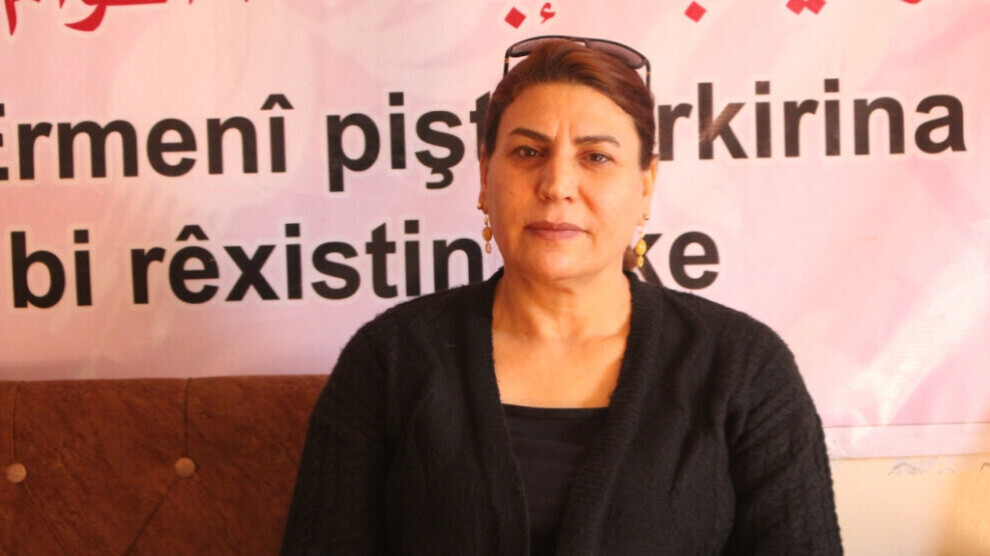
News Center – Messages of support for the Women's Protection Units (YPJ) continue to pour in from organizations, civil and human rights figures, at a time when calls are increasingly emerging to recognize the role of women in protecting local communities and enhancing their presence in conflict zones.
The Coordination of the Armenian Women's Union, Anahid Gaspian, today, Wednesday, May 6, sent a solidarity message to the YPJ stating:
"In countries accustomed to pain, stories are not mere passing narratives; they are a living memory that walks among people. There, where losses multiply and tired faces resemble one another, the survivors alone remain witnesses to what is not said, and to what must not be forgotten. Because the ink they write with is not ordinary ink, but the trace of survival mixed with loss.
Survival is not the end of the story; it is its beginning. Those who survive war do not truly survive it; they carry it inside them like a long shadow, in the details of their voice, in the hesitation of their silence, and in that gaze that does not resemble tranquility. Yet they write so that memory does not become a second grave, and so that pain is not left without meaning.
In the midst of this scene, women's experiences that sought to break the victim position have emerged, notably the Women's Protection Units (YPJ), which were not merely a military formation but an expression of a profound transformation in women's awareness and role. They were formed in a harsh context imposed by war, where women found themselves facing two choices: break down or confront. They chose to be part of the defense of society and of themselves at the same time.
Their presence was not only military; it also carried a symbolic and social dimension, as it redefined the image of women in an environment that had long constrained them. This transformation did not come from a vacuum but from an accumulation of experiences of oppression and from the need to possess voice and decision. Therefore, ignoring this role means not only denying sacrifices but also overlooking part of the transformation that society itself has witnessed.
Hence, it becomes necessary for the Syrian government to look at these experiences realistically and responsibly, and to recognize the role of women in the path of protection and society, as part of the Syrian truth that cannot be erased. Recognition does not mean political adoption so much as a mature reading of reality, paving the way for a broader dialogue that ensures everyone's participation in shaping the future. The ink of the survivors does not dry, because it is not written for decoration; it is written to remain. It remains as a testimony to a time that tried to erase everything and did not succeed. Between the lines of this ink, stories that are not yet complete pulsate, but they refuse to be erased and insist on being told."