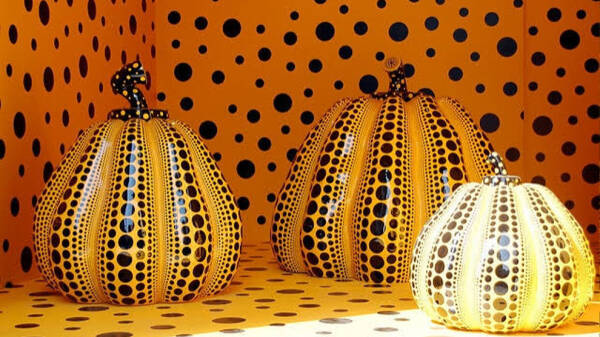
Yayoi Kusama... Japanese Artist Who Turned Dots into a Global Visual Language
From Japan to the world's leading museums, Yayoi Kusama created an exceptional artistic world where dots, mirrors, and colors intertwine with concepts of infinity and existence, becoming one of the most influential and prominent names in contemporary art.
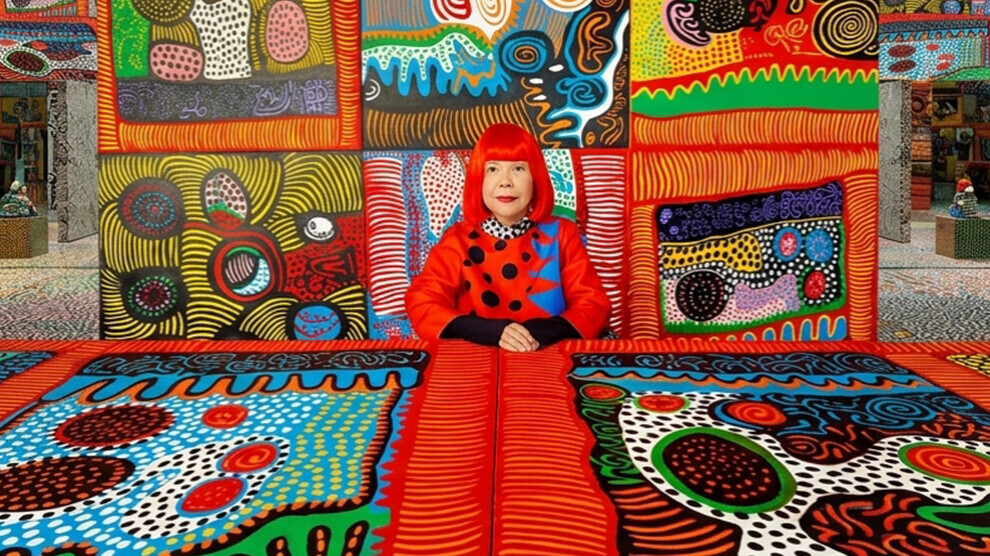
News Center — Yayoi Kusama is one of the most prominent figures in contemporary art, and over decades she developed a unique visual language that made dots, networks, mirrors, and colors the defining features of her work.
She became one of the most internationally renowned Japanese artists. Much of this recognition is due to her ability to build a clear, easily identifiable visual identity.
Her work relies on recurring elements, foremost among them dots, networks, mirrors, and bold colors, to present works addressing concepts such as infinity, existence, the universe, identity, and the relationship between humans and the surrounding space.
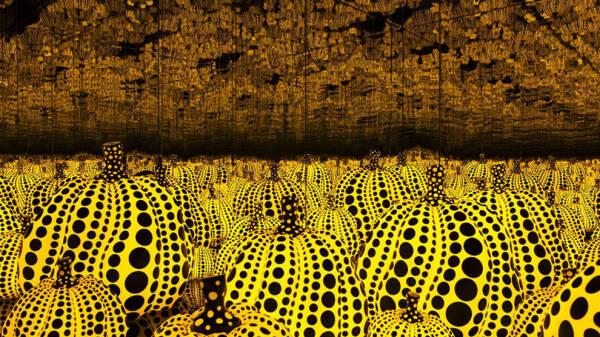
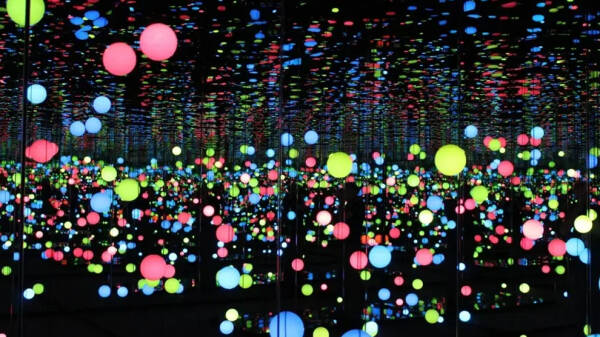
Her fame was not limited to traditional paintings; her practice extended to sculpture, installations, performance, fashion, writing, and other fields. Her works, particularly the Infinity Mirror Rooms and polka‑dot pumpkins, have become some of the most prominent pieces in museums and galleries worldwide.
Upbringing and Artistic Beginnings
Yayoi Kusama was born in 1929 in Matsumoto, Nagano Prefecture, Japan. From childhood, she showed a clear interest in drawing and art, and began producing works based on repetitive patterns of dots and networks. Her early visual experiences were an influential factor in the development of her artistic language; she spoke of experiencing unusual perceptual phenomena from a young age, which was reflected in her increasingly repetitive and continuous patterns.
Over time, these elements became an essential part of her artistic practice, and dots and networks became a means of expressing her vision of the world, not merely decorative elements.
In 1957, she moved to the United States, settling in New York City, which was then a major hub for modern and avant‑garde art movements. There, a new phase of her career began, as she produced large‑scale works based on dense repetition, and also moved into sculpture, installations, and performance. Her work quickly attracted attention for its departure from traditional styles and its use of covering spaces and objects with repetitive patterns.
Her practice did not stop at painting and sculpture; it extended to a wide range of artistic fields, including installations, performance, film, fashion, writing, and poetry. Her name was also associated with a number of modern and contemporary art movements and trends, and her work contributed to discussions on avant‑garde art, pop art, and feminist art.
In 1973, she returned to Japan and continued her artistic and literary work. She kept working on her paintings, installations, and writings, maintaining the style she had developed over the preceding decades.
Since the 1970s, she chose to reside in a psychiatric care facility in Tokyo, while continuing her artistic work regularly from her nearby studio. This residence did not hinder her creative career; she continued to produce new paintings, installations, and artworks, while also participating in exhibitions of her work in Japan and around the world.
Yayoi Kusama Museum
In 2017, the Yayoi Kusama Museum opened in Tokyo, as an institution dedicated to displaying her works and presenting her artistic experience to the public.
The museum represents an important milestone in the artist's career, bringing together her various works and helping to document her artistic experience while offering the public the opportunity to explore her creative world more broadly.
Yayoi Kusama continued her artistic activity into her final years, never ceasing to paint and create despite her advancing age. With her passing on August 14 at a hospital in Tokyo, at the age of 97, the life of one of the most influential Japanese artistic figures in contemporary art came to a close.