
Speaking of Life in the Heart of War…Palestine Through the Voice of Rim Banna
Through her songs, Rim Banna carried Palestine’s pain, memory, and hope for freedom, defending life in war. Her voice insists peace requires justice.
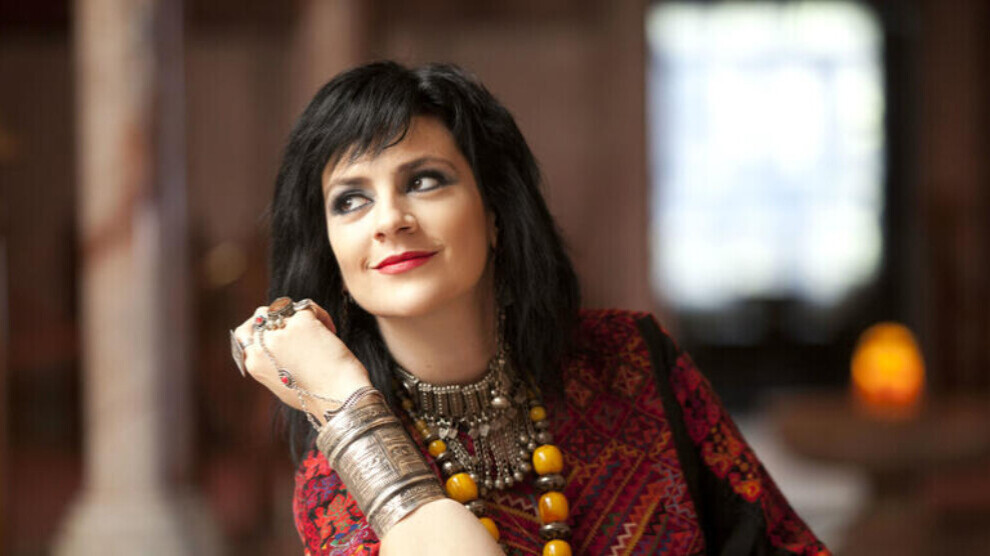
News Center_ Children growing up amid the wars of the Middle East, people displaced from their homes, cities destroyed, and the memory of those left behind. As September 1, the International Day of Peace, approaches, the voice of Palestinian artist Rim Banna reminds us of the human face of war_a face that cannot be reduced to numbers.
In her songs, Palestine is not merely a geopraphy witnessing conflicts, but also a place where children grow up, people love, long, and continue life despite all this destruction.
Rim Banna was born in 1966 in Nazareth and became one of the most prominent female voices that introduced Palestinian music internationally. She began her musical career at an early age and studied music in Moscow before returning to her homeland.
She dedicated a significant part of her artistic life to reviving old Palestinian children's songs, as well as the oral heritage that was threatened with oblivion. However, over time, her music was no longer just a project for preserving cultural memory; it also came to carry the issues of loss, displacement, prisons, children's lives, and Palestinians' longing for freedom.
One of the most notable examples of Rim Banna's anti‑war stance on the international stage was her participation in 2003 in the project Lullabies from the Axis of Evil. At a time when the Iraq war was ongoing, the project brought together female artists from the Middle East, Cuba, Afghanistan, and various parts of the world. Instead of the language of war, there was the language of lullabies; women's voices carried an anti‑war message to the world, and Rim Banna was Palestine's voice in this project.
She Told Palestine's Pain Through Children's Stories
Rim Banna's 2005 album The Mirrors of My Soul told the story of the destruction Palestine experienced through individual stories. The album dealt with the tales of the displaced, those uprooted from their homes, Palestinians held in prisons, and children who lost their lives.
One of the most impactful works on the album is the song "Sara," in which Rim Banna tells the story of the killing of a young Palestinian girl, shifting the war from military and political concepts to a life that was cut short for a child. In Rim Banna's music, war was not only fought on battlefields; it also continued in a mother's loss of her child, in a child's life cut short, in a home its owners were forced to leave, and in a land left behind. For this reason, alongside the pain, a strong insistence on life is heard in her songs.
From Lullabies to Songs of Resistance
Perhaps the greatest power of Rim Banna's music lies precisely here. The journey that began with recording old Palestinian lullabies sung to children transformed over time into a musical testimony carrying a people's memory to the world.
Rim Banna blended traditional Palestinian texts with contemporary music, set poems to music, and re‑performed children's songs that were threatened with oblivion. Thus, music for her was not only an art but also a means of preserving memory.
In a region where wars can uproot people not only from their land but also from their language, songs, and memories, Rim Banna left her voice so that these things would not be forgotten. When she passed away in Nazareth in 2018, she left behind not only her albums but also a strong female voice that accompanied modern Palestinian history.
Today, as the Middle East once again passes through wars, forced displacement, and destruction, her songs take on another meaning. As September 1, the International Day of Peace, approaches, listening to Rim Banna means not only listening to a Palestinian artist but also listening to the voices of the people who remain behind the grand political narratives of wars. It means listening to the human being who, despite war and destruction, tries to cling to life, memory, and hope.