
“Qasr Qand” … When the Flood Does Not Stop at Sweeping Away Homes
"In Qasr Qand, Beeta Qalandar portrays Balochistan's struggle against nature, poverty, and tradition, as families fight to survive and hold on."
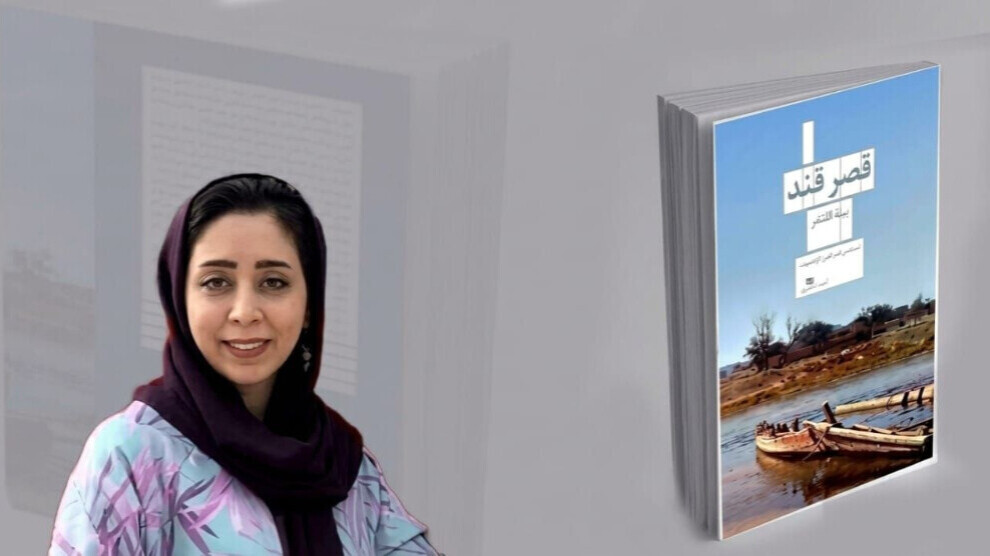
News Center_”Qasr Qand” : A Tale from Balochistan, where nature, poverty, and traditions conspire to keep people's lives in constant hardship and suffering. The story begins with heavy rains that turn into a torrential flood, coming after years of drought, sweeping away the homes and lives of the villagers of "Sitel." But in this book, the flood is not merely a natural disaster; it is a pretext to uncover the wounds that already existed in people's lives before it occurred.
Through the lives of Humaira, Khudabakhsh, Nahid, and Othman, the author Beeta Qalandar tells the story of a community where human destinies are shaped under the influence of poverty, migration, family relations, and deeply rooted traditions. Amid all this, women are not presented as secondary characters; rather, they stand at the heart of many crises, bearing a large share of the burdens of family life.
One of the book's strengths is its attention to local details and its attempt to draw close to the reality of life in Balochistan. The language, beliefs, family relations, and people's relationship with nature give the story a clear identity, transforming Balochistan from a distant, unknown geography into a tangible and present human space.
However, the novel "Qasr Qand" sometimes places the narrative burden on a consecutive series of misfortunes, rather than delving deeply into the characters' inner worlds. The flood, poverty, illness, migration, and family crises follow one after another, and in some parts of the novel, the characters are not given enough time to catch their breath or to develop gradually. This may detract from the emotional power of certain situations.
Nevertheless, the novel's value lies above all in the fact that it does not turn suffering into a general, faceless image. "Qasr Qand" speaks of people who, in the heart of deprivation, continue to struggle to preserve their families, homes, and hope.
Perhaps the book's title can be read as a metaphor for life itself: a palace that appears solid and firmly established on the outside, but it takes only a torrential flood to reveal just how much of that palace was built on the foundation of hope, memories, and resistance.