
Hedy Lamarr... An Icon Who Bridged Two Different Worlds: Acting & Science
The Hollywood star of the 1940s and 1950s whose name shone on screens was hiding behind the scenes a brilliant mind—without which we would not be able to read this article on our devices today.
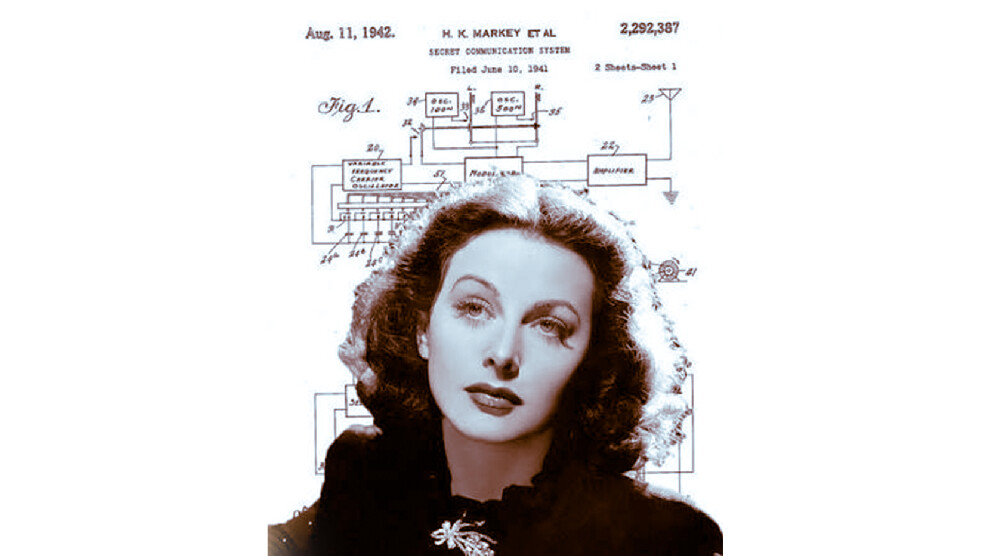
News Center_Hedy Lamarr was one of the most famous Hollywood stars of the 1940s and 1950s, renowned for her beauty and cinematic roles that made her an icon of her era. But behind her image as a beautiful star, she hid a mind passionate about science and technology, and her ideas later contributed to the history of wireless communications.
Hedy Lamarr was born as Hedwig Eva Maria Kiesler in Vienna on November 9, 1914, to a Jewish family. From her childhood, she showed curiosity about machines and how things worked, and was interested in science and technology despite not obtaining specialized university education in this field.
From Theater to Hollywood
Lamarr began her relationship with art at an early age, enrolling at sixteen in the school of theater director Max Reinhardt in Berlin to study acting and drama. In 1933, she appeared in the Czech film "Ecstasy" when she was eighteen. The film sparked widespread controversy due to the boldness of some of its scenes and became one of the works associated with the beginnings of her artistic career.
Later, she married Austrian arms dealer Fritz Mandl, and her married life was difficult and full of restrictions. But during that period, she became close to the world of weapons and military technology, attending meetings that included engineers and military officers and listening to their discussions about weapons and wireless systems, which helped her gain technical knowledge she later benefited from.
After her marriage failed, she left Europe for the United States and signed with MGM, beginning a new phase of her life. She soon became one of Hollywood's most prominent stars, but her fame and beauty overshadowed her other interest in science and invention.
The Inventive Mind Behind the Captivating Beauty
With the outbreak of World War II, Lamarr wanted to contribute to the war effort against the Nazis in a way that went beyond acting. In collaboration with musician George Antheil, she began thinking about the problem of torpedoes controlled by radio waves.
If the enemy discovered the frequency being used, they could jam the signal and disable the torpedo or change its course. Therefore, Lamarr and Antheil proposed an idea based on the signal rapidly hopping between different frequencies instead of remaining on a single fixed frequency.
The transmitter and receiver would be synchronized, so both would know the next frequency to which the signal would move. Thus, intercepting or jamming it would become more difficult. Antheil drew inspiration for the synchronization idea from the mechanism of the mechanical piano (Pianola).
In 1942, the two obtained a patent for a secret communication system based on this idea and submitted it to aid the American war effort.
An Invention Ahead of Its Time
The invention did not receive great attention at the time, but it later became an important part of the history of wireless communication technologies. With the development of technology, the idea of frequency hopping became linked to modern communication technologies and contributed to the scientific legacy that preceded the emergence of systems such as Bluetooth and Wi-Fi, although these technologies are the product of many scientific and engineering developments and not the result of Lamarr's invention alone.
A Woman the World Saw Only as Beauty
The paradox in Hedy Lamarr's life lies in the fact that the world knew her for a long time because of her beauty, while her inventive mind did not receive the same attention. She was an actress and cinematic star, but she was also a woman passionate about science and capable of thinking of solutions to complex technical problems.