
The Yellow Line and “Green Rafah”: Projects Redrawing Gaza’s Borders
Political researcher Jowan Saleh confirms that the “Green Rafah” project reflects a vague and alarming vision for the future of Gaza’s population rather than offering realistic solutions.
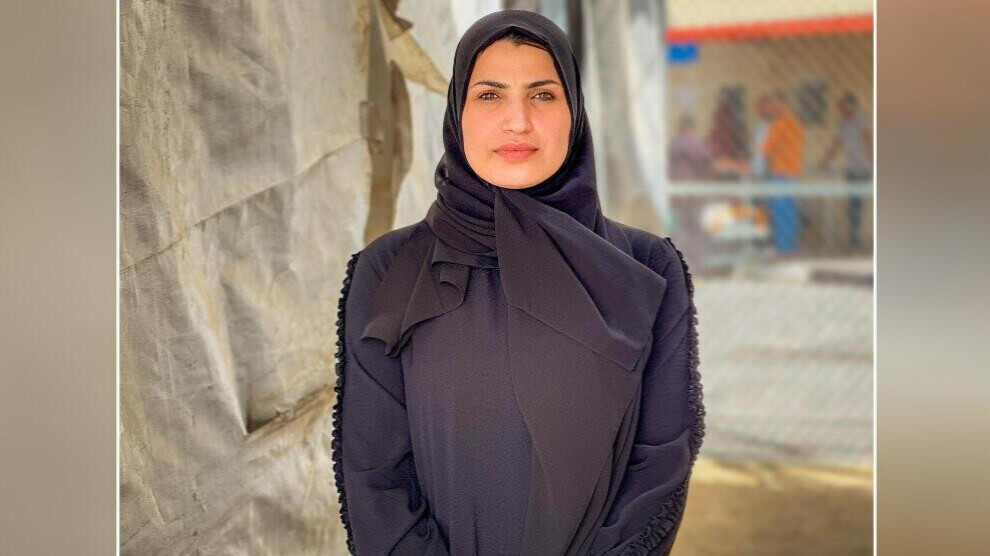
Rafeef Asleem
Gaza-Amid ongoing debate over the future of Gaza, a project known as “Green Rafah” has emerged—an Israeli-American plan promoted as a new city to be established east of Rafah.
At first glance, the idea appears humanitarian. It is said to be designated for Palestinians who are not affiliated with Hamas and would provide housing and basic services such as schools, healthcare centers, and job opportunities linked to reconstruction efforts. However, behind this optimistic image, many believe the project carries deeper political and security objectives.
The chosen location is far from random. It lies within what is known as the “Yellow Line,” a vast area comprising more than half of the Gaza Strip and currently under Israeli military control.
From a Palestinian perspective, “Green Rafah” is not a city of hope, but rather an attempt to divide Gaza into two zones: a “green” zone under Israeli control and a “red” zone remaining under Hamas influence. It is viewed as part of a broader plan to reengineer Palestinian society by creating a new environment that weakens national ties, which form the foundation of resistance.
Political researcher Jowan Saleh explains that “Green Rafah” is one of the projects promoted by Israeli media following the announcement of a ceasefire in October. She notes that it involves part of the city of Rafah in southern Gaza and is coordinated with the U.S. administration to relocate residents currently living under Hamas rule.
She clarifies that Rafah spans approximately 64 square kilometers, but the entire area would not be developed. Certain zones controlled by armed groups, as well as areas under direct Israeli military control, would be excluded. What remains—around 40 square kilometers—is claimed by Israeli authorities to be sufficient to accommodate more than one million people, a claim Saleh describes as illogical and impossible given available data and population needs.
“Ink on Paper”
According to Saleh, the “Green Rafah” plan remains nothing more than ink on paper. Gaza as a whole is buried under rubble, and the project would have to proceed in multiple stages, beginning with debris removal, followed by the construction of temporary housing units known as caravans, and the establishment of basic infrastructure such as sewage systems and schools. She stresses that a city cannot be built overnight.
She adds that donor countries and entities responsible for reconstruction in Gaza reject the idea of building such a city, as there is no funding allocated for it. At the same time, Israel’s far-right opposes the project, viewing it as a burden on Israeli forces and soldiers. Therefore, she argues, the plan should be seen merely as a proposal aimed at reshaping perceptions of Gaza’s future rather than a viable development project.
Saleh believes that implementing this model—should residents accept living there—would mean heading into the unknown and would generate widespread fear among civilians. She points out several obstacles to building Green Rafah at present, including reconstruction mechanisms, population entry procedures, and legal challenges. The land designated for the city is privately owned by residents who were forcibly displaced, unlike the government-owned lands of Al-Mawasi.
Based on information circulated in Hebrew media, Saleh explains that entry into the city would require strict security screening. Anyone with alleged security ties to Hamas would be barred from entry, as Israel claims the area would be “terrorism-free.” She notes that the zone is currently inhabited by armed militias and remains largely unknown and opaque.
Regarding reconstruction in Gaza more broadly, Saleh states that it is tied to complex and unresolved files. Donors condition reconstruction on Hamas’s presence in the Strip, arguing that rebuilding would be futile if structures are later bombed again. Israel, meanwhile, links reconstruction to the disarmament of Hamas.
She concludes by noting that discussions at reconstruction conferences confirm the absence of a clear vision or concrete plan for rebuilding Gaza. As a result, the population’s living conditions are likely to remain unchanged until a consensus is reached on a vision that guarantees civilians their right to dignified housing— a right they have been deprived of due to the ongoing assault