
Palestinian Women in Politics: Burdened, Marginalized in Decision Making Positions
Three years of Israeli war have deepened the burdens on Palestinian women in Gaza, while their political presence and voice in decision making positions have remained limited.
NAGHAM KARAJA
Palestine — Palestinian women in the Gaza Strip have borne, during three years of war, burdens that go beyond daily survival, after finding themselves facing repeated displacement, the loss of housing and sources of income, supporting the family, and caring for children, while trying to reorganize life under conditions in which the elements of safety and stability have collapsed. As the scale of the roles women have assumed within families and local communities has expanded, their presence in political decision‑making positions has remained less than the size of the responsibilities they have carried on the ground.
Figures reveal the scale of the transformation that has affected women's lives. Since October 7, 2023, about one million women and girls in Gaza have been displaced, according to UN estimates, at a time when the total number of displaced people reached about 1.9 million during the early stages of the war—approximately 85 percent of the Strip's population.
UN Women estimates indicate that the number of females in Gaza before the war was about 1.1 million, meaning that nearly nine women and girls out of every ten had been displaced in that estimate, with many forced to displace repeatedly.
Displacement was not merely a geographical move from one area to another; for women, it represented a harsh experience of losing home, privacy, and sources of income, and moving between tents, shelters, and crowded areas, with declining ability to access basic services.
The Battle for Survival and Rebuilding Family and Society
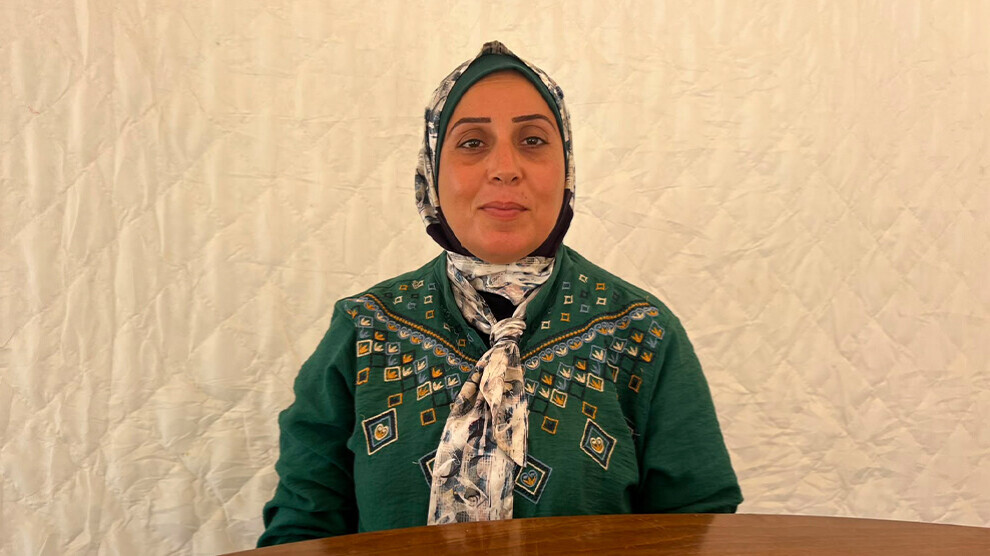
Areej Al‑Ashqar, head of the Women's Work Union, says the war has profoundly affected Palestinian women because they "bore the largest burden of social and economic life and were at the forefront of those who took on caring for the family and managing its affairs amid loss, displacement, and hunger."
She believes women were not merely recipients of the crisis but became a major party in dealing with it, after finding themselves required to support the family, assist the husband, protect children, and rebuild what could be rebuilt of life's details after the destruction of homes and property.
She explains that Palestinian women in Gaza bear the weight of successive crises threefold: as mothers, as workers, and as human beings who have lost the simplest elements of safety. From the years of siege to the latest rounds of war, women have transformed from partners in building to bearers of the burden of survival.
They also stand in aid queues for hours, return to repair a tent that protects neither from cold nor heat, work in sewing and home farming for wages that do not cover the price of a day's bread, and are subjected to doubled psychological and economic pressures amid the absence of health services and the lack of privacy in shelters.
Areej Al‑Ashqar affirms that "women remain the backbone of the family and society. They resist with patience, build with hope, and raise a generation on the meaning of resilience despite wounds. Palestinian women have always been capable, solid, and stubborn, and have proven to the entire world that they are strong women, clinging to their roots, land, and homeland, and defending it with all their strength."
She explained that this reality places a greater responsibility on any upcoming humanitarian or developmental path, as societal recovery cannot be separated from women's ability to restore safety, economic and social independence, and access to positions that allow them to influence decisions affecting their lives and future.
"Their Presence Has Not Been Reflected in Decision‑Making Positions"
This social and economic transformation was not marginal. In November 2025, UN Women reported that more than 57,000 women in Gaza had become heads of their households. More recent data indicated that 95 percent of businesses that employed women in Gaza had closed, while about 690,000 women and girls were living in overcrowded shelters.
She explains that women resorted to new patterns of work—from baking bread to selling on street stalls—in an attempt to secure the family's needs. She adds: "We saw women standing at the oven to bake and standing at a stall to sell whatever they had, just so they could support their families. Women carried the responsibility of the home under conditions where safe life, privacy, and dignity were no longer available as before."
However, the expansion of the role women played in managing daily life has not been reflected to the same extent in their participation in political life. The paradox, according to Areej Al‑Ashqar, is that the woman who bore the burdens of war was not present with the same weight in decision‑making positions related to the future of Palestinian society.
She explains: "Although Palestinian women suffered from more than one aspect of the war, this was not reflected in their presence in decision‑making positions, especially in negotiations, reconciliation tracks, and the committees formed to discuss the future of the Palestinian situation. There was a clear absence of women from these spaces, even though they are the most capable of conveying women's needs and their experience during the war."
This political gap does not come in a vacuum. Even before the war, Palestinian women's participation in local governance positions was limited; UN Women data shows that women held about 21.8 percent of elected seats in local governance bodies, based on the results of the 2021 elections in the West Bank.
The War Showed Women's Ability to Organize and Respond
Areej Al‑Ashqar believes the war added a new layer of obstacles to pre‑existing social and political challenges, foremost among them the patriarchal structure that limits women's access to leadership positions. She says: "Women were already facing the obstacles of patriarchal and authoritarian society, then the war came to add new burdens, making the path to political participation more difficult."
At the same time, the war showed women's ability to organize community response under extremely harsh conditions. UN Women affirmed that women were at the forefront of humanitarian response and community work, as caregivers, heads of households, and leaders in their communities. The organization also dedicated, within its response in Palestine, an axis to support Palestinian women's ability to effectively influence political decision‑making at various levels.
But recognition of the societal role is not enough if it does not translate into real representation in the institutions that draw up policies. Areej Al‑Ashqar affirms that "Palestinian women have not forgotten their right to political participation and have not abandoned their right to determine their destiny and their homeland's future. They continue to encourage women and girls to reach decision‑making positions so they can convey women's needs and suffering to where policies are made."
The matter takes on greater importance in the post‑war phase, because decisions related to reconstruction, return, housing, social protection, work, health, education, and protection from violence will directly affect women's lives. Excluding them from shaping these decisions means that an essential part of the experience the society lived through during the war may not reach the policy table.
Excluding Women from Peace Processes Leads to Ignoring Their Needs
The need for political participation is not limited to internal Palestinian affairs. International expertise on peace and security issues confirms the continued weakness of women's representation in negotiation processes. In 2023, women's participation did not exceed 9.6 percent of participants in more than 50 peace processes around the world, while UN Women affirms that excluding women from peace processes often leads to ignoring their needs and fears in peace agreements and recovery plans.
Areej Al‑Ashqar believes any upcoming political phase must begin from women's own needs, foremost among them safety, housing, privacy, and social and economic protection, along with ensuring their voices reach decision‑making positions. She says: "Palestinian women need a safe environment and a life that preserves their dignity, and they need someone to convey their issues to decision‑makers. They should have been present within political decision‑making to defend women's rights and ensure their needs are part of upcoming policies and programs."
She stresses that women's participation should not turn into formal presence or symbolic representation but into influential participation in institutions, parties, political committees, reconciliation tracks, and societal rebuilding. She adds: "It is not enough for women to be present in society and bear its burdens, then be absent when responsibilities are distributed and decisions are drafted. The woman who carried the family under the harshest conditions must be a partner in determining her future and her society's future."
Three years after the war, the paradox appears clearer: Palestinian women were at the heart of the crisis—they managed the family, faced displacement, sought to provide food, cared for children, and tried to rebuild life from the rubble. But their presence in decision‑making circles remained less than the scale of what they endured. In the phase of rebuilding Gaza, involving women is not merely about achieving fair representation but about ensuring that upcoming policies can read the reality women lived, understand their needs, and transform their experience from a testimony of war into an influential force in shaping the future.