
Candidate: I Do Not Make Electoral Promises, But I Commit to Defending Equality
The statements of Nesrine Jaafar reflect the Workers' Party's vision for a campaign based on collective commitment, highlighting citizen engagement, the challenges of women in politics, and the priority of defending vulnerable groups.
NAJWA RAHM
Algeria — The 2026 Algerian legislative elections constitute a significant political milestone, taking place in a sensitive social and economic context, reflecting citizens' aspirations for institutional renewal and the enhancement of popular participation in decision-making, with the necessity of following developments through reliable sources.
Within the framework of the electoral campaign for the upcoming July 2 legislative elections, Nesrine Jaafar, a journalist and candidate of the Workers' Party, affirmed that the electoral program she is running on is not presented as an individual program for each candidate separately, but rather as a collective program reflecting the party's vision and political commitments.
Commitments of the "Determination and Resilience" List
She explained that the competing electoral list, under the slogan "Determination and Resilience," has adopted from the outset a document of commitments signed by all candidates, containing a set of principles and pledges aimed at embodying the party's program and defending it at various political junctures.
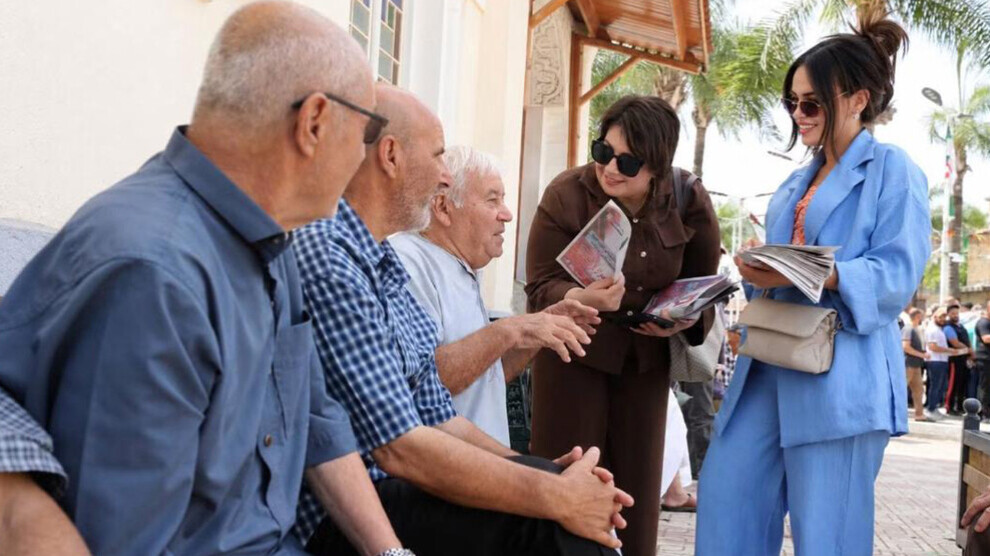
Regarding the field campaign, she indicated that members of the list have so far organized field visits across the 57 municipalities of Algiers, explaining that activities sometimes take the form of women's visits and at other times within collective teams comprising various list members.
Regarding citizen engagement with the campaign, she affirmed that she was initially concerned about the nature of public reception given the political situation in Algeria and the accompanying despair among some citizens and loss of confidence in the possibility of bringing about change through elections. However, she was surprised by what she described as a wonderful response, both to the candidates and to the Workers' Party.
She said that some citizens still hold positions rejecting voting or political participation, but the majority preferred to share their daily concerns with campaign members. She added that what most caught her attention during field meetings was the extent of suffering experienced by retirees, affirming that she had not imagined the scale of the feeling of injustice accompanying this group's conditions, making their issues among the priorities that should be worked on in the future.
Motivations for Candidacy
Speaking about her motivations for candidacy, Nesrine Jaafar explained that each candidate has goals they seek to achieve and through which to leave their mark in political life, noting that her decision to run for election is linked to a set of objective and subjective factors, especially amid the multiple crises the world is witnessing today and the pressures and challenges they impose on various countries.
She believes that the repercussions of the current international situation on Algeria have become inevitable, requiring the strengthening and unification of the internal front to confront various threats and challenges, affirming that her candidacy within the Workers' Party list falls within this framework, as a political contribution to supporting national cohesion and strengthening internal unity.
Regarding women's participation in political work, she stressed that enhancing women's presence in elected councils should not depend only on the quota system or imposing specific percentages but requires, above all, genuine political will and comprehensive reform of the system related to women's political participation.
She added that the legal gains achieved by Algerian women, foremost among them the right to run in legislative and local elections, often collide with persistent social and cultural obstacles, explaining that many families and regions still reject women's engagement in political work despite this right being legally guaranteed, making many women face considerable social and family pressures and objections alone.
Defense of Vulnerable Groups at the Forefront
She affirmed that the core message she seeks to convey is that the law has granted women their natural political rights, but society in some cases still stands as an obstacle to the realization of these rights and gains on the ground.
She also addressed the situation of the media and publishing sector, considering that this field requires clear legal reforms that ensure the establishment of fixed and transparent criteria for the distribution of funding among various media institutions, pointing to the need to consider legal texts leading to a national salary scale for journalists working in the private sector to guarantee their professional and social rights.
Nesrine Jaafar affirmed that she does not make electoral promises to citizens because she is aware of the limits of a deputy's powers within the National People's Assembly, considering that the deputy's primary role lies in political struggle, defending citizens' daily concerns, and working to convey their voices to the relevant institutions.
She commits to making every possible effort to reject laws that negatively affect citizens' purchasing power. She also committed to standing with all initiatives and amendments that promote justice and equality, defending the rights of vulnerable groups, and contributing to the consolidation of a culture of acceptance of others and respect for differences in all their forms within Algerian society.