
Yemeni Lawyer Affirms the Relationship Between Art and Law
Lawyer Fatima Nour bridges art and law, exposing gaps that hinder women, and charts a path to justice that restores law's human spirit.
FATIMA RASHED
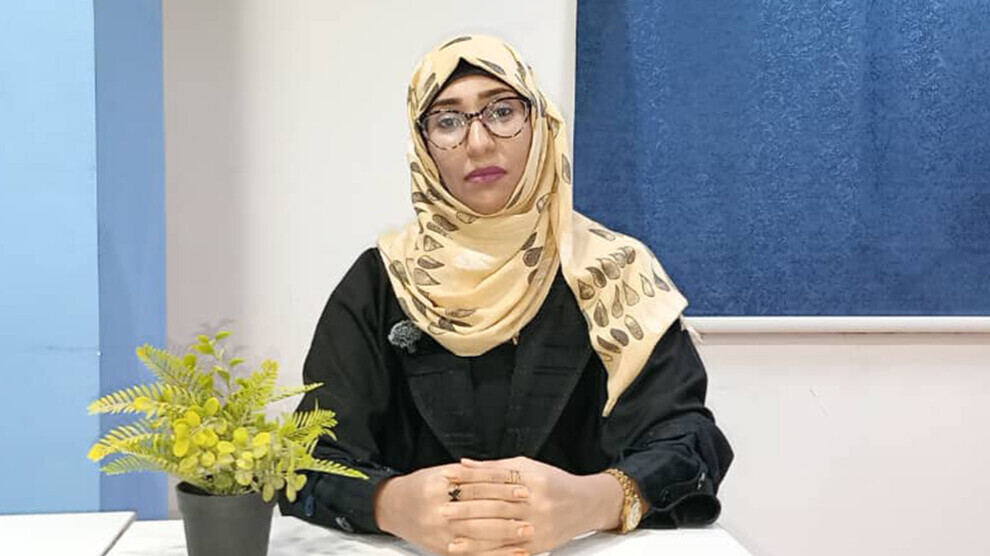
Aden — In a society where customs intertwine with legislation, and rights sometimes vanish behind a wall of legal ignorance, exceptional women emerge who turn their diverse talents into weapons for change. Lawyer, actress, media professional, and head of the "Siham Al-Khair" (Arrows of Goodness) initiative, Fatima Nour, is a model of the Aden woman who has fought many battles, moving between the dark corridors of courts and the vibrant stage of theatre.
Lawyer Fatima Nour explains the relationship between art and law, reveals the gaps in which women fall, and draws a roadmap for a justice that does justice to victims and keeps pace with the times.
The Marriage of Art and Law
On how to combine the strict language of law with the creative language of theatre, Fatima Nour affirms that art, education, media, and law are merely faces of the same coin, with humanity as their goal. She says: "The theatre stage is a direct and honest means of communication between the actor and the audience, and therefore it has the ability to convey humanitarian and rights-based messages much faster than rigid legal texts."
She recalls her passionate beginnings, saying: "When I was a law student, I wrote and directed my first play, which addressed the issue of child marriage. Through it, I wanted to show how law and society can complement each other to achieve justice for women and transform collective consciousness. From here, I realized that legal media and awareness programs that simplify personal status, civil, and criminal laws are the real bridge for organizing relations between citizens and judicial platforms."
From the Lecture Hall to Rape Cases
Fatima Nour's journey was not paved with roses. She encountered shocking criminal reality while still in her fourth year of university, when she took on the writing and research of a criminal case that shook her emotions—a rape and murder case. She noted that this case was a turning point in her view of the profession, especially when she saw how some perpetrators exploit legal loopholes, and how a lawyer can sometimes acquit a defendant despite the enormity of the crime.
This experience made her hesitate before entering the judicial field immediately after graduation, so she turned to education, working as a teacher. Regarding this, she says: "I felt then that I needed greater life experience in how to address people, understand their minds, study personalities, and guide them. Media, theatre, and education—all were streams that polished the lawyer's charisma. The judiciary does not need showmanship or excessive superficial details (like loud makeup) that have recently harmed the profession; it needs a measured dialogue style and a convincing personality that compels the judge and opponents to respect it."
Conceptual Chaos and Women's Unknown Rights
Speaking about the absent legal awareness, Lawyer Fatima Nour revealed gaps related to common misconceptions in society, most notably the term "guardian" (wali). She explained: "Many are unaware that the law protects a woman if her guardian refuses to marry her to a competent man without a legitimate reason; the law has allowed her to file a case known as the 'obstructive guardian' (wali al-adhil) to transfer guardianship to the court and grant her justice."
She adds that ignorance extends to concepts of "legal capacity" in its various forms (commercial, criminal, and the age of majority), in addition to citizens' ignorance of mechanisms for filing complaints with the public prosecution. Even the term "lawyer" is shrouded in ambiguity. She explains: "The legal profession is not a broad, loose term. There must be a distinction between a criminal lawyer, a commercial lawyer, an administrative lawyer, or a labor lawyer, and between someone working as a legal consultant for a government body, a local authority, or a social welfare fund."
Moving to her radio experience, Fatima Nour believes that radio sometimes has an impact surpassing television, due to its ease of reach to the listener. She criticizes traditional media discourse: "Many broadcasters speak in a dry and complex language that bores the listener. Through my legal program, which achieved great success in its first and second seasons, I made sure to present information in a quick and concise manner. In the first season, I even used a humorous format to simplify legal material so it could smoothly enter the heart and mind of the ordinary citizen."
Paid Motherhood and Gaps That Favor the Divorced Woman
On the rights of divorced women that many overlook, Fatima Nour detailed a set of available financial and legal rights, saying: "Legally, a woman has the right to request payment for breastfeeding her child (up to two years) and payment for caring for them. A woman has the right to overdue alimony, alimony of consolation (mut'a), and provision of a legal residence 'suitable for upbringing' that provides a safe environment for the divorced mother to raise her children." She emphasized that many make the mistake of settling for a small amount of alimony for the child that does not cover clothing, school, and medical expenses.
Despite the strength of the texts, Fatima Nour collides with practical reality inside courtrooms. She describes the laws as "rigid" and criticizes the infiltration of customs at the expense of legislation: "A woman is sometimes shocked to find that some judges tend to apply tribal customs at the expense of law, although the law has restricted tribal arbitration to specific cases with special criteria, and completely prohibited it in cases of marriage, lineage, and divorce. This overlap creates conflict and violence that does not only fall on the victim but extends to affect the lawyer herself, who faces double violations in the field work environment."
Fatima Nour held the media partially responsible, affirming the failure of visual and audio media to allocate periodic awareness spaces for housewives (whether educated or uneducated) to educate them about their rights, especially in cases of child marriage and women being deprived of inheritance in rural areas due to the dominance of custom over religious and legal provisions.
A Defiant Message to Women
Lawyer Fatima Nour directed a sharp yet hopeful message to women: "Do not let society stand in your way, and do not let fear creep into your heart. Your rights are complete—in inheritance, education, and health. If you are ignorant of something, ask and read so that no one can exploit you. Life is not paved with roses; we have all been subjected to violations and violence from a patriarchal society that sometimes resists seeing a woman with a position, an entity, and freedom of opinion... but you are strong and courageous. Resist and do not surrender."
Lawyer Fatima Nour concludes with the compass of her future ambition, hoping that the scale of justice in Aden would rise so that the whole society would be balanced. She issued a call for radical legislative amendments to Yemen's criminal and personal status laws to keep pace with modern and horrific crimes such as rape cases, whose current penalties she considers weak and insufficient to deter the perpetrator, calling for increased penalties to life imprisonment to protect victims.