
Tightening Academic Restrictions Narrows the Horizons of Iranian Women
The synchronization of internal and external restrictions in the university field has made the horizons of study and research before Iranian academics more difficult, and academic women may be more affected by these restrictions than others.
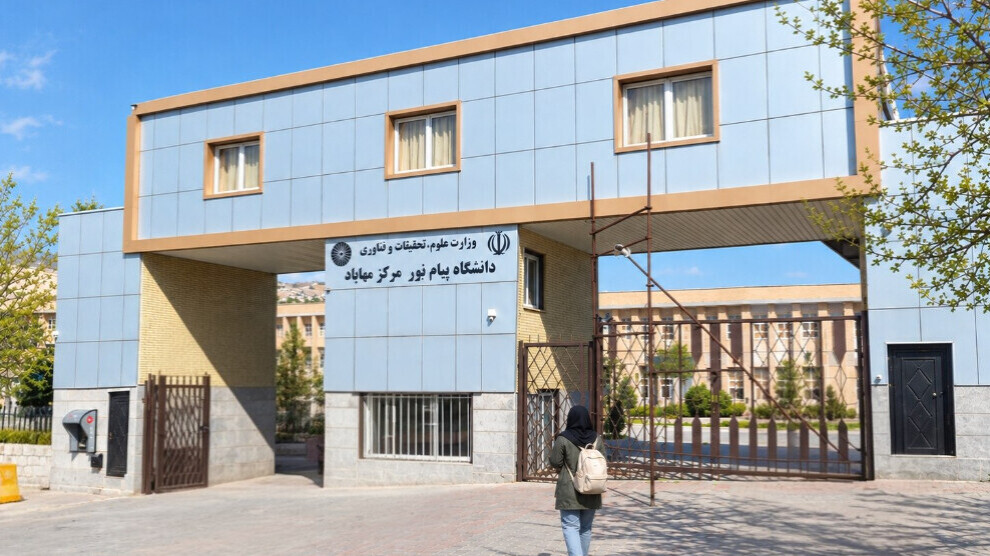
JAWAN SHARIFZADEH
Bukan – Simultaneously with the spread of news about the cancellation and suspension of the procedures of some international language tests in Iran, a new draft law in the Consultative Assembly (Parliament), proposed in late August and early September, raised concerns about the future of the academic environment in Iran.
At a time when Iranian universities are facing, more than ever, challenges represented by the migration of specialized competencies, limited resources, and difficulty of communication with scientific centers in the world, the Consultative Assembly, in its twelfth term, through the approval of Article Two of the "Draft Law on Confronting Influence," imposed new restrictions on some cross-border activities and communications.
Criminalizing Scientific Communications... Ambiguity and Upcoming Challenges
Based on the text of this draft, some economic, legal, educational, social, research, scientific, and cultural activities and contracts, including "preparing and publishing books, magazines, articles, reports, and statistics," will be subject to obtaining official authorization. Individuals must also, before applying for a scholarship, a research opportunity, scientific and academic cooperation, organizing or being delegated to or participating in a workshop and training course, or an artistic residency, obtain the necessary permits.
The draft also stipulates obligating the Ministry of Intelligence to prepare an annual list of permitted institutions, while academics are obligated to limit their communications to this list.
According to the provisions of the draft, prison sentences and financial fines were imposed for non-compliance with these restrictions. However, Maryam Vahidi (a pseudonym), a lawyer and university lecturer, believes that the ambiguity in the definition of "influence" and the breadth of the scope of restrictions represent the most prominent legal challenges posed by the draft.
She says: "From a legal perspective, the fundamental problem in this draft lies in the ambiguity of the definition of influence and the breadth of the scope of restrictions. This legislation can fundamentally restrict citizens' rights and scientific communications. From a public law perspective as well, the law should be precise, predictable, and proportionate to the criminalized behavior, and the possibility of objecting to administrative decisions should be clear."
On the other hand, legal ambiguity and the possibility of applying such restrictions raised concerns among academics. Media M., a doctoral student in Urmia, believes that this situation means narrowing the field for acquiring knowledge. "The university and research environment has witnessed many and recurring problems in recent years; the inability to update knowledge and conduct academic exchanges, alongside the restrictions imposed on scholarships and educational migration, may reach a point where postgraduate studies in Iran no longer have the necessary status and capabilities, and completing them outside Iran also becomes impossible."
From Canceling Tests to Educational Restrictions
Simultaneously with the tightening of some American restrictions on Iran, obstacles also appeared before part of educational and academic exchanges and activities. On 24 August, the American government suspended several general licenses related to Iran indefinitely, including General License G. This license previously covered some university exchanges and educational services, including some academic and educational exchange programs.
These changes came at a time when many of those wishing to study outside Iran, and even applicants to continue their studies at higher academic stages inside the country, were preparing for international language tests and other admission stages. Alongside that, online educational courses, university cooperations, and international conferences represented for many researchers, especially women, under existing restrictions, one of the channels for maintaining communication with global scientific circles.
Starting from an Unequal Point
Although women constitute a notable proportion of the numbers of students and postgraduate students in Iran, their representation rate in some scientific and academic positions, such as faculty membership and working as professors in universities, is still unequal with men.
Women who continued their educational and professional path despite structural obstacles in society and laws may now face a set of new restrictions in the path of study and scientific research.
Shadi B., a university lecturer and civil activist, believes that this situation constitutes a factor for increasing pressures on women. "The university was one of the most important channels of social mobility for women in Iran. The rise in their education level over the past decades has led to the entry of thousands of them into specialized and professional fields, but the gap between the rise in education level and access to job opportunities and academic positions is still a subject of discussion. Iranian women must face several structural factors at the same time in order to achieve success. In such circumstances, any restrictions that reduce the possibility of access to professional and scientific networks may turn, instead of being merely an administrative or scientific restriction, into an issue that affects the path of social and professional advancement of women."
The high cost of participating in conferences, the difficulty of obtaining visas, internet disruptions, and limited access to scientific sources were among the problems that Iranian researchers also faced previously. In such circumstances, the new restrictions can affect women's opportunities for professional growth, their presence in scientific research networks, and in the long term, their representation rate in scientific positions inside Iran and at the international level — categories that already faced aspects of inequality in the path of advancement, and now have to pay a greater cost.