
Activists: No National Unity Without Respect for Kurdish Identity and the Rights of Syrian Components
The Hasakah demonstrations raised questions about the contradiction between calls for coexistence and practices targeting Kurdish symbols, amid warnings from Sewdia activists that exclusion and discrimination undermine trust and civil peace.
ROCHELLE JUNIOR
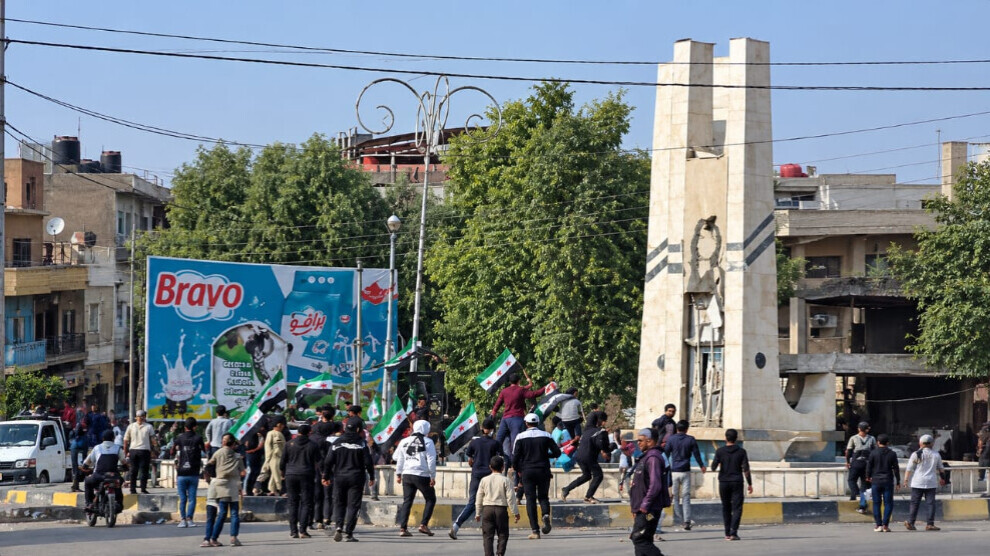
AS-SWEIDA – Anonymous pages on social media called on the residents of Hasakah governorate to organize a demonstration after Friday prayers on the second of October, calling for "Syria's unity." However, the presence of Islamic religious banners and the tearing of Kurdish flags and symbols raised questions about the contradiction between the call and the practices on the ground.
Women activists from the Syrian city of As-Sweida considered that the call for "Syria's unity" cannot be separated from respect for all its national and religious components, warning that exclusion and targeting cultural symbols undermine trust and threaten the prospects of national coexistence.
Tearing the Symbol of the Kurdish Woman Contradicts the Slogans of Unity
In this context, media professional Shatha Qreisha denounced what the demonstrations in Hasakah witnessed, considering that the call for a unified Syria and the rejection of sectarianism contradicts the practices that target the symbols of the cultural identity of Syrian components, foremost among them the symbols of the Kurdish woman.
She paused at the incident of tearing a banner bearing the braid of the Kurdish woman, noting that the braid carries deep cultural and symbolic connotations, and is not limited to being an aesthetic appearance, but is linked to identity, dignity, heritage, and collective memory.
She explained that the braid has special connotations in some Kurdish cultures and beliefs, including the Kakai and Yarsani cultures, noting the existence of traditions in which the mother's braid is granted a special symbolic status.
Shatha Qreisha confirmed that the dignity of the Kurdish woman is not reduced to her braid, but is linked to her rights and her homeland that she defends, considering that targeting this symbol cannot be separated from targeting cultural identity, and that such practices contradict calls for accepting the other and building a state that accommodates all its children.
She added that the call for "Syria's unity" requires recognizing all components and respecting their national, religious, and cultural specificities, wondering how trust in the government can be built if some components feel targeted or unacceptable.
Shatha Qreisha described the interim government as "sectarian and terrorist," considering that the persecution of women and the targeting of cultural symbols constitute, from her point of view, part of the manifestations of exclusion and violence.
She linked her position to the massacres and bloody events that the people of As-Sweida were subjected to, noting that what the people of As-Sweida lived through reinforces the importance of solidarity between the components that are subjected to violence and persecution, and the necessity of standing up to sectarianism and discrimination.
She announced her solidarity with Kurdish, Druze, and Alawite women, and the particularly oppressed, confirming that the working and struggling woman will continue her struggle for dignity, freedom, and justice, rejecting all practices that target women or diminish their rights.
How Can Syria Be Unified While Ignoring the Sacrifices of the Kurds?
For her part, activist Rimal Al-Hamad addressed the demonstrations witnessed in Hasakah, noting the raising of slogans calling for a unified Syria, simultaneously with the appearance of banners and slogans dating back to ISIS.
She evoked what the region witnessed in previous phases of grave violations committed by extremist organizations against the population, noting the role played by male and female Kurdish fighters in confronting ISIS and the Nusra Front, and standing up to the violations that affected various components of society.
She stressed that national unity is not achieved by raising slogans alone, but needs accepting the other, respecting their rights, and guaranteeing their participation in public life, warning that exclusion and discrimination lead to undermining trust between society and the authority.
For her part, Sara Nadim, a working woman from As-Sweida, expressed her denunciation of what Hasakah witnessed, considering that calls for Syria's unity raise serious questions in light of the events and violations to which components are subjected.
She noted that the call for a unified state requires that all citizens feel they are equal in rights and duties, and that the government provide them with protection and security.
She pointed to the fears facing Syrian components, including Kurds, Christians, Alawites, and Druze, related to security and societal and political acceptance, confirming the continuation of women in defending their rights and the rights of their society, and adhering to the demands of freedom, justice, and dignity.