
Syrian Children Under the Weight to Violence…Protection Absent, Crimes Without Deterrence
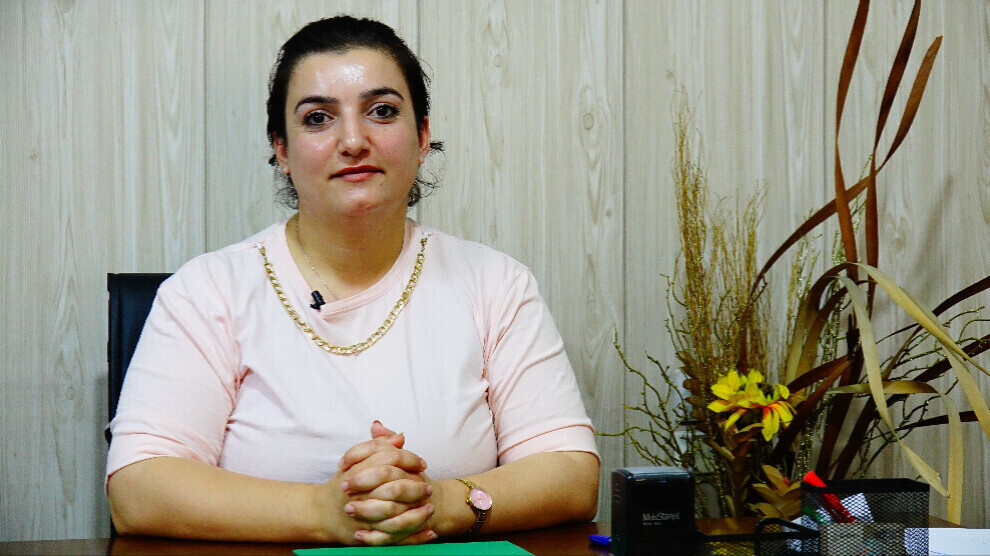
Noudem Shiro warns that child violations in Syria far exceed the capacity of local institutions to prevent them, amid weak protection mechanisms, limited accountability, and a lack of effective cooperation.
SORKEL SHEIKHO
Qamishlo_Over a decad after the outbreak of war in Syria, childhood continues to pay the heaviest price for a humanitarian crisis whose effects have not ended. While children face harsh confitions of displacement, poverty, and deprivation of education and healthcare, girls remain the most vulnerable,amid escalating forms of violence, exploitation, and violations that threaten their safety and fundamental rights.
The dangers do not stop at poverty and displacement; girls face the risk of early and forced marriage, along with sexual assault, exploitation, and a lack of adequate protection. Horrific crimes witnessed in various regions have revealed the scale of danger surrounding girls, including the killing of Ghala Khamis Al-Saleh, three years old, who was strangled in the eastern countryside of Deir ez-Zor; the killing of Nour in Daraa after being sexually assaulted by her uncle; and the death of Farah Al-Hamoud, who was only two and a half years old, following an assault she suffered.
"We Cannot Prevent Assaults on Children in Syria"
Regarding the situation of children and the economic and humanitarian crises weighing on them, Noudem Shiro, Director of the Child Protection Office of the Women's Authority in Rojava, said: "The office continues to implement programs and activities aimed at protecting and embracing children. However, the scale of violations across Syria exceeds the capacity of local institutions to prevent them."
She noted that children face multiple forms of violations and crimes, including sexual assault, exploitation, murder, in addition to cases related to domestic violence.
Noudem Shiro affirmed that children are paying the heaviest price for these crises, stating that the scale of violations they endure reveals a dangerous gap in the protection of their rights. "This reality cannot be hidden. Children are subjected to continuous violations, which indicates that their rights are not receiving the protection they should receive."
Children Deprived of Their Rights
She said that continued impunity leads to the recurrence of violations and makes children vulnerable to violence, exploitation, and murder. "Children's rights are violated, children themselves disappear, and then they are killed again."
She considered that the number of children killed in Syria from March 2011 to November 2024—30,293 children—reveals the scale of the catastrophe they have endured during the war years. She affirmed that this number should not be treated as a passing statistic but as evidence of the scale of crimes and violations committed against children.
She emphasized that child protection is a collective responsibility that begins with specialized institutions and extends to the family, society, the judiciary, the government, and civil society organizations. She said: "The foundation of the world begins in childhood," and that protecting a child's right to life must be accompanied by guaranteeing their rights to health, education, and a secure future.
In light of the transitional phase Syria is going through, Noudem Shiro believes that weak institutions and legal mechanisms capable of protecting children leave them facing the dangers of violence, exploitation, and murder, noting that the absence of accountability exacerbates these violations and prevents the deterrence of perpetrators.
She cited the case of a three-year-old girl who, according to reports, was sexually assaulted and then killed, asking: "How can a child of this age be assaulted and then killed?" She considered that this crime reveals the need for urgent and serious government action regarding violations committed against children, and for ensuring that those responsible do not escape punishment.
Although children's rights are enshrined in Syrian laws, Noudem Shiro affirms that the problem lies in weak implementation on the ground, noting that children do not receive the protection guaranteed by laws, amid continued exploitation, killing, and domestic violence. "We cannot say that even 2% of children's rights are being protected in Syria."
Accountability for Perpetrators Requires Genuine Cooperation
Noudem Shiro spoke about the difficulties facing child protection efforts, affirming that the Child Protection Office of the Women's Authority in Rojava cannot operate in isolation from security and judicial institutions. Protecting a child who has been sexually assaulted and holding perpetrators accountable requires genuine cooperation from relevant authorities, noting that the absence of this cooperation limits the office's ability to perform its duties.
She noted that children in various Syrian governorates, particularly in remote villages and areas that have long suffered marginalization, face deprivation of fundamental rights, foremost among them education, healthcare, and psychological support. She explained that weak services make it difficult even to accurately assess their educational levels, at a time when children's psychological and social needs are worsening.
"UNICEF Must Move Beyond Publishing Data"
Noudem Shiro criticized the role of the United Nations Children's Fund (UNICEF), calling for a shift from documenting violations and announcing the numbers of children killed or subjected to exploitation and abduction, to implementing concrete programs and solutions to reduce them.
She emphasized the need to prioritize children's mental health in schools, health centers, kindergartens, and camps, affirming that child protection is a responsibility requiring cooperation from all relevant institutions.
She added that the Child Protection Office cannot face these crises alone, calling for the activation of security and judicial institutions and the strengthening of coordination between them and child protection bodies, with the aim of preventing violations and holding perpetrators accountable, amid the humanitarian and security crisis Syria is witnessing.
"Do Not Cooperate with the Government in Covering Up"
Noudem Shiro addressed an appeal to families of children who have been subjected to violations, calling on them to raise their voices and demand justice and accountability for perpetrators, affirming that weak community awareness makes many families hesitate to disclose violations for fear of society's judgment.
She emphasized that fear of "scandal" or "what others will say" must not become a means of concealing crimes, because family silence, according to her, contributes to the continuation of assaults and the denial of children's rights. She called on families to use available media and legal means to expose violations and defend their children's rights.
"Newborn Children Are Being Abandoned"
Noudem Shiro pointed to cases of newborn children being abandoned on the streets, near garbage containers, or in front of mosque doors, attributing this to several factors, most notably family problems, poverty, and the deteriorating economic situation.
She explained that Syria lacks a clear and unified system for caring for these children, with some families taking care of them while others are referred to orphanages by court order. She warned that leaving children without care and protection exposes them to risks of exploitation, sexual assault, abduction, murder, human trafficking, and drug abuse.
In concluding her remarks, Noudem Shiro called on the interim government to provide temporary and safe care for these children, and to develop plans that guarantee their future and protect them from homelessness, exploitation, and violations.