
Lawyer: Recognition of the Kurdish Language Must Be Accompanied by Legal and Constitutional Guarantees
Lawyer Rozif Kanno said recognizing Kurdish as a national language isn’t enough, stressing clear legal and constitutional protection ensuring education, official use, and preventing discrimination.
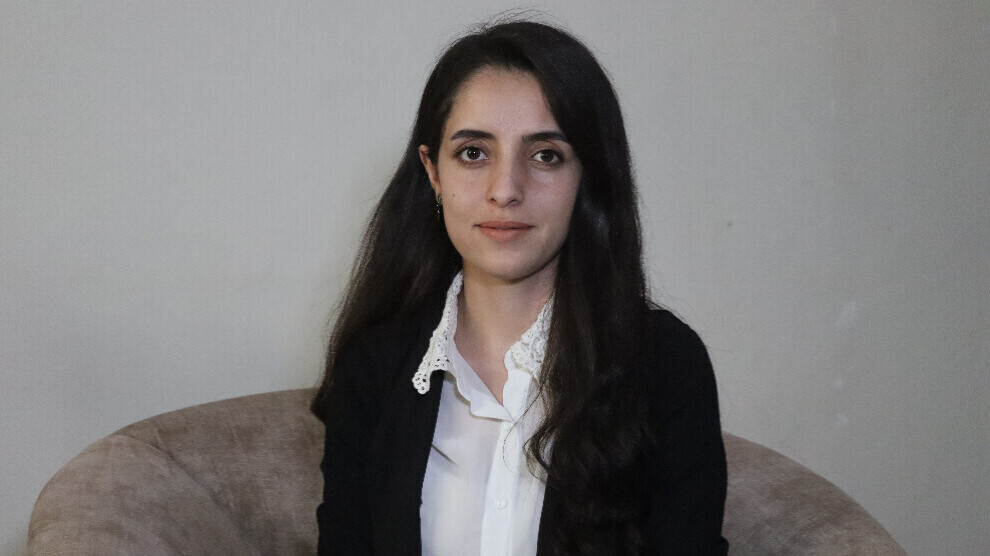
BARJAM JODI
KOBANI_ The language issue is considered one of the most promintent files linked to identity and cultural and national rights in Syria, and the importance of this file has increased during the transitional phase the country is going through, especially with the escalation of discussion about the from of the new state, the content of the constitution, and the rights of the various Syrian components.
In this context, Decree No. 13, issued by the interim government regarding the Kurdish language on the twenty-seventh of last August, sparked widespread discussion about the nature of official recognition of the Kurdish language and the limits of the rights granted by the decree, especially regarding education and the use of the language in public life and official institutions.
To learn about the content of this decree and the extent of recognition and rights it provides for the Kurdish language, and the international legal framework related to education in the mother tongue, our agency conducted the following dialogue with lawyer Rozif Kanno:
After the issuance of the decree by the interim government regarding the Kurdish language, this file has become one of the most prominent issues raised in Rojava.
How do you assess this decree? What are its most prominent contents, and to what extent is it consistent with the relevant legal frameworks and standards?
Decree No. 13, issued by the head of the interim government this year, includes a number of provisions related to the status of the Kurdish language in Syria. According to what is stated in it, the Kurds were dealt with as a minority, while the decree recognized the Kurdish language as a national language and approved the right to education in it. However, this right remained limited, as education in the Kurdish language was confined to Kurdish areas, and Kurdish was presented as an optional language, which placed it in a framework similar to languages that students can choose to learn alongside Arabic, instead of granting it an official status in the state.
This comes at a time when Syria is passing through a transitional phase, which raises questions about the extent of the continuity of decrees issued by the interim authority and guaranteeing their survival in the future. With the formation of a permanent government and the approval of a new constitution, these decrees may be subject to amendment or cancellation, which makes the rights contained in them subject to reconsideration. From this standpoint, it cannot be asserted that the Kurds have definitively obtained legal and constitutional guarantees ensuring their right to education in their mother tongue.
The Kurdish people's adherence to their language is linked to a long history of preserving and defending it, as the Kurds continued to learn their language and teach it to their children even during the era of the Baath regime, when they often had to do so secretly due to the restrictions imposed on them. During the past fifteen years, the Kurdish language has witnessed remarkable development; it is no longer limited to teaching reading and writing, but has expanded to include the production of literary, scientific, and educational materials, while successive generations have studied these materials and graduated based on them.
Accordingly, confining the teaching of the Kurdish language to a limited number of school classes or presenting it as an optional subject does not reflect, according to this argument, the development that the language has witnessed and does not meet the need for integrated education in the mother tongue.
There are many international agreements related to the right to education in the mother tongue. What are these agreements, and to what extent do they apply to Syria?
There is a legal framework in the world that includes a number of agreements and laws that guarantee, in countries that include multiple languages alongside the official language, the right of peoples to education and study in their original language.
In this context, it is necessary to distinguish between the existence of a right that is declared and the existence of legal guarantees that ensure its implementation. The mere declaration and recognition of the right to education in the mother tongue, without providing legal protection for it, keeps it within the framework of written texts without guaranteeing its entry into force.
The United Nations recognized in 1992 the right of different national groups within the state to education and study in their mother tongue, alongside a number of other international agreements and understandings related to linguistic rights. The UNESCO Convention of 1960 also rejects discrimination on the basis of language and recognizes the rights of peoples, while declarations on the rights of the child confirm children's right to learn and be educated in their mother tongue, in addition to dozens of other relevant agreements and declarations.
But when looking at the reality of the Middle East, it becomes clear that these laws, agreements, and declarations are not applied within states in practice; rather, some cases witness practices involving widespread discrimination against other languages and peoples.
The Kurds say that the language should not only be a national language, but must also have an official character. What does this demand mean, and what should be done?
According to Decree No. 13, the Kurdish language was not granted the status of the second official language in Syria, but was recognized as a national language. The importance of this stands out in light of the state's continued official designation as the "Syrian Arab Republic," which raises questions about the status of the Kurdish language in the state.
Recognizing the Kurdish language as a national language may allow teaching it as an optional language, but it does not grant it the status of the official language. Here, a distinction must be made between the two terms; the national language guarantees for members of the nationality the right to speak their language and express their identity, while the official status allows the use of the language in institutions, transactions, and official fields of the state.
Accordingly, the Kurdish language still faces restrictions in the official field, where Arabic replaces it in many transactions and official fields.
As a Kurdish lawyer, what kind of struggle and work is required in your opinion during this phase, especially regarding the language?
Syria is currently passing through a transitional phase witnessing many legal problems and violations, in light of the incomplete legal and constitutional framework of the country until now. In this context, the Constitutional Declaration defined the Kurdish people as a "component," which raises concerns about recognizing them and their rights as an authentic part of Syrian society, and the reflection of that on the Kurdish language and identity.
In light of this, a set of demands stands out, foremost among them including in the constitution a clear article stipulating the recognition of the Kurdish language as an official language, and recognizing the Kurds as the second nationality in Syria, given that they are the largest nationality after the Arabs.
It also demands that the teaching of the Kurdish language be made available in all Syrian governorates, and not be limited to Kurdish areas, alongside enacting a law that protects the Kurdish language from discrimination and holds accountable violations against it.
The importance of these demands increases in light of the discriminatory practices witnessed in the Middle East against some peoples and languages, which in some cases have reached policies aimed at erasing them.
Hence, the importance of raising these issues during the discussion of the constitution in the Syrian People's Assembly stands out, and working to draft a constitution that reflects Syria's pluralism and guarantees the rights of its various peoples and components.