
Dima Dabbous: Arab Feminist Networking Is a Necessity to Confront Transnational Discriminatory Laws
The “Hurua Coalition” represents an attempt to build cross-border feminist solidarity, addressing shared issues and developing more effective collective tools to confront the discrimination, violence, legal exclusion experienced by women in the region.
ASMA FATHI
Cairo- At a time when the crises facing women in the Arab region are escalating, rights battles are no longer confined within each country's borders. Many issues have become intertwined and similar—from personal status laws, to discrimination within the family, to the legal and social violence that women experience to varying degrees. This similarity has created a growing need to build cross-border feminist spaces capable of exchanging experiences, applying joint pressure, and confronting the regressions that threaten women's gains in more than one Arab country.
The "Hurra Coalition" stands out as one of the Arab feminist models attempting to build shared regional work rooted in the issues of women in the Arab region, rethinking mechanisms of solidarity and collective action beyond narrow geographical borders.
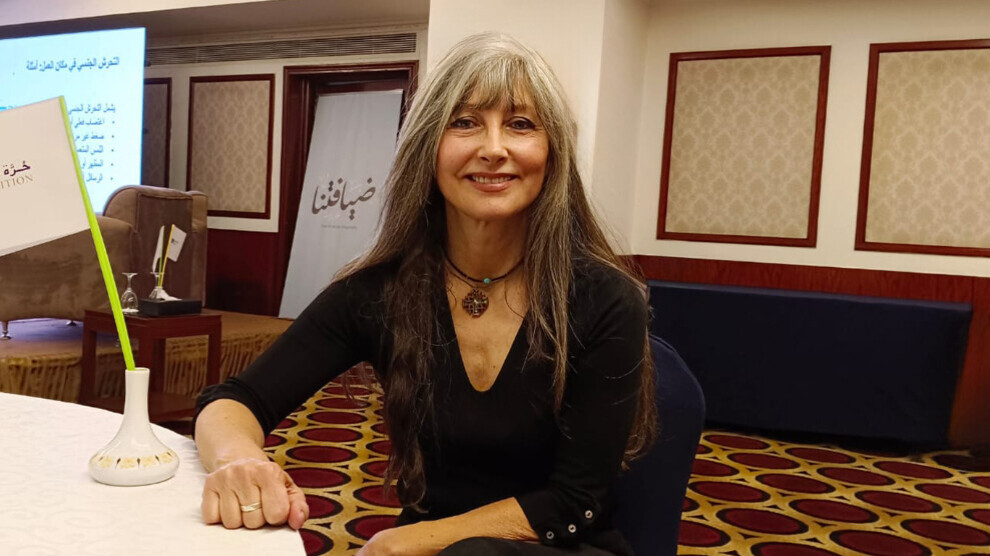
To learn more about the idea of the coalition, the nature of shared issues among Arab women, how regional networking can create tangible impact at the local level, the complex challenges facing collective feminist work, and the importance of building more participatory and democratic models within regional networks, our agency conducted an interview with Dima Dabbous, Regional Director for the Middle East and North Africa at "Equality Now."
How do you view the idea of the "Hurra Coalition," and what prompted this number of Arab feminist institutions to work together?
I see that the idea of the "Hurra Coalition" fundamentally stemmed from a group of feminist associations in the Arab world recognizing that we face shared problems. Even if we are talking about 22 Arab countries, there is a shared history, a shared culture, and often a shared religious reference that influences laws and societies.
Therefore, we found that there are issues that clearly unite women in the Arab region, and thus collective action on them allows for faster and stronger results than individual work.
Currently, we are close to 17 organizations spread across 9 Arab countries: Egypt, Lebanon, Palestine, Jordan, Iraq, Morocco, Algeria, Tunisia, and Bahrain. All these institutions came together because they believe that regional networking has become a necessity, not a luxury.
How do you view the nature of the shared issues facing women in the Arab region?
If we look, for example, at family laws in most Arab countries, we find that the fundamental problem begins with the concept of guardianship itself—that the man is always placed in first position, while the woman is placed in second. This idea alone is the key to understanding the scale of discrimination within family laws.
From here, many crises branch out: women lose custody much faster than men even if they are qualified; if she remarries, she may be deprived of her children while a man does not lose custody through remarriage. Also, in cases of divorce or death, there is no real recognition of what the woman contributed to building the family's wealth, despite her having participated in work, spending, and support for many years, yet in the end she may receive only the traditional inheritance share.
Even the concept of "house of obedience" still exists in some Arab countries to this day, despite us being in the twenty-first century. A woman may be a full partner within the family—working, producing, and contributing economically—but her legal rights within the family remain much less than men's rights.
This is why the "Hurra Coalition" came about—because we see that these issues are not separate from one another but are highly similar, and progress achieved in one Arab country can benefit women in other countries. For example, when Egypt abolished the article that allowed a rapist to escape punishment if he married his victim, we used this experience in Lebanon, Jordan, and Palestine to say: we too are Arab countries with the same cultural context, so we can fight the same battle and achieve the same change.
To what extent can cross-border solidarity create real impact on local issues?
We have very clear experiences in this regard. For example, when amendments related to religious personal status appeared in Iraq after the American occupation, discussions began about introducing laws that might allow broader polygamy, restrict women's inheritance rights, and bring back child marriage on a larger scale.
In Lebanon, we have long experience with religious personal status laws and the stark discrimination they produce against women. So we were able to transfer this experience to our partners in Iraq. We networked with the United Nations and UN Women, and we exerted external pressure to say that what is happening is a regression from the gains of the Iraqi civil code, not progress.
This type of networking really helped preserve some gains and prevent the expansion of some articles related to polygamy and child marriage within religious courts. Here, the importance of regional work becomes clear, because experience produced in one country can become a tool of protection for women in another country.
Speaking of regional work... what are the most prominent challenges you face as an Arab feminist coalition?
One of the biggest challenges we face is finding an Arab country that can host all coalition members. Sometimes we are forced to hold our meetings in Turkey, not because it is the closest option, but because it is the country where most Arab nationalities can obtain visas.
If we choose a specific Arab country, only four or five members might be able to attend, while others are prevented due to travel and visa procedures. This is a very significant challenge for us, because we believe in the importance of direct meetings and annual exchanges of experiences, stories, and successes.
The fact that holding an Arab feminist meeting within an Arab country has become so difficult is in itself a crisis reflecting the region's reality.
There are also crises related to collective work itself, such as competition and exclusion within some networks... how did you deal with this issue?
All those working in the feminist field know well that there is a competitive state within civil society. Part of this competition is understandable because it is linked to funding, especially as support sources decline year after year, and with decisions like the halt of some USAID funding, many associations have entered into greater competition over limited resources.
But there is also another type of competition related to claiming sole credit for successes—meaning that passing a law or amending a specific article can turn into a struggle over "who achieved this." Sometimes personal factors intervene in an unpleasant way within human rights work.
For this reason, we tried within the "Hurra Coalition" to build a different, horizontal structure. No one has greater authority than others, and even within the leadership committee, every member's voice is equal to any other member's, regardless of their position or institution's name.
For us, the presidency is not a privilege but a responsibility and additional work only. Therefore, there are no battles over positions. We decide together the issues we work on, the places where we meet, and our priorities as a coalition. This horizontal structure has created a space where everyone feels genuine participation and no marginalization.
What are the most prominent files that "Equality Now" is currently working on in Egypt?
We are working strongly on the issue of criminalizing child marriage, but we also believe that amending laws alone is not enough. Penalties may be increased or the act may be legally criminalized, but if societal awareness does not change, the problem will remain. Therefore, we are trying to work with local associations and reach remote and marginalized areas, not just major cities, because we want a change in thinking and mentality, not merely an amendment of legal texts.
We are also working on personal status issues from an intersectional perspective, especially regarding women with disabilities and mothers who have children with disabilities, because they face double challenges in accessing justice and obtaining rights within the family.
We always try to reach the most marginalized groups—whether women in remote areas or women with disabilities—because genuine human rights work must be able to see the groups that usually remain outside traditional circles of concern.
Amid the political and social challenges facing the Arab region, cross-border feminist experiences appear as an attempt to rebuild the concept of solidarity itself—not only as moral support but as a tool for pressure, experience exchange, and protection of women's legal and social gains. Many of the issues faced by Arab women share common roots, even if their details differ from one country to another, which makes regional networking a necessary space for developing more effective tools in confronting discrimination, violence, and legal exclusion.
Dr. Dima Dabbous's remarks reveal that regional feminist work does not only face battles related to laws or policies but also collides with the complexities of borders, funding crises, and competition within the human rights field itself. Nevertheless, building more horizontal and participatory models, and striving to reach the most marginalized women, remains an essential part of the attempt to create an Arab feminist movement more capable of sustainability and impact, and of transforming scattered local experiences into a collective cross-border force.