
"A Woman's Fingerprint Revolution" Initiative: The Voice of Mothers Harmed by the Jaafari Code
Activist Tahira Dakhel launched "A Woman's Fingerprint Revolution" to document Iraqi mothers' testimonies after the Jaafari Code took or threatened custody, conveying their voices worldwide and pressuring judiciary and parliament.
RAJAA HAMID RASHID
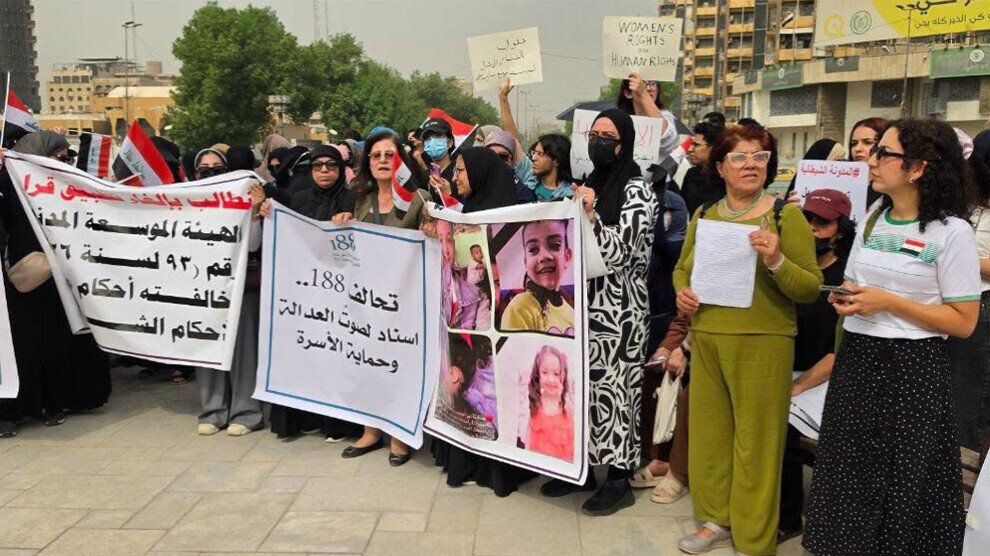
IRAQ– In an attempt to convey the voices of Iraqi mothers who were harmed by the application of the Jaafari Code, activist Tahira Dakhel launched the "A Woman's Fingerprint Revolution" initiative to document mothers' suffering through filmed testimonies, amid fears of abuse campaigns and legal prosecution, and complaints related to custody and depriving mothers of seeing their children.
The initiative aims to document mothers' experiences and suffering through short filmed testimonies, and transform them into documentary materials and awareness films published through social media, with the aim of shedding light on custody issues, the mother's right to see her children, and obtaining community and legal support for their demands.
Testimonies from Mothers
"S. F.," who preferred not to reveal her name to preserve her privacy, was surprised by her ex-husband converting their marriage contract into the provisions of the Jaafari Code based on Law No. (1) of 2025 to demand custody of the children, despite his lack of knowledge of the details of their school life or his previous efforts to see them. After all the mothers' appeals to parliament and the religious authority and protest stands failed without response, they resorted to the "A Woman's Fingerprint Revolution" initiative to convey their voices to the world, confirming that their only demand is to achieve the interest of the custodial child.
"Q. W." and her children were subjected to injustice as a result of being deprived of custody of her children without her knowledge or consent due to the retroactive application of the Jaafari Code. She explained that after knocking on the doors of clerics, politicians, and representatives, and demonstrating throughout the year in the streets of Baghdad without any response to their demands, she decided to raise her voice through the "A Woman's Fingerprint Revolution" initiative to convey her cause.
From Protests to Documentation
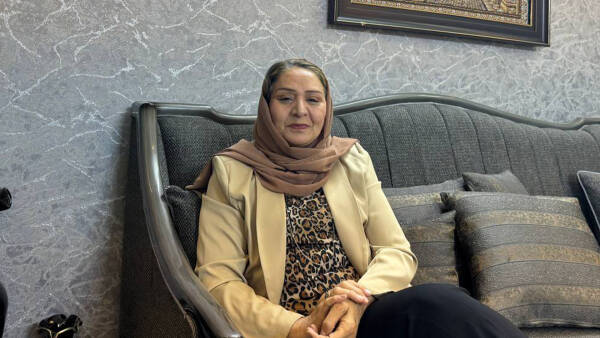
Activist in the field of women's and children's rights Tahira Dakhel explained that the idea of the "A Woman's Fingerprint Revolution" initiative came against the backdrop of the recent demonstrations in which Iraqi women came out to demand their rights and object to the injustice related to the Jaafari Code.
She said that during those demonstrations, women were subjected to abuses targeting the woman demanding her rights. She added that some abusers used images of women and modified them through various applications, or added offensive content to them, before republishing them.
She noted that these attacks were not limited to abuse through social media, but extended to women who spoke to the media about their conditions and problems with their former husbands, and the deprivation of custody of their children or seeing them that they were subjected to.
She added that some testimonies addressed the deprivation of mothers from seeing their children or the taking away of custody, in addition to complaints related to the violence that children may be exposed to while in the father's custody. She noted that some women have become anxious and hesitant to participate in protest stands or speak publicly about their experiences, for fear of being subjected to further attacks or legal prosecutions.
Four Appeals to Convey Mothers' Voices
Tahira Dakhel explained that the idea of the initiative is based on recording a short testimony for each woman, ranging in duration between one minute and four minutes, in which she introduces herself and explains the nature of her suffering and her appeal, according to her wish.
She explained that the initiative includes four tracks of appeal. The first is directed at Iraqi society, with the aim of enhancing awareness of the Jaafari Code and its repercussions. The second targets Iraqis residing abroad, to invite them to contribute to conveying the issue to public opinion, and to communicate with international humanitarian and human rights organizations concerned with women's rights.
The third track consists of appealing to the Iraqi judiciary to consider the complaints and concerns raised by women regarding the effects of applying the Jaafari Code on their family conditions and their rights related to their children.
As for the fourth track, it is directed at members of the Iraqi House of Representatives, with a special focus on female representatives, to invite them to support women and convey their suffering and demands to the concerned authorities.
Tahira Dakhel confirmed that Iraqi women face multiple economic and social challenges, and that depriving them of their child may double their suffering, especially when they lack the financial resources and family and social support necessary to confront these conditions.
Testimonies Revealing the Suffering of Mothers and Children
Regarding the testimonies that the initiative received, Tahira Dakhel said that she monitored, among 99% of the fingerprints that reached her, two recurring patterns of complaints. The first pattern relates to the mechanism of the father's visitation of his child, as some mothers indicated that the father may content himself with greeting the child when he arrives, then sit far from him throughout the visitation period, while the mother waits for the specified time to end.
The second pattern, according to Tahira Dakhel, relates to complaints from mothers who said they are deprived of seeing their children after custody is transferred to the father. She explained that some testimonies speak of the father moving to another city, changing the child's school and place of residence, in addition to some of them being subjected to pressures and threats when they ask to see their mothers.
Regarding the next steps of the initiative, Tahira Dakhel explained that work will continue on collecting and documenting testimonies, while preserving the mothers' voices, in preparation for producing a documentary film documenting their experiences, or turning some stories into animated films.
The initiative seeks, through the testimonies, to convey mothers' experiences to public opinion, and to shed light on the concerns they raise about custody and their right to communicate with their children, in anticipation of a response from the concerned authorities to these demands and complaints.