
Moroccan activist: The campaign to support YPJ reflects transformations in global feminist solidarity
The campaign to recognize the Women's Protection Units (YPJ) reflects transformations in cross-border feminist solidarity: moving beyond victims to recognize women as actors in protection, security, and community participation.
Hanane Hart
Morocco – Amid the rise of cross‑border feminist solidarity campaigns, calls have recently emerged for the official recognition of the YPJ in Rojava, within the debate on women's role in protection and community security issues in conflict zones.
These campaigns have been accompanied by messages of support and positions taken by activists, researchers, and feminist actors from different countries in the Middle East and Africa, bringing back to the fore the debate on forms of cross‑border feminist solidarity and the limits of its intersection with political and human rights issues linked to conflicts.
This interaction comes in a context marked by the growing role of digital platforms in shaping international feminist debates, as women's issues move rapidly from local spaces to the global arena through digital campaigns, statements, and video testimonies.
Moroccan human rights activist Souad Al‑Tawousi believes that the concept of cross‑border feminist solidarity has evolved in recent years from symbolic solidarity to a more complex solidarity closely tied to the human rights dimension. It has become concerned with different contexts and opens the space for women to express their own voices and experiences rather than speaking on their behalf.
She also pointed out that digital platforms have played a pivotal role in this transformation because they have helped transfer women's issues quickly from the local level to the international space. She explained that women in conflict zones are no longer isolated from global public opinion, as their testimonies or campaigns can turn into global issues through data, petitions, videos, and digital testimonies.
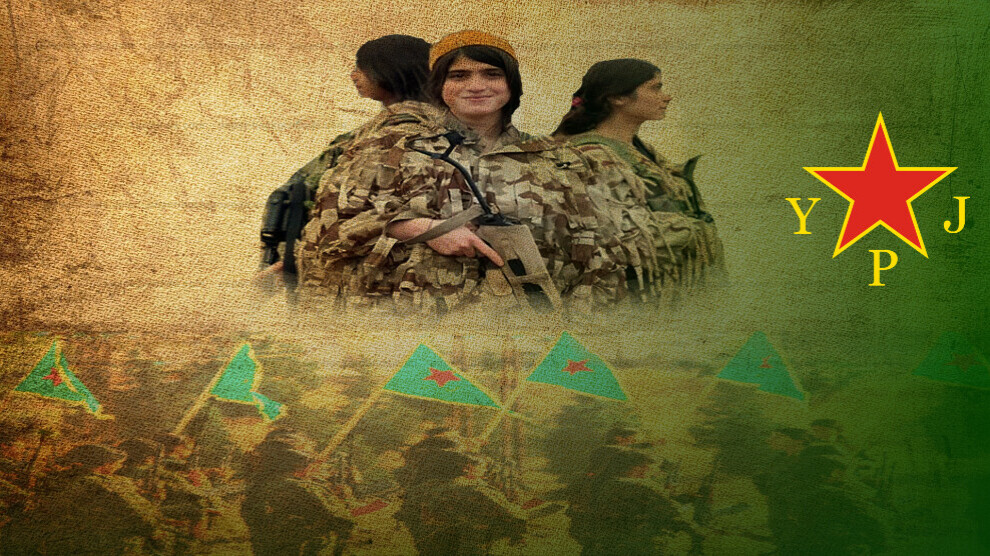
Speaking about the experience of the YPJ, Souad Al‑Tawousi said that the idea of creating women‑led protection units represents a distinctive experience within the transformations affecting women's issues in conflict contexts, considering that such experiences reflect women's accumulations that go beyond traditional approaches and the fragmentation of women's issues.
She explained that the experience of Syrian women in northern and eastern Syria, despite the specificity of the context in which it arose and the complex circumstances associated with it, simultaneously reflects issues of a global nature in which women intersect on many demands related to rights, dignity, and freedom, despite differing political and social contexts.
Souad Al‑Tawousi stressed that the gender approach helps to deal with women as actors capable of change and participation in reshaping their reality, pointing out that women in such experiences should be seen as collective actors whose capabilities and the role that cross‑border feminist solidarity can play in supporting their issues should be recognized.
She noted that the gender approach does not view women in conflict zones only as war victims or symbols of resistance, but as social and political actors living within complex structures of power and violence.
She stated that the experience of women's organizations in Rojava raises questions related to how women move from the position of protection or victim to the position of actor capable of influencing reality and redefining security concepts from a women's perspective.
She believes that differences in political, geographical, and cultural contexts should not lead to narrow approaches to women's issues, but rather to a more comprehensive understanding of their different experiences, as women, despite their different situations, share multiple forms of violence and marginalization.
She added that campaigns calling for the recognition of these women's organizations can be understood as part of the transformations in cross‑border feminist solidarity, where this solidarity is no longer limited to defending women as victims but has come to include recognizing them as actors in the fields of security, politics, resistance, and expressing their issues.
She said the strength of the gender approach lies in its ability to transcend direct political alignments and ready‑made media images, by reading women's experiences within their historical, political, social, and cultural conditions. She affirmed that cross‑border feminist solidarity does not mean adopting ready‑made ideological positions, but rather building a responsible critical understanding that recognizes the multiplicity of women's experiences and their right to produce their own discourse on issues of security, freedom, dignity, and justice, as full‑rights actors in accordance with international covenants and conventions.