
Purchasing Power Under Pressure... What Happened to the Iranian Economy?
The controversy over "Calaberg" has brought back to the forefront the file of the purchasing power of Iranian families, at a time when the economy faces multiple pressures.
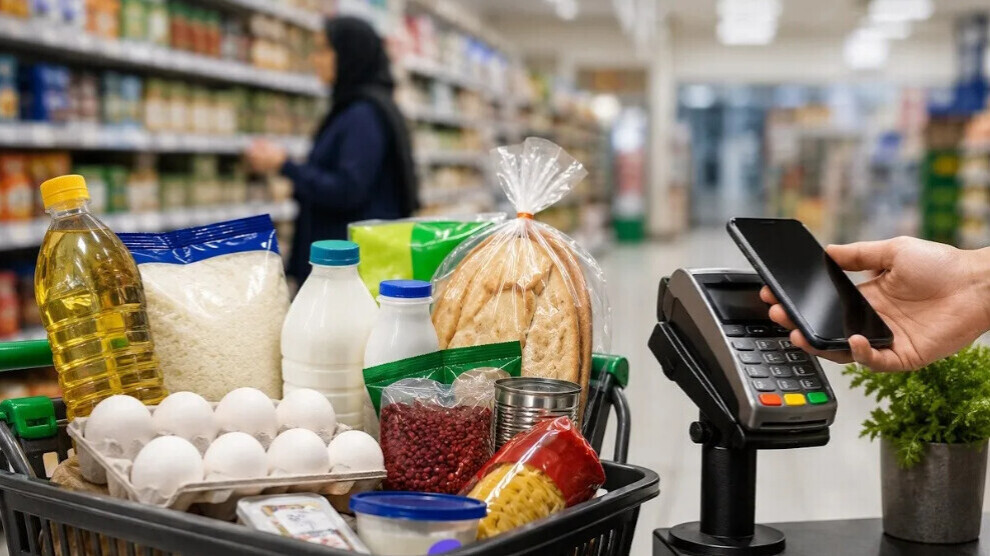
NEWS CENTER – A statement by Fatemeh Mohajerani, spokesperson for the Iranian government, during a press conference on 29 September, that "the commodity coupon is not for buying bufak," sparked a controversy that went beyond the issue of this product or even the function of "Calaberg" itself.
The statement came in response to a journalist's question about the possible increase of 300,000 tomans in the coupon balance, and whether it would be sufficient amid the continuous rise in prices. Fatemeh Mohajerani explained that the coupon is allocated for purchasing basic goods, while the amount of 300,000 tomans at that time was still a possible increase and had not been definitively settled.
But the importance of this incident lies in the question behind it: Why has an increase of a few hundred thousand tomans in government support become a fundamental issue in the discussion of the Iranian family's livelihood?
To answer, one must return to the economic situation that preceded the war, because interpreting the current crisis requires separating problems that already existed, the effects of sanctions, and the pressures added by the war.
An Economy Burdened with Problems Before the War
A World Bank report issued in April 2025 showed that the Iranian economy was already facing multiple pressures. Growth slowed, oil production declined under the impact of tightened American sanctions and lower Chinese demand, and the non-oil sector was affected by sanctions, energy shortages, and rising uncertainty.
But sanctions were not the only factor. The World Bank also pointed to weak investment and inefficiency in the energy sector, repeated electricity and gas outages, rising pressures on the state budget, and low labor force participation. The labor market participation rate reached about 41 percent, compared to only 14.1 percent for women.
These indicators reveal that the war did not begin in a stable economy and then overturn its conditions, but entered an economy already suffering from accumulated imbalances. At the same time, this does not diminish the impact of the war or sanctions; each of them can add new shocks to an already fragile economy.
Inflation Is the Core of the Purchasing Power Crisis
At the heart of this equation stands inflation. An increase in income or support does not mean a real increase in purchasing power if prices are rising at a faster pace. Therefore, the discussion about increasing the "Calaberg" balance is not in essence a discussion about 300,000 tomans, but about the actual value of this amount against living costs.
Calaberg is an electronic system of digital ration coupons or vouchers adopted by the Iranian government as an alternative mechanism to direct cash support, aiming to protect citizens' purchasing power and secure basic food commodities amid high inflation and the decline in the value of the local currency.
If the value of the coupon increases, while the prices of food, housing, treatment, education, and energy rise at a greater pace, then nominal support rises, but its real impact shrinks. Hence, the value of support becomes linked not only to its monetary size, but to what this amount can actually buy.
"Calaberg" is a tool to alleviate part of the costs of basic goods, but it cannot alone address inflation, weak investment, energy problems, or the budget deficit. Rather, the transformation of livelihood support from a complementary and temporary measure into a permanent element in the family income may in itself be an indicator of the decline in the purchasing power of ordinary income.
Sanctions, War, and Structural Problems
The Iranian economic situation cannot be understood through a single factor. Sanctions before the war pressured oil exports, foreign currency revenues, trade, and investment, while energy, budget, investment, and labor market problems existed independently.
As for the war, it added new risks to these pressures, including potential damage to infrastructure, disruption of trade and transport, increased government spending, declining revenues, and rising uncertainty. These factors can increase production costs and pressure prices and the real income of families.
This applies particularly to the energy sector. The electricity and gas crisis, lack of investment, and inefficiency existed before the war, and the war can exacerbate them, but they were not the reason for their emergence in the first place. The same applies to the state budget, which before the war faced pressures related to current expenditures, transfers, salaries, pensions, and the fluctuation of oil revenues.
The Problem Is Broader Than "Calaberg"
Therefore, the real question is not whether "Calaberg" is allocated for buying bufak or not, but why families have become more dependent on government support to secure their basic needs, and whether the value of this support is commensurate with the actual rise in living costs.
The answer cannot be obtained by comparing the coupon amount alone. What is required is looking at the relationship between prices, income, employment, inflation, investment, and government policies. Weak labor force participation, high production costs, energy crises, sanctions, and financial pressures on the state are all factors that directly or indirectly affect purchasing power.
Consequently, reducing the livelihood crisis to the war alone does not reflect the full picture, just as ignoring the impact of the war and sanctions would in turn be incomplete. Pre-war data clearly indicate that the Iranian economy was suffering from deep problems before the outbreak of the confrontation, while the war and external pressures can increase these problems in severity and scope.