
Iraqi engineer succeeds in manufacturing seven innovative medical devices
Sara Suhail Najm, Iraqi youth innovator, turned medical programming passion into seven locally-made medical devices in a few years, despite logistical challenges and limited resources.
Rajaa Hamid Rashid
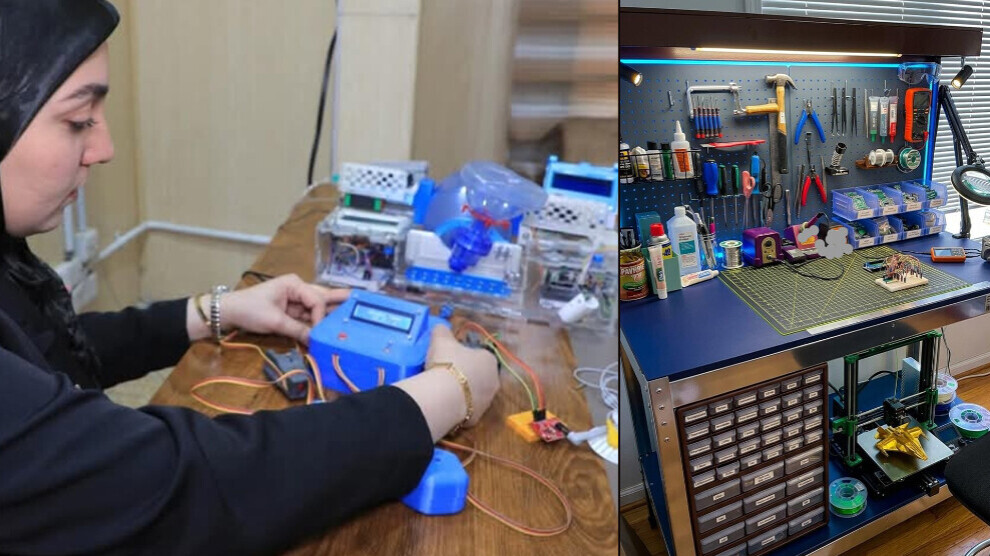
Iraq – Amid the challenges imposed by the COVID‑19 pandemic, young woman Sara Suhail Najm emerged as a model of ambitious youth in the field of medical innovation, as she succeeded in turning her passion for programming and "Arduino" technologies into successful medical projects serving patients and health institutions.
Sara Suhail Najm works as a medical device technology engineer and teaching assistant at the National University of Science and Technology in Dhi Qar, where she began her journey with programming through self‑learning, focusing on "Arduino" technology – an electronic platform used globally to build smart control systems through simple programming codes, and used in education, robotics, and medical applications.
From the COVID‑19 pandemic to medical innovation
Sara Suhail Najm said that the real starting point was during the COVID‑19 pandemic in 2020, when hospitals witnessed an acute shortage of medical devices. She noted that her uncle, who works in the Ministry of Health, would daily share with the family details of what was happening inside hospitals, which pushed her to think about manufacturing local medical devices.
She added that the first device she worked on was a patient monitor, which gave her the joy of first success, as it was used on a family member and also tested in the hospital, with the device's sensors operating using infrared (IR) technology.
She explained that she continued to develop her medical projects, designing a centrifuge used to separate blood samples in laboratories, before later moving on to manufacturing a ventilator, using Arduino technology to operate sensors and motors with high precision.
She indicated that most of the electronic components used in manufacturing the devices were available outside the city, while some parts were manufactured using modern printing technologies outside Iraq, which caused delays in their arrival and significantly increased production costs.
She affirmed that her specialization in medical device technology engineering contributed to developing her scientific and practical skills, explaining that the department provided her with the scientific foundation to understand medical devices and their development mechanisms.
Engineering ambition turns into medical achievements
Sara Suhail Najm explained that she was able to manufacture seven successful medical devices. The first was a vital signs monitoring device during the COVID‑19 pandemic, which measures blood oxygen levels, heart rate, and temperature, using remote measurement technology to reduce contact and prevent infection transmission between patients.
The second device was a laboratory device for separating blood samples, characterized by its low cost compared to imported devices, with similar operational efficiency. She also worked on manufacturing a prosthetic limb that was donated to an injured person.
She indicated that she also participated in manufacturing ECG, EMG, and EEG devices, affirming that all these devices were supervised by specialist doctors and achieved successful results.
She pointed out that her latest medical project was a device combining a vital signs monitor and a ventilator into one portable, easy‑to‑use system, capable of measuring breathing rate and monitoring the patient's condition according to their age and health status.
Challenges that stood in her way
Regarding the most prominent challenges she faced, Sara Suhail Najm explained that the beginning was the most difficult due to her weak programming experience and limited knowledge of electronic components, in addition to lockdown conditions and the difficulty of transporting components between cities during the COVID‑19 pandemic.
She added that the idea of manufacturing a local medical device by a student who had not yet graduated seemed difficult to many, noting that convincing some professors of her ability to succeed was not easy, but practical results proved her competence.
She spoke about her first experience using her medical device, saying she used the patient monitor on a family member infected with COVID‑19, describing her feeling at that time as great satisfaction, considering that seeing the results of her work after effort was the greatest reward she received.
She affirmed that she hopes, as a university teaching assistant, that her students will follow the same path of learning and development, and achieve better results than she did, pointing out that learning resources are now available to everyone online, on social media platforms, and YouTube, in addition to benefiting from university professors' expertise.
She indicated that the device that gave her the joy of first success will remain the closest to her heart because it was the starting point of her journey, while the graduation project was the most exhausting because it was an innovative project with difficulty in obtaining all the necessary tools for its execution.
She also revealed her new project with her students: manufacturing drones, despite being far from her main specialization, affirming that the experience represented a new step toward learning and acquiring additional skills, and that the team managed to achieve second place at the university level in student production exhibitions.
Sara Suhail Najm dedicated her achievements and work in manufacturing the seven medical devices to her family, who were her primary supporters, and to her professors and every patient who needs these devices and cannot obtain them.