
What are the repercussions of the economic crisis on the situation of Sudanese women?
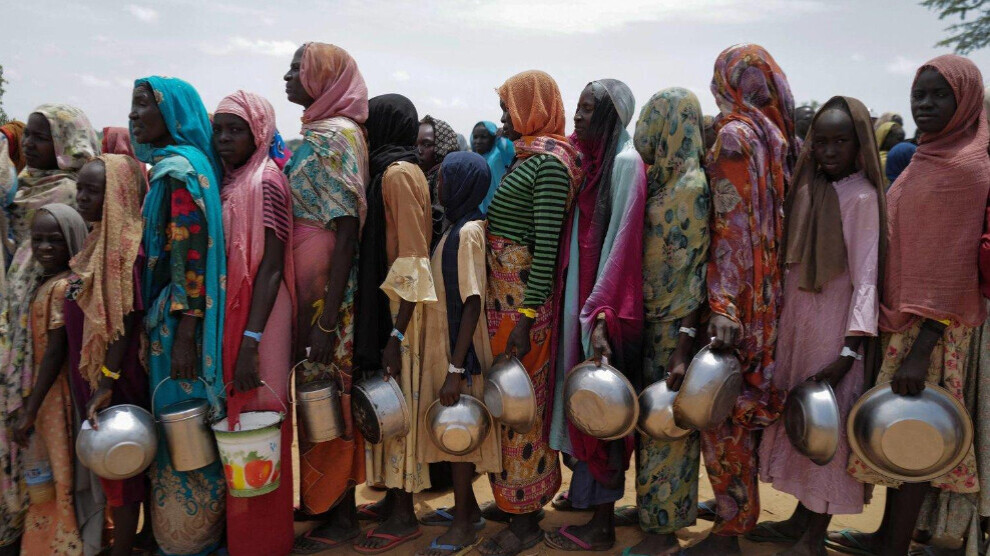
Sudanese women face complex economic and social repercussions from conflict, bearing double burdens inside and outside family, and increasing economic violence, complicating their role despite efforts to adapt to accelerating collapse.
Aya Ibrahim
Sudan – Sudan is currently passing through one of the biggest economic crises in its modern history, as a result of the conflict that broke out in 2023 between the Sudanese army and the Rapid Support Forces, and the resulting widespread collapse of the economic and living infrastructure. The dollar has exceeded the barrier of 4,000 Sudanese pounds, which has multiplied families' suffering in providing their basic needs. Fuel prices have also risen sharply, affected by the repercussions of the ongoing war between the United States, Israel, and Iran, adding a new burden on citizens.
Social specialist Amal Abdel Latif explains that the conflict in her country had complex and compounded economic effects that have greatly impacted women, considering that the post‑conflict economic crisis is one of the most severe crises in Sudan's modern history due to the collapse of the currency, resources, and government institutions, creating a huge economic burden on women. She affirms that many families rely heavily on women.
She stresses that Sudanese women play a pivotal role in the national economy and have always been among the groups most affected by social and economic crises. They bear the greatest burden within the family, and with the accelerating changes in the country, their role has become more complex, as they are now required to support the family and provide the minimum of basic services.
She believes that this situation places women before harsh challenges that make it difficult for them to provide a safe and stable environment for their families or even to meet their minimum needs.
Psychological and social repercussions
Regarding the economic violence women face, Amal Abdel Latif affirms that economic violence against Sudanese women has seen a significant increase after the outbreak of the conflict, explaining that many women were forced to enter the informal labor market after losing their basic jobs, searching for any alternatives that would enable them to cover essential needs or the minimum for living.
She points out that one of the most prominent manifestations of this violence is that holders of higher education degrees in shelters have resorted to simple work in markets, noting that some women find themselves forced to sell relief supplies they receive from organizations to meet their families' needs – a scene reflecting the scale of the economic pressures they face.
She believes that psychological and social challenges represent one of the most serious effects facing Sudanese women today, especially given their dual role of supporting the family and the absence of family support. This situation places them under accumulated psychological pressures that may, over time, lead to a decline in their confidence in their own abilities and potential due to their high sensitivity to their responsibilities.
She points out that these pressures are among the deepest problems associated with economic and social effects, as they directly affect children and lead to complex psychological problems that are difficult to deal with later, making the crisis multidimensional and not only economic.
Regarding how to confront the economic effects, Amal Abdel Latif says that Sudanese women have become socially, economically, and psychologically burdened, affirming that the economic and social crises are two sides of the same coin, and their repercussions have multiplied especially for women. Although the crisis has greatly burdened women, they "are still able to face challenges through multiple attempts," including establishing small projects and relying on their personal efforts, in addition to receiving support from some entities that help alleviate the economic burden.
At the conclusion of her speech, social specialist Amal Abdel Latif affirmed that women must play a major role in the economic recovery process in their country despite the challenges they have faced, pointing out that they have proven this role in previous times, even at the level of national recovery.
Brain drain and its impact on the economy
For her part, media professional and economic affairs enthusiast May Mansour believes that the mass emigration from Sudan since the outbreak of the conflict was among the first factors that "paralyzed" the country's economy. Business owners and pioneers of companies and institutions that formed an important part of the economic cycle left, leading to an "abnormal" decline in production components.
She points out that rising fuel and basic commodity prices have worsened the living situation, explaining that the agricultural sector has been severely affected because it relies on modern technologies that have become difficult to operate amid the conflict. She affirms that the economy has reached a stage of "complete collapse," which has been reflected on society in harsh and unprecedented ways.
In light of this collapsed economic scene and the extended repercussions of the conflict, Sudanese women appear at the heart of the storm, bearing double burdens and facing complex challenges that affect their living, psychological, and social lives. Despite the harshness of the conditions, their presence remains effective in the community's resilience and ability to continue, as they prove time and again that they are a fundamental pillar in protecting the family and supporting the local economy, and that their role will remain central in any path toward recovery and reconstruction.