
Rani Lakshmibai… the queen who refused to bow
In Jhansi, where memory mingles with legend, a statue stands of a woman undefeated by empire or time. She mounted her horse, raised her sword, becoming eternal symbol of resistance.
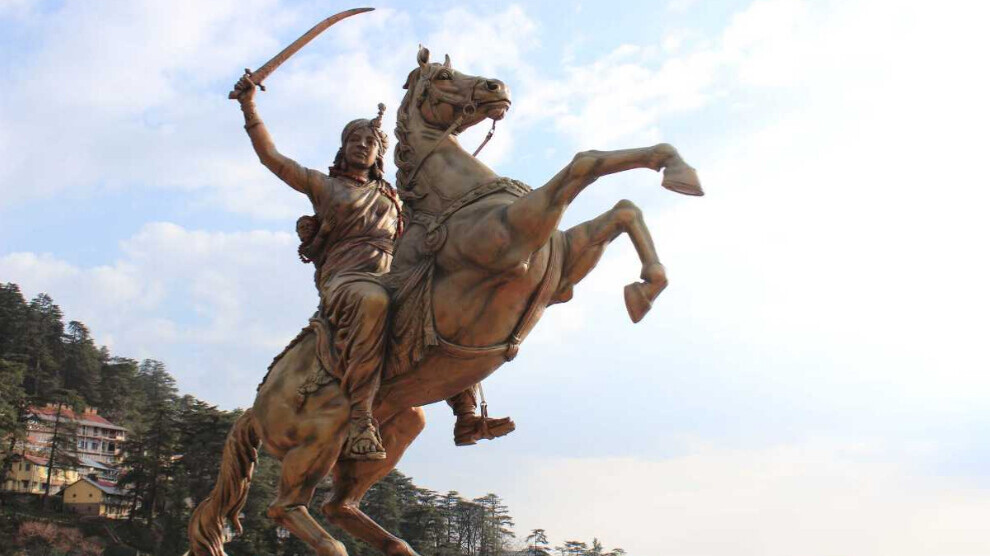
News Center – In the Indian city of Jhansi, a statue rises of a woman who looks as if she has just stepped out of a battle that has not yet ended. She rides a wild horse, her hair flying behind her like a spark of fire, her arm raised with a sword that glistens as if still cutting through the air. She is not just a queen, but a woman who carried her kingdom on her shoulders and refused to bow.
This statue does not tell a story of victory; it tells a story of determination. The sculptor did not wish to immortalize a static body, but a blazing moment of history: the moment of resistance that changed the course of India. Every bend in the horse's body, every clench of the queen's fist, suggests that movement has not ceased, and that the battle continues in the memory of the place.
Rani Lakshmibai (Manikarnika) was born in 1828 and was raised from childhood on horsemanship and combat. After her husband's death, the British tried to annex her kingdom by force, but she refused. She saw herself not only as a ruler, but as a shield for her people.
Then came the year 1857, the year of the great rebellion. When the flames reached Jhansi, the queen did not flee. Instead, she donned her armor, mounted her horse, tied her young child behind her, and plunged into the battlefield. This specific image inspired sculptors, and it is what the statue today embodies with all its power and momentum.
Rani Lakshmibai's life ended on the battlefield in 1858, fighting until the last moment. She was not defeated; she became a legend.