
The novel “The Mother” … A journey from submission to revolution
Maxim Gorky’s novel “The Mother” embodies a woman’s journey of transformation from fear and submission to awareness and resistance, against a social dominated by class divisions and exploitation.
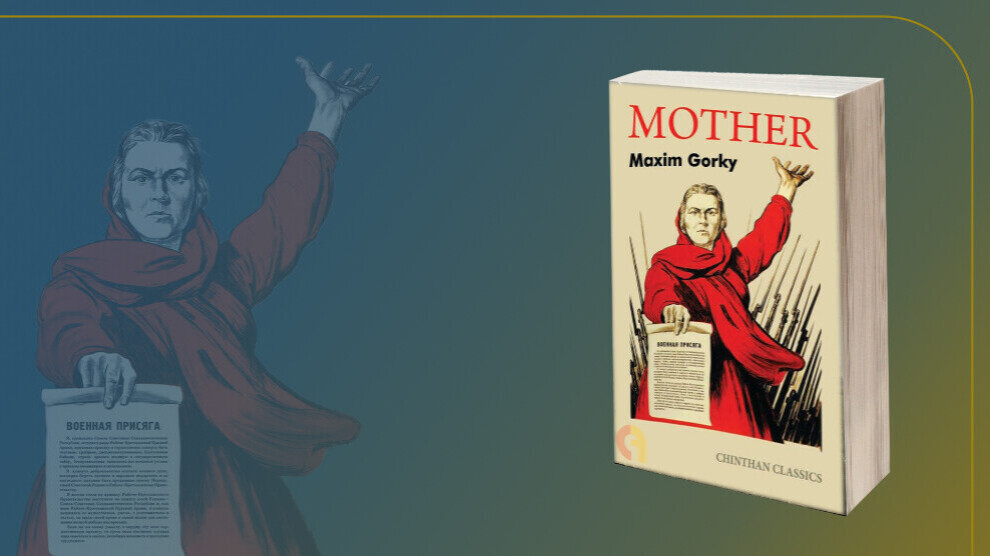
NEWS CENTER— Maxim Gorky's novel "The Mother," written in 1906 during his exile, is considered one of the most prominent literary works that addressed the social and political transformations in Russia at the beginning of the twentieth century.
The novel highlights the workers' struggle against capitalist exploitation and tyranny, through the story of Pelagia, who transforms from a woman subjugated by fear and violence into a conscious figure fighting for freedom, justice, and equality.
From a life of submission to awareness and struggle
Pelagia lives in an environment dominated by poverty, violence, and alcohol addiction, and suffers from her husband's abuse, accepting her suffering as an unchangeable fate. But after her husband's death, her son Pavel begins to move away from his father's life, turning toward reading and joining a group of young people who adopt socialist and liberationist ideas.
At first, Pelagia fears her son's activity and his comrades' ideas, but over time, through her participation in their meetings and listening to their discussions about human rights and equality, she begins to change her outlook on life, and gradually transforms into a supporter of them and their struggle.
From motherhood to revolutionary action
With the spread of socialist ideas among workers, Pavel is arrested because of his activity and his positions rejecting exploitation. Pelagia takes over distributing leaflets in his place, becoming an active part of the movement, transcending the boundaries of her motherhood to become a support for all her son's comrades.
After Pavel's release, he participates in the May First march, advancing the workers and carrying their banner, but he is arrested again along with a number of his comrades. During his time in prison, Pelagia learns to read and write, and continues spreading socialist ideas by delivering leaflets and books to village residents, becoming an activist who contributes to expanding social awareness.
The mother's resistance... the triumph of awareness over fear
During the trial, Pavel and his comrades defend themselves, speaking about human rights, the exploitation of workers, and social injustice, but the court sentences them to exile. Despite Pelagia's sadness, she feels proud of their stance and their steadfastness to their principles.
At the end of the novel, Pelagia is arrested while trying to distribute leaflets containing her son's speech. Despite being beaten, she continues to defend her ideas, throwing the leaflets into the air so they pass from hand to hand. This scene embodies the radical transformation in her character; from a woman who feared violence and kept silent to a woman who confronts repression with courage and steadfastness.
Women at the heart of the struggle for freedom and equality
The novel highlights women's role in social change, and presents Pelagia as a model of a woman who liberates herself from fear and submission through knowledge, awareness, and participation in struggle. It also affirms that women are not merely witnesses to events, but are capable of initiative, influence, and contributing to changing society.
Through this character, the writer Maxim Gorky shows how awareness can break the convictions that make injustice and exploitation an inevitable fate, and how motherhood transforms from a family role into a humanitarian and social stance.
Thus, "The Mother" not only narrates the story of the Russian workers' struggle, but also presents the story of a woman's liberation from surrender, and affirms that knowledge, awareness, and will are capable of transforming a person from a victim of reality into a force seeking to change it.