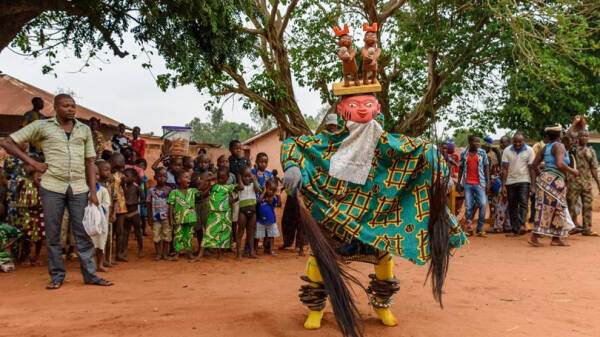
"Gelede"Woman as Symbols of Power and Memory
Not all masks hide faces;some reveal what is unseen. In Yoruba-Nago communities,Gelede rituais celebrate elder women's power in protecting society,preserving balance,and safeguarding collective memorey.
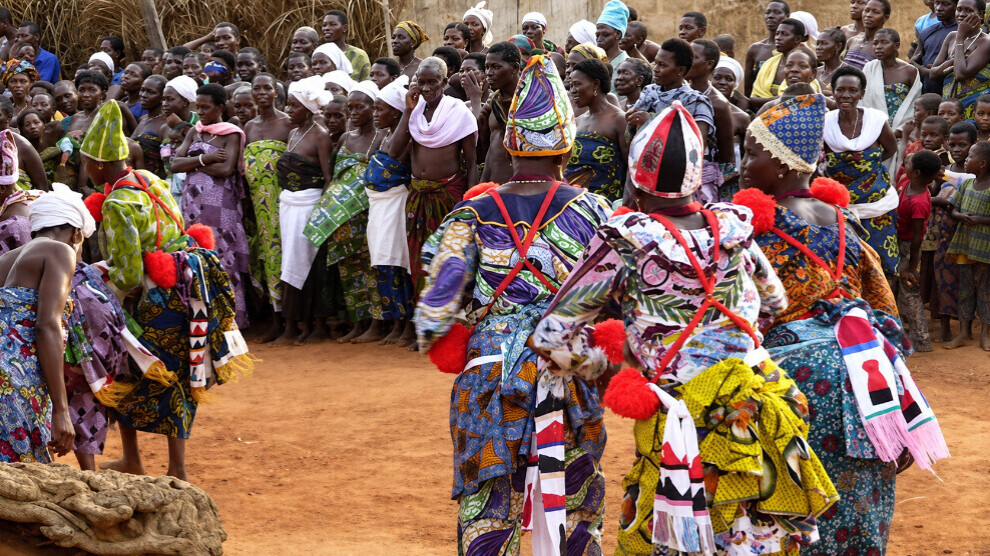
News Center_In many cultures around the world,women have been associated wih special rituals that preserve memory and transmit knowledge from generation to the next.However, some of these rituals have not merely documented women's presence but have made their power part of society's very balance.Among these traditions stands out the "Gelede" fistival.
In Yoruba communites in West Afirca,there is an ancient perception of a latent power inn women,especially elder women_a power linked to wisdom, fertility,and protection,yet simultaneously capable of becoming fearsome if balance within society is disturbed.
From this,Gelede was born_one of the most distinctive celebratory traditions of the Yoruba in Benin,Nigeria,and Togo.No precise date is known for its beginning;it was passed down orally through generations befor being documented and studied in the modern era.
This celebration is held annually after the harvest season or during times of crisis such as drought and epidemics,where squares transform into open theaters. The sound of drums rises,and masked figures appear in decorated costumes and large masks,moving amid singing and dancing .
At first glance,the scene appears to be colorful folk celebration. But behind these masks lies a much deeper story. It is a celebration of what Yoruba traditions call " The Mothers"_elder women of status,experience,and spirtual power. "Mothers" here does not mean mothers in the narrow famillial sense,but a broader image of women who hold symbolic authority within society.
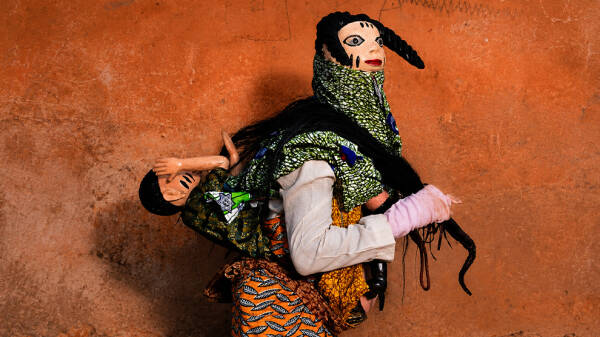
The Masks That Speak
Everything in Gelede carries meaning. The mask is not merely a face covering,the dance is not just movement,and the song is not simply music. Through the performances, stories are told,memory is reclaimed,community affairs are discussed,and even criticism and satire can be directed at behaviors,individuals,and social phenmoena.
Here,the square become a space where society can speak about itself to itself. Yet the most striking paradox is that who perform these masked characters were historically mostiy men. A man enters the square,hides his face behind a mask,wears cereminial attire,and begins to embody a world associated with the power of "the Mothers." As it the ritual says there is a feminist power that a man cannot possess,but he can acknowiedge its existence and celebrate it.
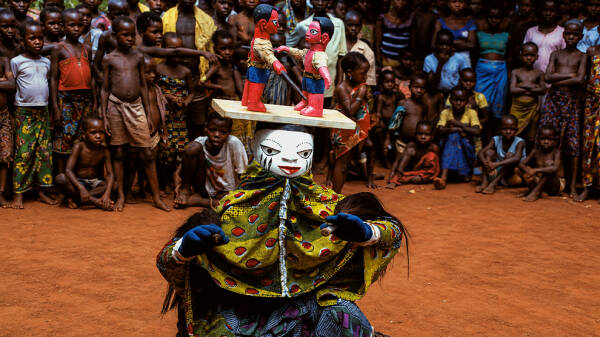
In traditional perception,this power can be protective of society.Therefore,honoring "The Mothers" is not merely a symbolic compliment to elder women_ it is an attempt to maintain balance between the individual and the group,between humans and the spirtual forces believed in by society. For this reason,Gelede has historically been associated with prayers for fertility,prosperity,protection,and the continuation of life and societal stability.
When Woman Become Society's Memory
Most importantly,Gelede does not place women in a single image. It celebrates the mother,the elder woman,the wise,and the one fo status,giving women's presence a meaning that transcends the body and familial roles. In a society where knowledge is transmitted across generations,"the Mothers" also become a bearer of memory.
In 2008,UNESCO inscribed the oral heritage and manifestations of Gelede on the Representative List of the Intangible Cultural Heritage of Humanity,as a tradition passed down among the Yorbua communities in Benin,Nigeria,and Togo.