
From Genocide to the Journey for Identity and Justice (4)
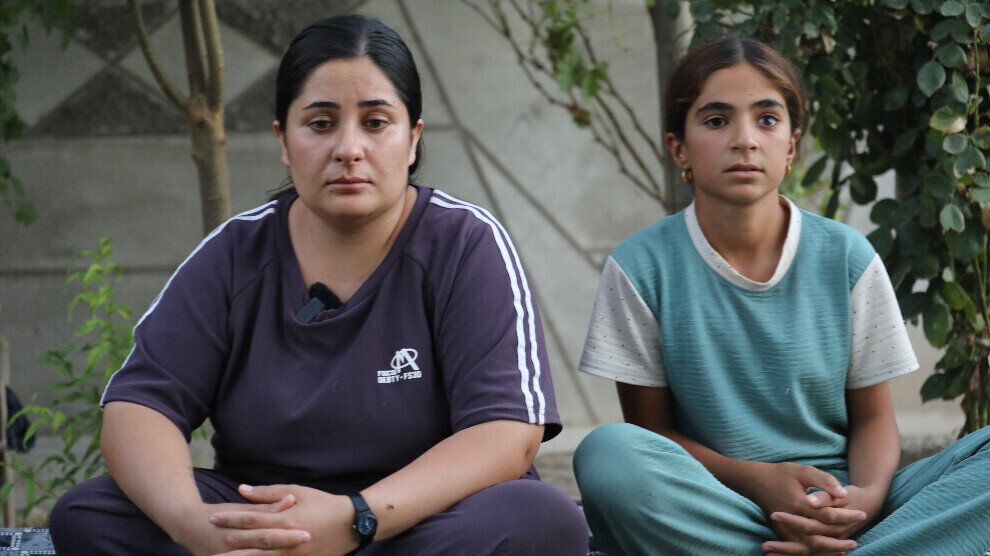
Nasreen Faisal Mi'a recalls the memories of the Yazidi genocide tragedy in lines filled with pain, noting the continued absence of her family members detained by ISIS, and their subjection to forced forgetting despite the passage of years.
"We Were Imprisoned for Forty Days"
JIHAN ZIMO & KILISTAN AZIZ
Shingal — I picked up my camera bag once more, and we set off on the road toward Shingal. Our destination was the village of "Siba Sheikh Khidr"—a place that holds in its memory one of the most painful and resistant chapters in Yazidi history.
There, on August 3, 2014, this place bore witness to the resilience of Yazidi resistance fighters, to the stories of martyrs and missing persons, and to the deep wounds left by the Shingal tragedy, whose effects remain present in people's memories.
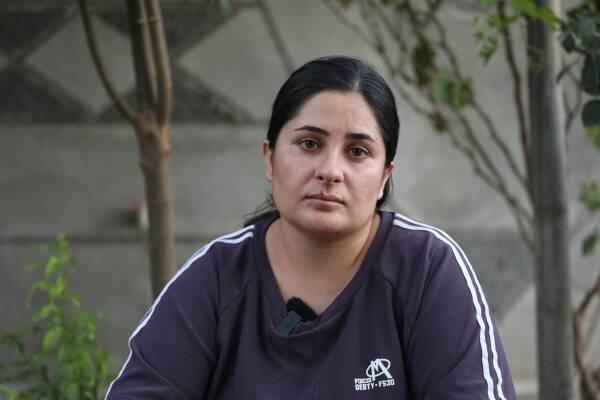
Among those stories, the villagers introduced us to a Yazidi woman named Nasreen Faisal Mi'a, one of the survivors rescued from the grip of ISIS. Her story carries the pain of years of suffering, but it also carries a voice that must reach the world. Her voice deserves to be heard.
After ISIS imposed its decree (genocidal campaign) on the Yazidis in 2014, many Yazidi girls and women were abducted and transported to various areas such as Tal Afar, Raqqa, and Mosul. Despite all the attacks, Shingal did not fall to ISIS and was liberated by Kurdish forces (Peshmerga). Following the liberation of Shingal, led by the People's Protection Units (YPG), the Women's Protection Units of Shingal (YJŞ), and the Shingal Resistance Units (YBŞ), efforts continued to liberate the Yazidis who had been detained. Thanks to these efforts, many women and children were rescued and returned to their region.
She Fell into the Hands of ISIS at the Age of Fifteen
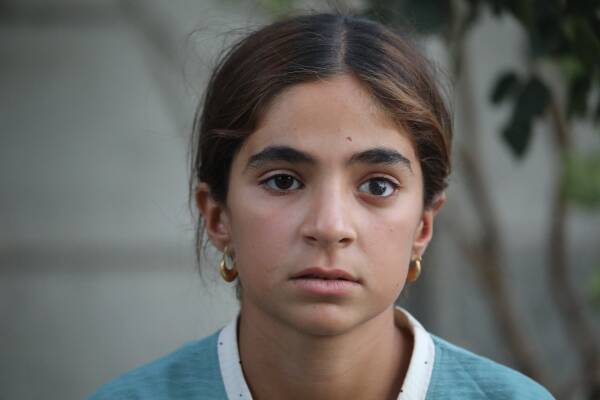
Some women managed to survive thanks to their families' efforts, among them Nasreen Faisal Mi'a. She and all 22 members of her family fell into the hands of ISIS. She was fifteen years old at the time.
At three o'clock in the morning of August 3, ISIS took control of the village of Siba Sheikh Khidr. They had no chance to flee, as they fell into the hands of ISIS before they could even leave the road.
ISIS gathered them and transported them to the village center, then took them to Shingal Park, where they separated the women, men, and children. After that, Nasreen Faisal Mi'a was transferred from Shingal to Tal Afar, and from there to "Badush" prison, where they remained for forty days.
She says: "Those forty days were extremely harsh; there was no water and no food. My little sister was constantly crying from hunger, and there was no milk to give her."
In Badush prison, they were told that those who had families should go to them, and they were then transferred to a school in Tal Afar. There, she was reunited with all her family members, and they were housed in one of the houses, where they were forced to sort and arrange the livestock and property that ISIS had looted from the people of Sheikhan. This situation continued for nine months.
One day, the ISIS members announced that the men should gather at the mosque. From that day on, the family was dispersed once again, and each individual was taken to a different place, with no one knowing anything about the others.
She adds: "After nine months, they returned us to Tal Afar. As for my father, they took him to another place. I, my sisters, my mother, and my aunts were left alone. Then they separated the young women and transported them to different places. Since that day, we have received no news of my father, nor of two of my sisters, nor of two of my aunts. To this day, the state has not informed us of anything about their fate. All we want is to know whether they are alive or dead. If they were killed, let them return their remains to us so we can visit them."
"They Gouged Out One of My Sister's Eyes"
Nasreen Faisal Mi'a and her sister remained alone in the grip of ISIS. She thought that if she presented her sister as her daughter, they would be freed.
She prefers not to speak of what she went through; her silence speaks louder than words. What she does not say, Nasreen leaves to the testimony of history regarding what Yazidi girls and women endured—being bought and sold in markets and subjected to brutal physical and psychological assaults at the hands of ISIS.
She was still a child at the time, yet she bore the responsibility of caring for her sister under harsh conditions. She says: "There was no milk; I tried to feed her with whatever milk I had. When they discovered that she was not my daughter, they tortured her brutally and gouged out one of her eyes before me."
She adds: "Now my sister lives with one eye, and seeing her like this fills my heart with pain and tears. Our situation was tragic, and we were subjected to torment every day."
https://jinhaagency.com/uploads/photos//12773/28-07-2026--NESRIN-e888e2pre.jpg
"We Were Detained for Forty Days"
We wanted Nasreen to speak more about her experience, but she avoids it. She says angrily: "What can I say? When Yazidi women were being sold, what could our situation have been? I do not want to speak further. They forced us to convert to Islam. When they went to battles, they would lock the doors on us."
She recounts: "On one occasion, we were detained in the house for 40 days without food or water." Later, she managed to contact her family, and through that, she was rescued. When she returned home, she found that her mother had also been saved. She says: "My mother raised us and cared for us alone, and she raised my brothers and sisters. It is extremely difficult when a father is absent. Our mother did everything for us and still makes many sacrifices to this day."
She adds: "We were initially afraid of rumors rejecting the return of female survivors from ISIS captivity, but our community embraced us with warmth and appreciation. I got married and had a child, and this great community support dispelled much of our pain." From the depths of this experience, she sends a message of hope and a sincere call to every Yazidi woman still captive, urging her to hold on to the chance of returning to her home and her people.
https://jinhaagency.com/uploads/photos//12774/28-07-2026--1-89eadapre.jpg
"Now My Two-Year-Old Sister Has Grown Up and Knows Nothing About Us"
One of Nasreen's brothers, Salih Mi'a, also returned, but he lost his mental faculties as a result of being severely beaten by ISIS, and due to his mental condition, he was released. However, there are still 5 family members counted as missing, and the family has no information about them. All they wish for is to hear any news that would reassure them.
Nasreen Faisal Mi'a says: "Whenever we approach the anniversary of the tragedy (the genocide), we relive those difficult days. No matter what we do, we cannot forget what we went through. My father, my sister, and my brother are never absent from my mind, and I tell myself that they are still in the hands of ISIS even now. When they took my little sister, she had not yet learned to walk, and she was not yet two years old. Now she has grown up and knows nothing about us. And my other sister is now 25 years old, and my aunts are in the same situation."
As the anniversary of the genocide approaches, the psychological burden intensifies, and the hours become heavier and harsher for Nasreen and all who share this pain. The demands are no longer a luxury; they are the most basic human rights—summarized in the urgent need to reveal the fate of the missing, and to ensure the return of all absent Yazidis to their homes, to close this painful chapter.
To be continued...