
A Woman Recounts Her Journey of Survival from the Attack on Suwayda City
Ghazala Al-Qintar recalls surviving Suwayda's attack: her father shot before her, a fearful treatment journey, and return after 17 days.
ROSHELLE JUNIOR
As-Suwayda — One year after the Suwayda massacres, the memory of survivors still holds the details of the harshest and most fearful days. Moments lived by many amid violations and displacement, while others found themselves facing limited options for survival and escape.
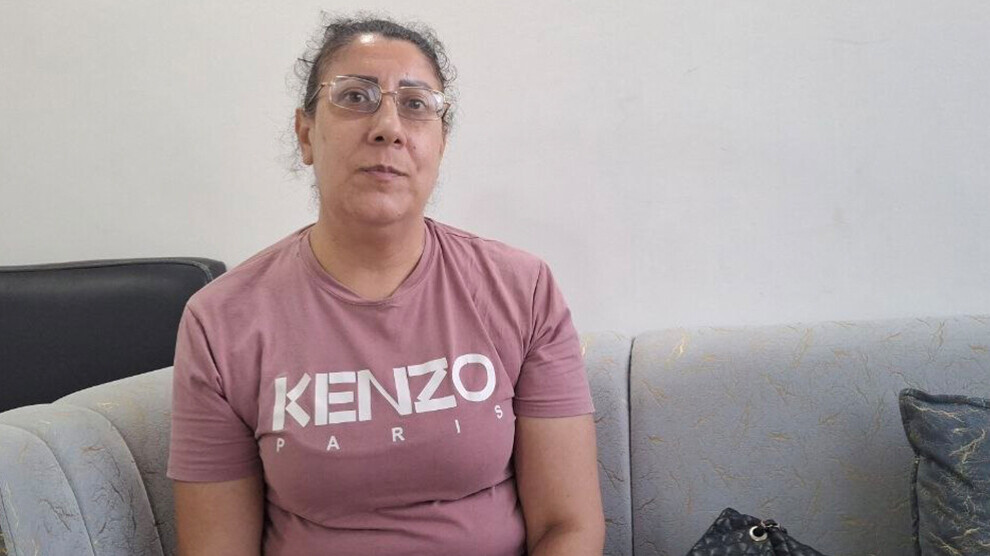
Ghazala Al-Qintar, from the village of "Dama" in the Syrian city of Suwayda, is one of the survivors for whom the details of those days remain vivid in her memory. She recounts how her story began on July 15, 2025, when armed groups entered her village, and how she found herself alone with her wounded father in their home, amidst a state of fear and chaos.
The Moment Her Father Fell Before Her Eyes
Ghazala Al-Qintar says that the village of "Dama" was almost empty of its residents that day, with only a few people remaining. She was at home with her father, 77 years old, when the gunmen entered the village.
When the first group from the General Security forces entered, her father was shot and fell to the ground before her, with no one able to reach the house to offer help. In those moments, she says, "other armed groups began entering homes, carrying all types of weapons, from heavy to light," while her family's home was looted, and mobile phones and other belongings were stolen from the house.
At the same time, Ghazala Al-Qintar was trying to save her father, providing first aid and attempting to stop the bleeding, until she transported him by car toward the village of "Jarin." She says that this Druze village was almost empty of its residents at that time, and had been transformed into a field medical center equipped to receive the wounded.
She adds that large numbers of medical staff were present in the village, along with ambulances and medical supplies, noting that this preparation left her with the impression that the place had been pre-equipped to receive large numbers of wounded, in anticipation of casualties during the attack and fighting.
Ghazala Al-Qintar notes that about four doctors examined him and informed her that his condition was stable, but that he needed to be transferred to a hospital to complete treatment.
A Treatment Journey Fraught with Fear
After "Jarin," her father was transported by ambulance toward "Al-Sanamayn" Hospital, but the vehicle broke down at the "Khabab" bridge, forcing them to transfer to a civilian taxi. She says that the driver, after learning they were from Suwayda, tried to reassure her, saying: "Don't be afraid, I am Christian."
She notes that this statement left a profound impact on her, asking: "Since when have we been speaking in sectarian terms?" considering that what happened reflected the extent of the fear and division people experienced during that period.
Ghazala Al-Qintar and her father arrived at "Al-Sanamayn" Hospital, where he received treatment, but his condition required urgent surgery, after which he was transferred to "Al-Mowasat" Hospital in Damascus.
There, Ghazala Al-Qintar felt that the danger had not ended. The hospital contained a number of wounded gunmen, which made her fear revealing her identity. She says she was unable to speak in her dialect or say she was from Suwayda, for fear that this might expose her and her father to danger.
She describes that period as one of the most difficult phases of the treatment journey, as she felt danger surrounded her from all sides while her father was undergoing treatment.
Hearing Incitement Against Druze
Ghazala Al-Qintar says she heard talk inside the hospital that included incitement to kill Druze, affirming that she saw a person she described as "a leader affiliated with the regime speaking and issuing orders to the gunmen in Suwayda to exterminate the Druze." She adds that what she heard made her feel that what was happening went beyond mere confrontations, and that she was facing rhetoric inciting against members of her sect.
She notes that her father underwent surgery and was then transferred to the emergency surgery department, where there were a number of wounded who had participated in the attack on Suwayda. She adds that the entry of gunmen into the hospital with their weapons to follow up on their wounded increased her sense of fear, while she tried to focus on her father and stay by his side.
Leaving the Hospital and 17 Days of Waiting
As her father's condition improved, Ghazala Al-Qintar managed to leave the hospital with him and headed to the Ashrafiyat Sahnaya area, where a family from their town hosted them. There, they remained for about 17 days waiting for the crossing to open and for the possibility of returning to Suwayda.
She says they later returned with the convoys heading to Suwayda, describing the road as dangerous and difficult, before they finally managed to reach their town. Ghazala Al-Qintar also speaks of a group of about 35 people from her village, mostly women and elderly.
She affirms that these people were subjected to humiliation and assault after the jihadists of Hay'at Tahrir al-Sham entered the village, especially those "wearing religious attire," noting that they removed their turbans and head coverings, threw them to the ground, and trampled on them.
A Year Has Passed... But the Event Remains Present
Despite a year having passed since the attack, whenever she speaks of those days, she is transported back to the same moments, as if the events had just occurred, by her description.
Ghazala Al-Qintar revisits the details of the moment her father fell before her, the fear of being kidnapped, the long journey between hospitals, the fear of speaking in her dialect, and the days she spent waiting to return to Suwayda. She describes what she experienced as a time when she was "on the edge of death," affirming that the fear that accompanied her during that period remains present in her memory to this day.