
Between Pain and Silence: The Suffering of Girls with Female Genital Mutilation in Sudan
Female genital mutilation persists in some Sudanese communities, causing severe physical and psychological harm despite criminalization and awareness campaigns, as conflict and instability hinder social change.
Mirvat Abdel Qader
Sudan — Female genital mutilation is one of the complex social issues that continues in Sudan to this day despite being criminalized by law and despite extensive efforts to eliminate it. When a girl in Sudan reaches the age of five or six and begins to understand the world around her, fear often enters her life. She is now at the stage when the circumcision procedure—an act involving the cutting and mutilation of female genital organs—is carried out to prevent her from “falling into immorality and bringing shame,” according to local beliefs and cultural perceptions.
In the past, women even took pride in circumcising their daughters. The procedure was preceded by numerous rituals similar to those of a wedding ceremony. Families would invite relatives and friends to attend the event, slaughter livestock, and hold celebrations, while the girl was prepared like a bride, including henna ceremonies and other preparations.
Before the midwife—known locally as the “daya”—arrives, the girl is decorated and prepared. Three or four women hold her firmly to prevent movement during the circumcision, which they refer to as “purification,” implying cleansing from “immorality.” During the procedure, women outside beat drums and sing loudly so that younger girls who have not yet undergone the procedure will not hear the child’s screams and cries.
Meanwhile, the girl’s mother or another female relative enters—not to comfort her, but to ensure that the midwife has performed “Pharaonic circumcision,” the most severe form of FGM. In this procedure, a large portion of the girl’s genital organs is cut using a sharp instrument, which the mother believes guarantees that her daughter will not have sexual relations before marriage.
Risks That Can Lead to Death
The dangers of FGM do not lie only in the pain of the procedure itself. Its risks often accompany girls throughout their lives, and some have lost their lives during this dangerous practice.
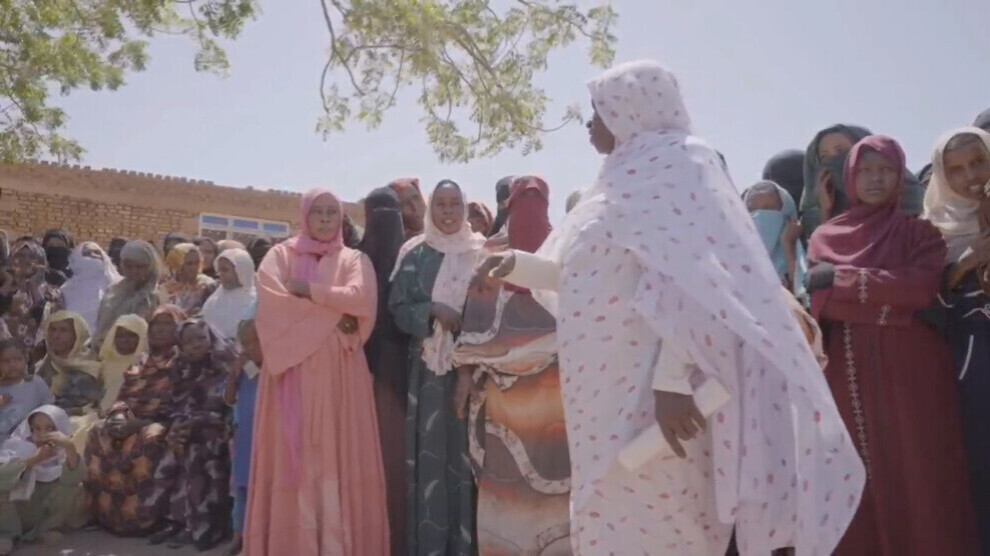
After witnessing the deaths of several girls due to circumcision, midwife Hasna Rahma Salem gathered women in her community in a village near the city of Al-Managil in Al-Jazira State, central Sudan, to raise awareness about the dangers of the practice.
In a statement to our agency, Hasna Rahma Salem said she was appointed as a midwife in 1980 to assist women with natural childbirth as well as to perform circumcision procedures on girls. She confirmed that many girls died after undergoing circumcision due to severe bleeding, and many passed away before reaching hospitals or health centers.
She addressed women in her village, explaining the dangers of circumcision—especially Pharaonic circumcision—on girls’ present and future health. She noted that the practice can cause uterine diseases, blockage of the ovaries, complications during childbirth, and even the death of the mother or the baby. It may also lead to the cessation of menstruation and various other health complications affecting girls.
Firdous Hassan, a nurse at a local clinic, also confirmed the dangers girls face due to circumcision, including death, infertility, disease, and difficult childbirth. She noted that the rate of circumcision has slightly declined compared to the past, when it was considered mandatory for every girl. However, some families and communities still cling to the practice and refuse to abandon it. She called on women in her community to give up this harmful tradition that leads either to the death of girls or to lifelong suffering.
A Psychological Counselor’s Experience with FGM
With a voice filled with sadness, psychological counselor Lubna Ali Mohammed spoke about the memory of her childhood friend who died during a circumcision procedure. She also lost another friend after childbirth, where the primary cause was complications resulting from circumcision.
She explained that she herself was unable to conceive for nearly ten years after marriage because she had undergone the most severe form of circumcision in Sudan—Pharaonic circumcision—which caused many difficulties in her life before and after marriage. She emphasized the serious health risks of circumcision for girls, including repeated miscarriages and other complications that may ultimately lead to death.
She added that eliminating the practice of female circumcision in Sudan is not an easy task, as many communities still strongly adhere to it despite official decisions banning it and campaigns led by international organizations and women’s institutions.
Statistics, Practices, and Laws
International and local women’s rights organizations have intensified campaigns calling for the abandonment of FGM. However, due to social resistance to these campaigns, the practice has sometimes continued secretly to avoid public scrutiny.
Female genital mutilation was officially criminalized in Sudan in 2020 under Article 141 of the Criminal Code. Those involved in the practice face up to three years in prison and financial fines. Penalties may also include the closure of medical facilities where the procedure is performed.
According to United Nations estimates, about 87% of women and girls in Sudan aged 15–49 have undergone some form of FGM.
In February 2026, the United Nations warned that approximately 4.5 million girls in Sudan are at risk of undergoing FGM this year. Meanwhile, Social Welfare Minister Salima Ishaq announced on 8 February the government’s full commitment to ending the practice by 2030, emphasizing the importance of protecting girls’ rights and preserving their dignity.