
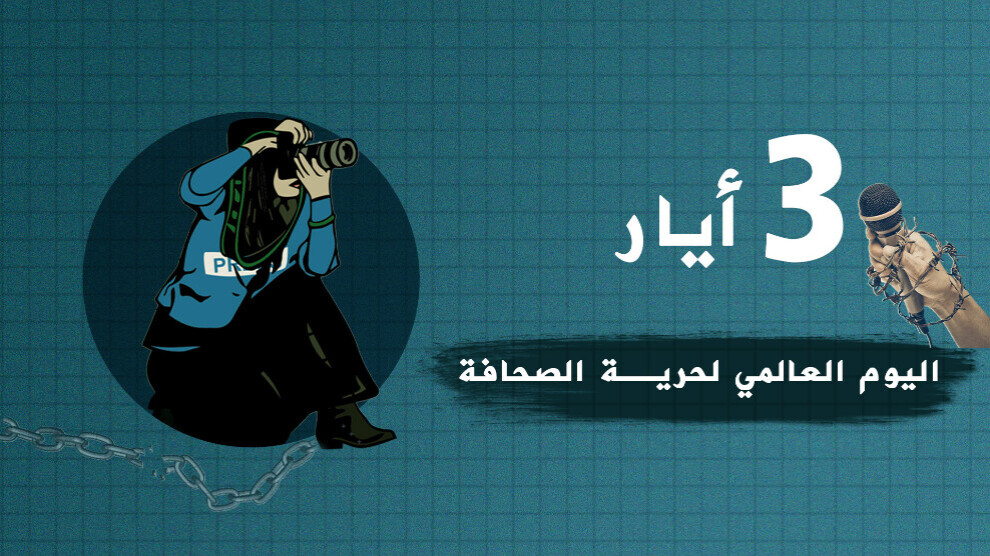
World Press Freedom Day... celebrating a memory that is assassinated every day
“Today’s world witnesses an unprecedented decline in press freedom: direct repressiion or silent restrictions. Between open wars, digital censorship, arrests, all journalists face an intergrated system serving the powerful’s interests.”
Ghadeer Al‑Abbas
News Center – Press freedom is no longer just a slogan raised on international occasions; it has become the last line of defense for truth in a world where events accelerate and narratives overlap. On May 3 of each year, the reminder is renewed that free speech is not a luxury, and that journalism is not a passing profession, but an essential pillar of any society seeking justice and transparency. Despite the tremendous technological development humanity has achieved, and the tools modernity has provided for accessing and disseminating information, reality reveals a painful paradox: the more possibilities for expression expand, the narrower the spaces available for it become.
On May 3 of each year, World Press Freedom Day is celebrated – an occasion concerned not so much with celebration as with reminding. Reminding that free speech is not a privilege but a fundamental right, and that journalism is not just a profession but a pillar of democratic society. Since the UN established this day in 1993, it has remained a mirror reflecting the state of media worldwide: where it advances, where it retreats, and who pays the price.
Despite the enormous technological development that has given journalists new tools to access and disseminate information, press freedom globally faces unprecedented challenges. Numerous international reports indicate that recent years have seen an increase in restrictions on media, whether through restrictive legislation, economic pressure, smear campaigns, or digital censorship.
In some countries, digital journalism itself has become a battleground, where surveillance technologies, website blocking, and cyberattacks are used to silence independent voices. Yet journalists around the world continue their work, driven by their belief that truth deserves to be told.
Journalism in war zones... truth is the first victim
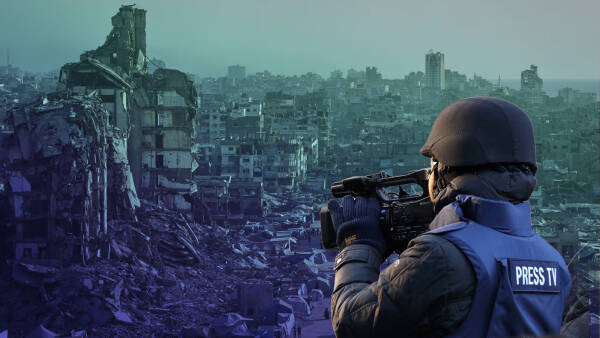
In every war, there are two narratives: the narrative of weapons and the narrative of truth. The first is manufactured by armies, the second is carried on the shoulders of journalists as they cross fire lines. But recent years have proven that truth is no longer just a collateral victim; it has become a direct target. As conflicts intensify in the Middle East, Africa, and Europe, journalism has become one of the most dangerous professions in the world, where journalists are killed not because they are a party to the conflict, but because they try to tell it. Moreover, there are no clear lines, no guarantees, no legal protection. Access to information becomes an adventure, and moving between areas may mean passing through armed groups that recognize only their own power. In this environment, every news story becomes a small battle, and every step a test of survival.
The situation in war zones shows that truth is the first victim. In 2025 alone, between 67 and 129 journalists were killed worldwide, with ongoing arrests and systematic targeting.
International reports agree that journalism has become one of the most dangerous professions globally, especially in the Middle East where open wars, political repression, and institutional collapse intersect. 2025 was exceptionally dangerous, described by international organizations as a year of rights violation and the entrenchment of impunity.
In the first quarter of 2026, the bleeding continued, with new killings recorded in Gaza, Lebanon, and Sudan, though a final tally is not yet available. However, according to documentation during April, several female journalists were killed in the context of escalating violence in the Middle East, especially in ongoing Israeli attacks on Lebanon, where three female journalists were killed.
Although statistics do not always distinguish between men and women, field reports indicate a noticeable increase in the targeting of female journalists, whether by direct shelling or during coverage from inside homes.
Journalists are targeted through killing, arrest, enforced disappearance, direct shelling, coverage prevention, in addition to the weaponization of laws to criminalize journalistic work. Most victims were in Gaza, Sudan, Yemen, and Ukraine. A large percentage of them are Palestinian female journalists, but reports do not provide exact figures.
Arrests... repression parallel to bullets
Killing was not the only threat. Arrest has become another tool to silence journalists. Arrest does not always come after a chase, nor does it need a legal justification, but it carries the same message as gun barrels: be silent.
The year 2025 saw the arrest of more than 500 journalists worldwide, according to Reporters Without Borders. China, Iran, and Myanmar topped the list of countries using arrest as a political tool to tighten their grip on the flow of information. In these countries, a journalist becomes accused before writing, a criminal before publishing, and threatened even if silent.
Female journalists in conflict zones not only face the same danger as their male colleagues, but a double danger. In addition to killing and arrest, many face additional threats including harassment, defamation, blackmail, targeting of family, and travel bans. Despite this, many continue to carry the camera and pen, driven by a deep sense of responsibility toward the truth and the conviction that silence is not an option. Arrest may stop the body, but it does not stop the idea. Bullets may pierce the camera, but they do not pierce the truth.
Conflicting narratives
In war and conflict zones, wars are not fought with weapons alone; there is a parallel war fought in the shadows – a war over narrative. The journalist finds himself at the heart of this battle, caught between conflicting narratives, each claiming to possess absolute truth. Warring parties – whether states, armed groups, or political powers – realize that controlling the narrative is no less important than controlling the ground. Therefore, they lavish ready-made messages on the media, exert direct and indirect pressure, and demonize any narrative that does not align with their interests. Often, the danger is not only on the front lines but also in newsrooms, where political and economic pressures clash with professional principles.
When press freedom declines without war
In some countries, press freedom does not need a war to decline. It is enough for the tone of authority to change, for official language to shift, for a new discourse to emerge that raises slogans like "protecting society" or "preserving traditions." Simple words, but they are used as a veil to reshape the media field to fit the power alone.
When official language changes, everything changes. The definition of "public interest" is reformulated, the boundaries of acceptable criticism are redrawn, some questions become "threats," some investigations become "defamation," and some opinions become "insults to values."
Under this umbrella, small but impactful steps begin: reducing open debate spaces, tightening censorship of "sensitive" content, imposing restrictions on field coverage, strengthening official or semi-official media, economic pressure on independent institutions. In this climate, journalists face a difficult equation: how to continue working without colliding with the new wall built not of stones, but of words?
Some choose caution. Some choose quiet resistance. Some continue writing as if nothing has changed, driven by the feeling that their role does not end at the limits of official discourse.
Freedom is not measured by noise
The silent decline of press freedom may be more dangerous than direct repression because it happens without everyone noticing. But journalism, by its nature, is capable of capturing these subtle shifts.
It is not only about reporting events, but also reading the general climate, monitoring the changing language, the narrowing spaces, and the questions that become forbidden without announcement. When discourse changes, journalists realize that their task has become harder – but also more necessary.
Thus, without war, without tanks in the streets or sirens, press freedom declines – silently, with small but steady steps. Unless society pays attention, it may wake up one day to find that truth is no longer a public right, but a privilege granted by authority to whomever it wishes.
Historical deterioration
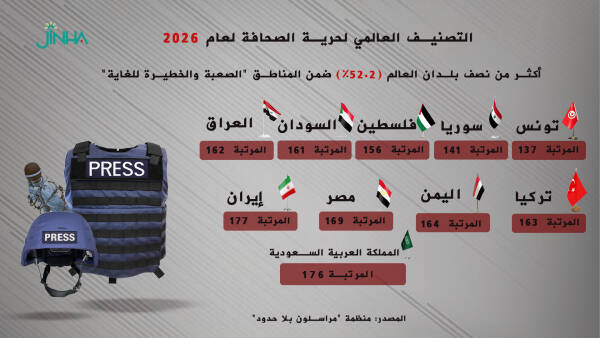
According to the 2026 World Press Freedom Index, Reporters Without Borders revealed an unprecedented historical deterioration in media freedom over the past 25 years. For the first time, the index placed more than half of the world's countries (52.2%) within the "difficult and very dangerous" zones, warning of systematic strangulation of journalism through an arsenal of restrictive laws.
In the Middle East, Syria ranked 141st out of 180 countries, while Iran ranked 177th, maintaining its position at the bottom due to internal repression and regional tensions.
Turkey (163rd) continued its decline as a result of the systematic use of anti‑terror laws and charges of "spreading disinformation," "insulting the president," and "denigrating state institutions" to suppress journalistic work and imprison media activists, according to the report. Iraq ranked 162nd, remaining in the dangerous zones due to security fragility and conflicts hindering independent journalism.
This decline is also attributed to the frequent outbreak of armed conflicts, as in Sudan (161st) and Yemen (164th), where ongoing wars left their clear mark this year.
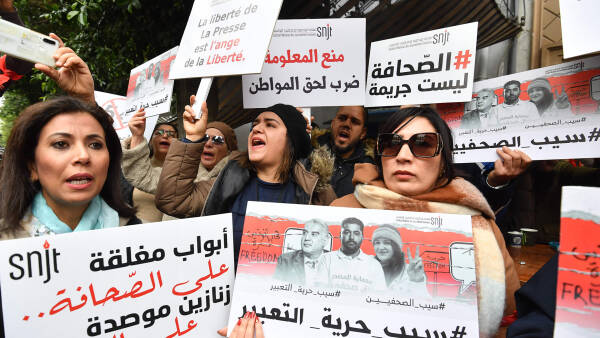
In North Africa, Tunisia (137th) does not escape this global trend of "legal warfare." Although Decree 54 on "spreading false news" is a key tool for criminalizing critical journalism in the country, the suspension of media outlets and repeated judicial prosecutions indicate an increasing use of the judiciary against professionals. Egypt ranked 169th.
Palestine ranked 156th, where the Israeli war on Gaza caused the loss of more than 220 journalists, leading to a 4‑point decline for Israel according to the report. Repression continued in Saudi Arabia, which dropped 14 places following executions and liquidations of media activists.
The United States ranked 64th, dropping 7 places compared to the previous year due to anti‑press rhetoric and sharp budget cuts for official media agencies.
The Reporters Without Borders report confirmed the "shrinking of good systems." Whereas 20% of the world's population lived in countries with a "good" press freedom situation in 2002, this percentage shrank to less than 1% in 2026.
Given this grim situation, it is clear that press freedom is no longer just a democratic indicator; it has become a test of societies' resilience against waves of repression and disinformation. Between killing and arrest, between overt censorship and that hidden behind the discourse of "protection" and "security," truth is under unprecedented pressure. Despite all the communication and openness tools modernity has provided, these very tools have often turned into means of censorship and restriction.
As conflicts and wars continue, restrictive legislation increases, and free spaces shrink, the question remains open for the world: Where is press freedom heading in an era that is supposed to be an era of modernity, yet witnesses a growing constriction of free speech?