
Tara Abdullah: Environmental protection begins with changing our daily behavior
Halabja's Directorate of Labor and Vocational Training in the Kurdistan Region launched an initiative to reduce plastic use, aiming to enhance environmental awareness and establish environmental protection responsibility among individuals and institutions
MEHRBAN SALAM
HALABJA_Environmental protection is no longer the responsibility of the competent authorities alone but has become a collective duty requiring individual awareness and practical initiatives that go beyond the limits of theoretical awareness.
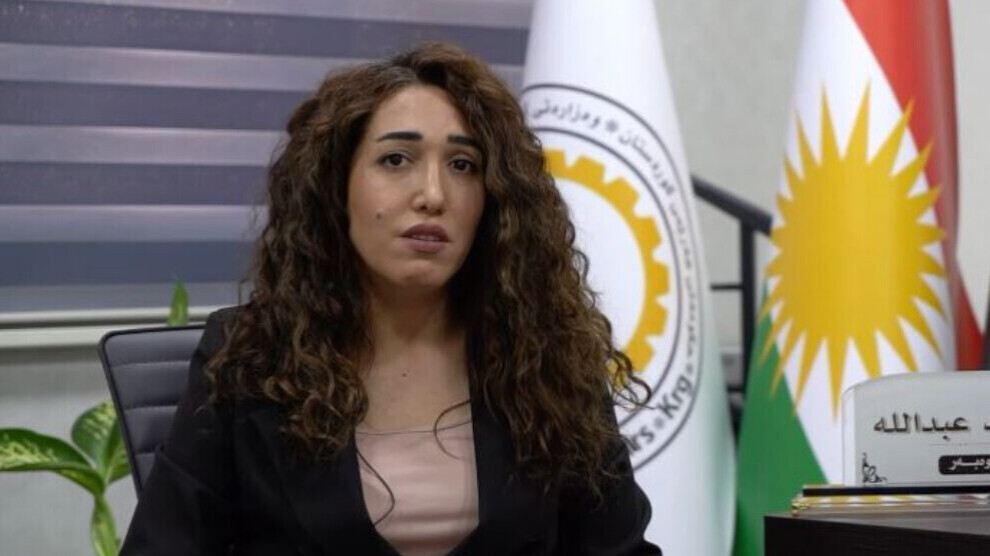
In this context, the experience of the Directorate of Labor and Vocational Training in Halabja in the Kurdistan Region stands out, having taken practical steps to reduce the use of plastic materials, at the initiative of its director, Tara Abdullah, who seeks to establish ann environmental culture that begins withing the institution and extends to its societal surroundings.
This initiative comes in response to the growing need to reduce plastic waste, especially that resulting from the activities and training courses that the directorate organizes continuously, in a step aimed at transforming environmental awareness from mere awareness messages into daily behavior and sustainable institutional practice.
Tara Abdullah, director of Labor and Vocational Training in Halabja, explains that the idea of the initiative started from the reality of work within the directorate. "We noticed that the vocational training courses we organize for young people cause, after their completion, the accumulation of large quantities of plastic waste, including water bottles and single-use plates and cups. From here, the idea of reducing plastic use began, and working to find alternatives that reduce the volume of this waste."
She adds that the directorate, in cooperation with the recycling center in Halabja, had previously organized awareness seminars for participants in the training courses, lasting between 20 and 30 minutes, addressing the importance of environmental protection and the means to preserve it. However, the conviction of the importance of moving from awareness to practical application pushed them to take a more serious step.
She says: "We realized that talking about environmental protection is no longer enough, and that the time has come to translate these ideas into tangible steps. Therefore, we decided to issue an official circular to reduce the use of plastic, and to prove our commitment through actual practice. I was the first to start implementing the decision within my office, before the employees joined me and participated in implementing this initiative collectively."
Moving from awareness to commitment
Tara Abdullah believes that the biggest challenge does not lie in making decisions, but in transforming environmental protection into an established societal culture reflected in individuals' daily behavior, affirming that humans are part of the environment and responsible for protecting it. "We must realize that we are part of our environment, that we as humans are responsible toward trees and nature, and that every individual must bear their responsibility and translate it into actions."
She pointed out that reducing plastic use has not yet become an established culture in society, which requires strengthening awareness and commitment to instructions and laws to ensure the continuity of these efforts.
She also stressed the importance of expanding the scope of the initiative to include organizations and bodies cooperating with the directorate, especially non-governmental organizations that adopt projects to protect the environment, stressing that coordination and collective participation contribute to enhancing the impact of the initiative and establishing sustainable environmental practices.
A collective initiative to reduce waste
Regarding the possibility that the decision could constitute an additional burden on the directorate, Tara Abdullah affirms that the initiative is fundamentally based on cooperation and participation, and is not a unilateral decision imposed by management on employees.
She explains that the continuation of environmental pollution and the failure of nature protection to become a general culture pushed her to bear greater responsibility in this field, especially with her continuous follow-up of climate changes and environmental challenges. "I was always keen to convey the importance of this issue to the employees, and to work on enhancing their awareness of their responsibility toward the environment. We have touched cooperation and positive interaction from them, which helped us transform the idea into a work program that we apply on a daily basis."
She affirms that the initiative's results were not limited to reducing the use of plastic materials within the directorate, but also contributed to reducing the accumulation of waste, which reflected positively on the work environment and reduced part of the daily burdens placed on cleaning workers.
"Humans are not separate from the environment"
Tara Abdullah expressed her hope that the initiative will continue and expand its scope, affirming that the step taken by the directorate represents a different model in dealing with environmental responsibility, based on moving from raising slogans to practical commitment. "We hope to continue working with this approach, for we have taken a different step in the field of environmental protection, and through it we have also been able to reduce the burdens on cleaning workers. Through our slogan: Humans are not an entity separate from the environment, but are part of it, we hope that our voice will reach everyone, and that every individual will realize their responsibility toward nature, and translate this realization into practical steps that contribute to protecting our shared environment."