
Nile Recession Poses New Economic Challenge for Sudan
The recession of the Nile's waters in Sudan is raising growing concerns about its impact on drinking water, agriculture, livestock, and fisheries, amid calls to study its causes and find urgent solutions to mitigate its economic and livelihood effects.
AYA IBRAHIM
Sudan — At a time when Sudan is grappling with the repercussions of the ongoing conflict between the Sudanese army and the Rapid Support Forces since April 2023, the phenomenon of the Nile's recession and declining water levels in several areas has emerged, adding a new challenge to the list of crises weighing on the country.
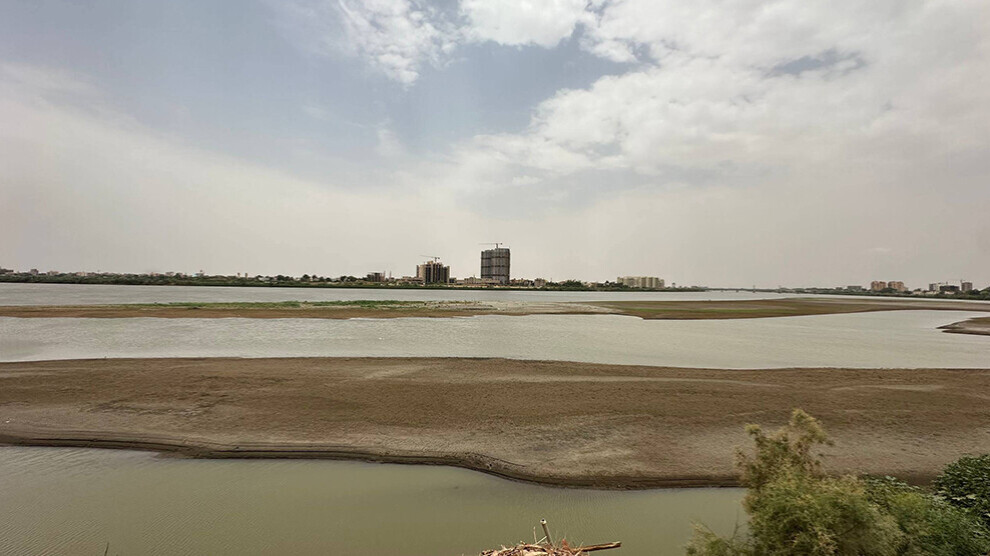
The appearance of large expanses of the riverbed and receding waters in various areas, particularly in states along the Nile's banks, has raised concerns about the phenomenon's impact on drinking water, agriculture, livestock, and fisheries, as well as its economic and livelihood effects on citizens.
The Nile River is a main artery of life in Sudan, as wide sectors depend on it for drinking water, irrigation of agricultural lands, livestock rearing, and fishing, in addition to its connection to a number of economic and productive activities. Any noticeable change in its water levels is a source of concern, especially given the exceptional circumstances the country is going through.

Direct Impact on Agriculture
Journalist and economic affairs specialist Rania Abdel Razek believes that the Nile's recession carries many negative effects, especially on the agricultural sector in the Northern State, which relies heavily on agriculture and Nile waters. She pointed out that the effects of the phenomenon have begun to appear in farmers' daily lives, through difficulty accessing the river and some being forced to travel longer distances to reach water sources.
She added that the continued recession of the Nile could directly impact the economy, due to damage to some agricultural crops that depend on the river's water, in addition to the rising cost of obtaining water. She noted that the coincidence of the phenomenon with the summer season further complicates the water crisis.
She stressed that the recurrence of the phenomenon requires intervention by relevant government authorities to conduct scientific and hydrological studies to determine its causes and develop appropriate solutions, especially since the recession has appeared in previous periods.
Concerns Over Drinking Water
The impact of the Nile's recession is not limited to agriculture; it can also extend to the drinking water sector, particularly in areas where water treatment plants rely on direct pumping from the river.
As the river's course recedes from pumping stations' intake points, some stations may face difficulty obtaining the required quantities, or their efficiency may decline, which could worsen the drinking water crisis and increase the cost of providing it to citizens.
The declining water levels also impose additional challenges on agricultural projects and farms along its banks, increasing burdens on producers and citizens who depend directly on water for their daily activities.

The phenomenon's repercussions do not stop at agriculture and drinking water; they extend to the livestock sector. Samah Abdullah, an employee in the Animal Health and Epidemic Control department at the Higher Council for Livestock, Fisheries, and Pastures in the Northern State, confirmed that the Nile's recession directly affects animal health, especially given that a large proportion of agricultural and pastoral activity in the state depends on the river.
She explained that the majority of herders are concentrated near the Nile's banks, so the receding water directly affects animals' access to water and fodder.
She pointed out that the recession of water can affect fodder production, which may lead to a decline in animals' health and the emergence of some diseases, which in turn affects milk and meat production.
Samah Abdullah warned that if herders are forced to seek alternative water sources, they may turn to unsafe or contaminated sources, which could affect animal health and immunity. In addition, moving animals from one area to another in search of water may expose them to stress, especially during periods of high temperatures.
Multiple Causes... Need for Scientific Study
Several factors intertwine in explaining the decline in Nile water levels, including seasonal changes in rainfall and water flows, climate and hydrological changes, in addition to the nature of water management and dam operations in the Nile Basin.
Changes in the water inflow from the Blue Nile, variations in rainfall rates in the basin's areas, along with storage and discharge timings in the dam system, can affect the quantities of water reaching Sudan. However, identifying the direct cause of the recession in each area requires field measurements and precise hydrological data, rather than attributing the phenomenon to a single factor.

Fish... Another Sector at Risk
In the fisheries sector, the effects appear more closely linked to water levels in water bodies and lakes. Rawda Othman, an employee in the Fish and Aquatic Life department at the Higher Council for Livestock, Fisheries, and Pastures, said that the fisheries and commercial fishing sector in the Northern State is based primarily on the Merowe and Nubia lakes.
She explained that the impact of the Nile's recession differs between the two lakes; Lake Merowe is affected by the decline in water inflow from the Blue and White Niles, while Lake Nubia still enjoys a relatively high water reserve, making the impact of the recession on it less pronounced so far.
She warned that continued water withdrawal and declining inflow could lead to future effects on fish stocks, noting that a decline in fish quantities would impact production and prices, and consequently the economic and living conditions of those working in the sector.
Rawda Othman believes that among the possible solutions are encouraging fish farming, along with expanding partnerships with supporting organizations and bodies, to help reduce reliance on natural fishing alone.
A New Challenge in a Country Exhausted by Conflict
As the conflict continues, production declines, living costs rise, and wide sectors of the economy are damaged, the Nile's recession adds a new challenge to Sudan, whose repercussions could widen if it continues for extended periods.
The matter is not only about declining water levels but is linked to a chain of effects starting from drinking water and agriculture, extending to livestock and fisheries, and then reflecting on prices, income, production opportunities, and water and food security.