
Tunisian Association Makes Independence the Key to Supporting Survivors of Violence
Tunisian civil society resists societal pressures, defending women and children with modest resources, providing support and empowerment to violence survivors.
ZOHOUR AL-MASHREQI
Tunis — Deep within Tunisia's geography, particularly in the southern governorates where social customs intertwine with economic challenges and a conservative environment imposes a specific reality on vulnerable women and children, violence is not merely a passing event but a vicious cycle fueled by social constraints that prevent victims from speaking out about their suffering.
In this complex context, the "Child's Voice" Association in the governorates of Medenine and Tataouine has emerged as a "bridge of safety" through which survivors cross toward independence. The association does not merely provide emergency solutions but adopts a strategy of "comprehensive accompaniment," seeking to break the shackles of isolation and stigma and to build new life paths for the most affected families.
Behind the Wall of Silence
To understand the dimensions of field intervention, one must first read the national figures that reflect the scale of the phenomenon. According to data from the National Observatory for Violence against Women, more than 15,000 cases of violence against women were recorded during 2024.
Reports indicate that 63 percent of these cases occur within the family sphere, making the "home"—which is supposed to be a refuge—the primary source of threat.
Regarding childhood, statistics from the Child Protection Delegation indicate that more than 6,000 notifications related to violations—including neglect, physical violence, and verbal and psychological abuse—have been received. However, these figures, however accurate, represent only the "tip of the iceberg," as a significant gap remains known as the "number of silence," where thousands of victims choose silence for fear of social repercussions or losing what remains of family stability.
The "Comprehensive Accompaniment" Model
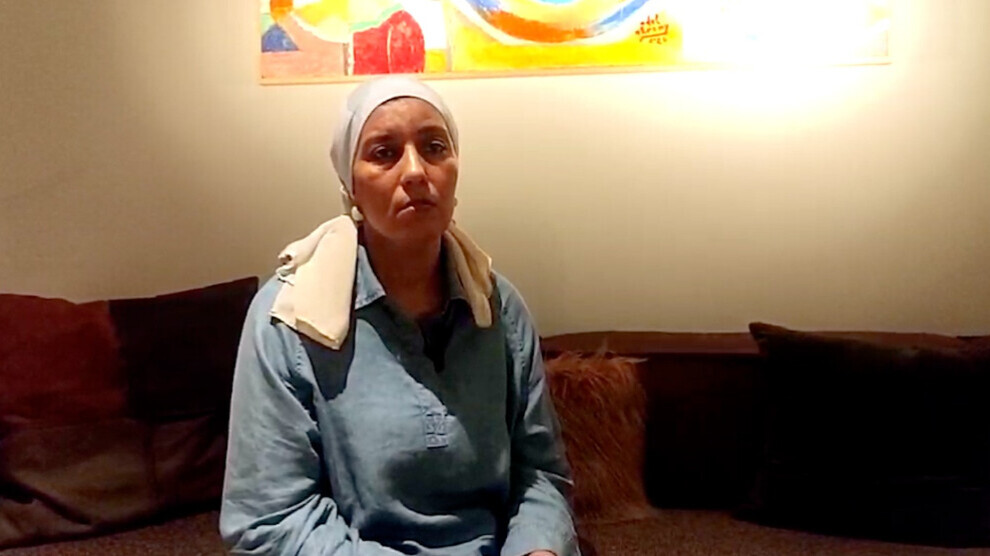
In Medenine and Tataouine, the "Child's Voice" Association has developed a working methodology that goes beyond traditional relief. Association President Ines Mlayeh affirms that the work is based on the pillar of "contractual commitment." She stated: "We adopt a holistic approach where our team, composed of social workers and psychologists, functions as an interconnected support network. We do not simply receive cases; we adopt life paths."
She added: "Our fundamental goal is to rebuild trust. Many of the women we accompany—whether they have voiced their pain under the label of direct violence victims or face harsh social challenges—first need to restore confidence in their ability to face the consequences of reality. Therefore, the 'accompaniment contract' is not an administrative procedure but a journey that begins with deep listening, moves through intensive psychological support, and reaches legal protection in courtrooms."
Confronting Administrative and Social Blockades
She reveals that the association's field observation has proven that the initial shock of violence is only the beginning of the battle. The victim later finds herself facing a dual "administrative and social blockade."
She explains this challenge: "The victim discovers that social stigma closes administrative doors before her, hindering her access to basic rights or the extraction of her documents. When we try to move to the economic empowerment stage, we encounter a bitter reality: small projects that could be lifelines—such as trade or handicrafts—face difficulty in social acceptance. Moreover, securing independent housing for these women becomes a problem in itself."
At this point, the association transforms into a "mediator" and "advocate," as a legal team and volunteers pave the rough roads before women, especially in sensitive files related to children's legal status or civil documentation that grants the mother and her child official recognition of their rights.
She emphasizes that vocational training programs for mothers are the true essence of sustainable solutions. Financial support alone remains a temporary solution, while economic empowerment is the key to permanent independence—which the association seeks to achieve through vocational training that ensures family income.
Testimony from the Field
A woman in her thirties, who was accompanied by the association for two years, recounts the details of her experience: "I was subjected to years of domestic violence that forced me to leave the marital home with my two children. I faced great difficulties in obtaining administrative documents in my name and encountered social rejection and stigmatizing views."
She added: "The intervention of the 'Child's Voice' Association was a turning point. It provided me with psychological support to regain my balance and legal accompaniment to regularize my children's civil status. It also enrolled me in a vocational training program in sewing."
She explained: "Today I run a small project from my home and secure an income for my family. Most importantly, I have regained my dignity and self-confidence. I realized that I am not a victim but a woman capable of building a future for her children."
Is the Work of Associations Enough to Break the Siege?
Through its cumulative experience, the "Child's Voice" Association concludes that the successful integration of vulnerable groups requires combined efforts.
Ines Mlayeh affirms: "It is not enough to have laws; the real challenge lies in 'community security.' The field accompaniment we provide is an attempt to bridge the gap between law and reality, but we need a radical change in society's view of these groups."
Today's reality raises a fundamental question: how long will the burden of accompaniment remain on the shoulders of civil society alone? In a society where some traditions may be harsher than the law, the existence of associations like "Child's Voice" becomes the first line of defense for women and children's right to life and dignity.
While nationally recorded violence figures remain alarming, the work of these associations remains a temporary "bridge of safety," awaiting bolder and more comprehensive public policies. The battle these women wage is not only for survival but for claiming a better future and choosing the path of confrontation over surrender to silence.