
Summer Centers in Houthi Areas... Militarizing Minds and Targeting the Young
Yemeni families struggle to shield children from Houthi summer camps that instill militant ideology, threatening young minds and turning childhood into battlegrounds.
RANIA ABDULLAH
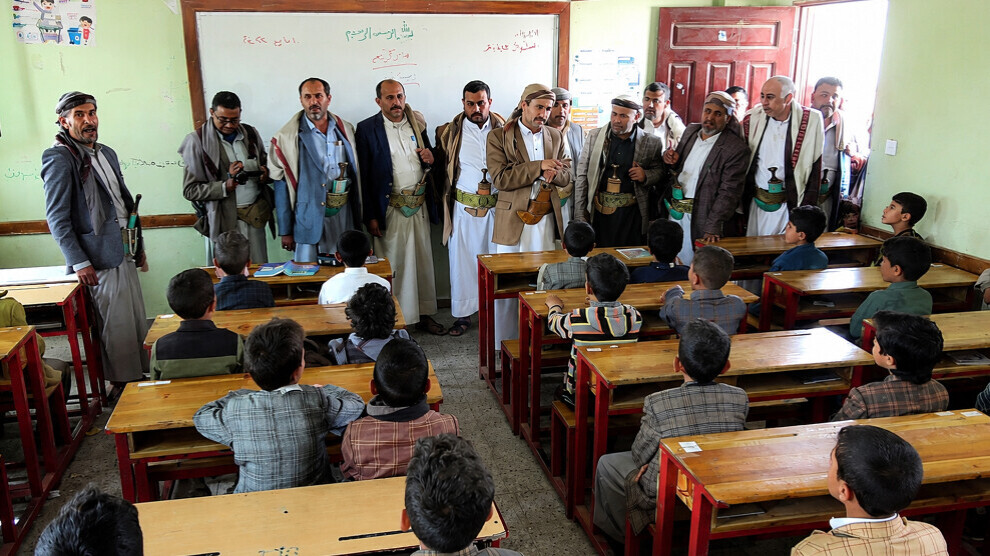
Yemen — Behind the walls of summer centers in Houthi-controlled areas, students do not learn communication skills, dictation exercises, handwriting improvement, drawing, or music. Instead, children and adolescents are taught how to "define the enemy," learn combat techniques, and attend intensive lectures on doctrine and religion according to the Houthis' own perspectives and ideas.
Maryam Ahmed's family, along with her husband and five children, resides in one of the Houthi-controlled villages in the Taiz countryside. They have exhausted every possible means to protect their children. Maryam Ahmed, a pseudonym for a woman who refused to reveal her identity for safety reasons, says: "In an environment that surrounds us from every side, w
e no longer know how to deal with the information and mobilization our children receive, whether in schools or in summer centers."
She adds with sorrow: "Whenever we hoped we would be rid of the Houthis and their recruitment of our children, they only expanded further. It has become very difficult for us to protect them from these ideas and beliefs that affect them and take them away from us."
Aggression and Jihad
Students there, ranging in age from 10 to 18, are subjected to curricula that include activities the Houthis describe as "faith-based, devotional, and cultural, derived from the culture of the Quran to correct misconceptions and confront the misleading ideas of enemies."
Child M.S.A., 14 years old, is one of thousands of children who enrolled in summer centers in the capital Sana'a. Throughout the summer vacation, he spent more than three hours daily inside the summer center, attending religious, doctrinal, and military lectures. He says: "We study the Holy Quran and its interpretation, as well as lectures of the Sayyid." The children's and adolescents' minds are also filled with military and political matters; from religious lessons to military lectures, the focus is on adapting the young people's thinking. The child adds: "What is most explained to us is about confronting the enemy and jihad, about betrayal and traitors in such times, and what punishment they deserve."
Media Monitoring
Our agency monitored the Houthis' official narrative, as Houthi-affiliated media published reports documenting the conclusion of summer course activities and programs held under the slogan "Knowledge and Jihad" (1447 AH / 2026 AD). Official reports from them reported the success of the subcommittee in attracting record numbers in Al-Hodeidah alone, where the Houthis announced that the number of male and female students enrolled in summer schools in various districts of the city reached 184,000 .
According to the Houthi media narrative, the ceremony included scout displays in which both the Yemeni and Palestinian flags were raised—a notable exploitation of regional issues in mobilization efforts.
Long-Term Effects
Haifa Al-Sharabi, Head of Activities at the Education Office in Taiz, southwestern Yemen—which is under the control of the internationally recognized legitimate government—explains that Houthi summer centers represent a growing danger to children, as their effects are not limited to a specific time period but extend for many years of the child's life, especially when they are directed from their early years toward a specific ideological thought.
She says: "We know that early childhood is a stage of psychological and cognitive security, a stage of discovery, exploration, research, analysis, and thinking. However, what happens inside these centers leads to the construction of distorted knowledge in children and makes them susceptible to intense intellectual direction, under pressures that push them to adopt specific ideas without giving them the opportunity to question or think freely."
She pointed out that the Houthis have focused their efforts on instilling ideas and values in children's minds, making it difficult later to rebuild their awareness or correct the concepts that have become entrenched in them. Over time, their opportunities for normal social interaction decline, and a state of rejection of others and intolerance toward coexistence or intellectual diversity emerges.
Widespread Warnings
Reports from international and local organizations highlight shocking facts about the exploitation of summer centers in Houthi-controlled areas. Human Rights Watch has documented the Houthis' expansion of child and adolescent recruitment through these centers, exploiting regional events to supply their camps and mobilize the youth ideologically and militarily .
Lawyer and activist Ghaza Al-Sameai considers the problem of child recruitment by the Houthis a flagrant violation of international humanitarian law and international human rights law. The danger of these practices lies in the fact that they may amount, legally, to war crimes, as stipulated in numerous international agreements and covenants.
She explained that the 1989 Convention on the Rights of the Child warned against recruiting children under the age of fifteen, and the 2000 Optional Protocol to the Convention on the Rights of the Child on the involvement of children in armed conflict further strengthened protection by raising the recruitment age to 18 . "What children in Houthi-controlled areas are subjected to represents a clear violation of these international obligations, especially with the continued recruitment of children under fifteen years of age."
Regarding legal accountability mechanisms, Ghaza Al-Sameai says that responsibility falls on leaders and those who select and recruit children. At the international level, the UN Security Council is among the most prominent bodies concerned with monitoring these violations and holding perpetrators accountable, alongside international organizations working to monitor these practices and defend and protect children's rights.
The battle of Maryam Ahmed and many families in Houthi-controlled areas was not born in the moment but has been an ongoing confrontation for more than ten years. Each time she thought deliverance was near, the years passed quickly, stealing her dream of preserving her children's innate nature and sound upbringing.