
Rufaida abdullah… A Sudanese Journalist Who Crossed the Lines of Fire to Document Violations
Sudanese women have paid the heaviest price in the conflict between the army and RSF since April 2023, facing widespread violations targeting their bodies, dignity, and security.
AYA EBRAHIM
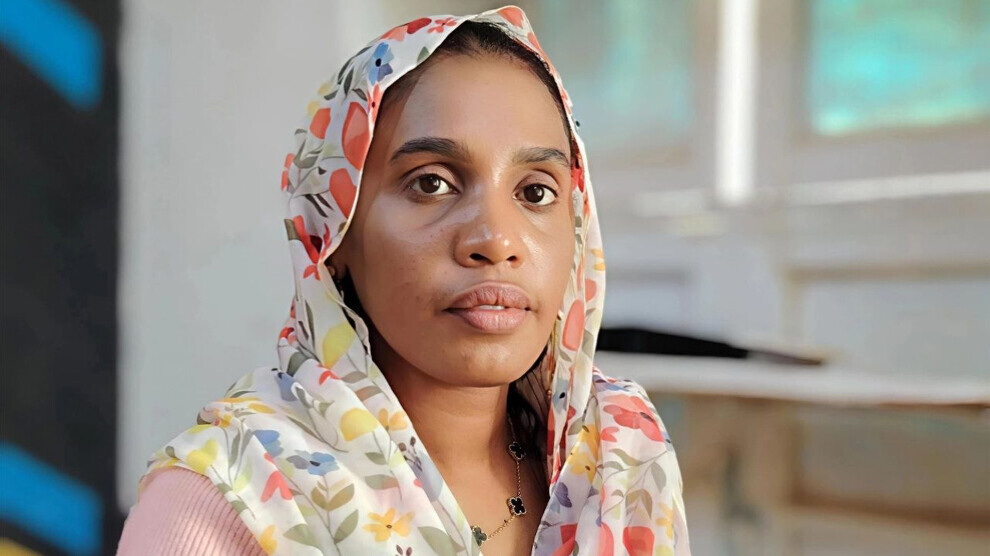
Sudan — In the midst of the harsh reality faced by the people of Sudan, journalist Rufaida Abdullah has emerged as a prominent figure. She left Khartoum after the fighting intensified, but she did not abandon her professional and humanitarian duty. Following the Sudanese army's recapture of control over Al-Jazirah and Sennar states, Rufaida carried her camera and notebooks and headed to the affected areas to document the systematic violations suffered by women and girls. This was a perilous journey, yet essential to uncovering the truth and giving voice to survivors.
Journalist Rufaida Abdullah explains that she worked to document the violations committed by the Rapid Support Forces (RSF) in Al-Jazirah and Sennar states, following the sharp rise in cases of rape, particularly in Al-Jazirah State, which recorded the highest number of such crimes. According to information she gathered from press reports, news, and documentary films, more than 500 cases of rape were documented, in addition to three deaths and 26 cases of miscarriage. She notes that the actual numbers are likely much higher due to the difficulty of accessing certain areas because of the security situation.
She speaks about the most difficult moments she faced while documenting survivors' testimonies, stating that in Al-Jazirah State she documented the case of a family whose three daughters, aged between 13 and 24, were subjected to gang rape by RSF forces. She describes the situation as extremely brutal: the violations began with the assault of the parents, the shooting of the brother, and the beating and restraint of the children. She adds that the youngest girl, aged 13, despite receiving psychological and medical treatment alongside her sisters, refused to return to school and has lived in complete isolation as a result of what she endured.
Psychological Impact and the Need to Support Survivors
Regarding the psychological state of survivors, Rufaida Abdullah confirms that it is highly complex, and that most are unable to resume their normal lives. Civil society organizations, through humanitarian and charitable initiatives, have been working to provide psychological support programs for survivors and for residents returning to their homes. However, a number of documented cases still refuse to integrate into daily life, particularly young girls who refuse to return to schools even after receiving psychological treatment from specialized organizations and psychological counseling units.
Rufaida Abdullah emphasizes the importance of a more aware society capable of accepting rape survivors, noting that society often refuses to engage with survivors and views them as a stigma, even though they are victims who bear no responsibility for what happened. She cites the case of one survivor who was married when she was raped; a doctor decided to perform an abortion to remove the fetus resulting from the assault, but her husband refused to accept the situation and decided to separate from her, even though she had committed no fault.
Based on her experience documenting RSF violations in Al-Jazirah and Sennar states, she stresses the need to launch widespread awareness campaigns targeting society, particularly regarding understanding the nature of rape crimes during conflict and treating survivors as victims of a coercive crime rather than as parties responsible for it. She affirms that the country is experiencing harsh conflict conditions, which requires society to show greater solidarity and awareness of women's rights.
Rufaida calls for recognition that women are not a party to the conflict, and that battles should not be fought on their bodies nor should they be used as a means of revenge or pressure. She also calls on civil society organizations to intervene urgently to protect women and rescue them from ongoing violations.
A Perilous Journalistic Journey
Rufaida Abdullah explains that her work documenting violations in Al-Jazirah and Sennar states exposed her to significant dangers, especially while moving between states. She entered areas where fighting was still ongoing and, at times, found herself caught between two warring forces, making her mission fraught with threats.
Rufaida Abdullah emphasizes the pivotal role that journalism must play in uncovering facts and documenting violations, especially given that documentation efforts have so far been insufficient. She stresses the need to organize awareness campaigns that remind all parties that women and children are not parties to the conflict, and she calls on human rights organizations and journalistic entities to maintain equal distance from all sides and to work collectively to end the war and support the path to peace.