
Qamishlo at 100: A Century of Growth, Diversity, and Transformation
From a small settlement established by the French in 1926 to a major cultural and economic center, Qamishlo’s history reflects the diversity and transformation of Syria’s Jazira region.
NAGHAM JAJAN
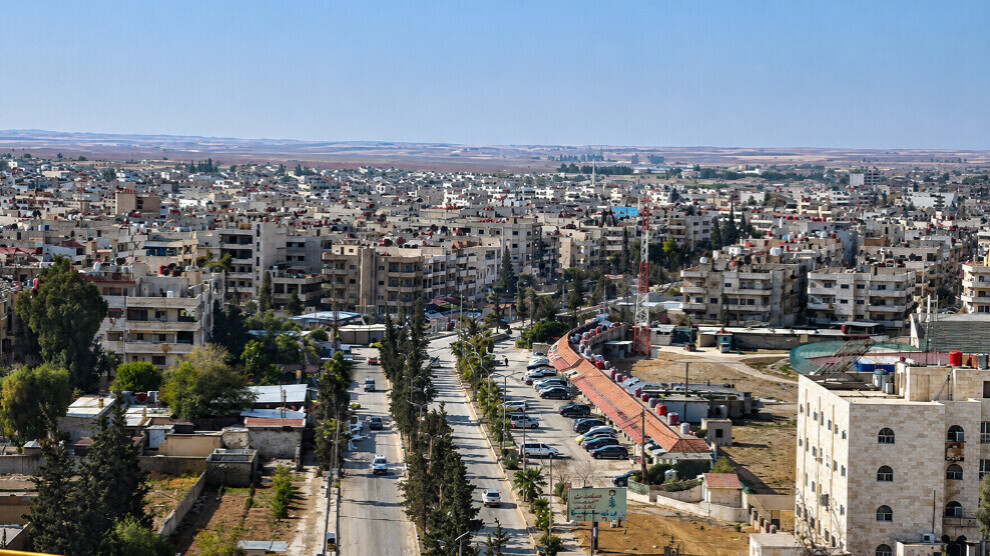
Qamishlo_ Qamishlo is one of the most prominent cities in Rojava, gaining its importance from its distinctive geographical location on the banks of the Jaghjagh River, adjacent to the city of Nusaybin in North Kurdistan. Over time, the city has evolved from a newly established urban settlement into a prominent economic and cultural center, carrying in its features the region’s history and demographic and social diversity.
The founding of Qamishlo is linked to the period of the French mandate over Syria. In 1925, planning for the city began, while 1926 is considered its actual founding year, when the French authorities began building military barracks and laying the first foundations for organized urban expansion.
Only a few years passed before the train station was opened in 1928, marking a new phase of growth for the city, benefiting from its location on the Baghdad railway line, which connected the region to important commercial and vital centers.
The establishment of Qamishlo came in the context of the major transformations following World War I, particularly after the demarcation of the Syrian-Turkish border, when Nusaybin—historically part of the region's geographical and social sphere—became part of Turkish territory.
Under this new reality, the French authorities established Qamishlo on the Syrian side to serve as an emerging administrative and commercial center, benefiting from its border location and the connectivity provided by the railway network.
In its early days, Qamishlo was only a small area surrounded by agricultural lands, but its strategic location soon gave it the foundations for growth. With waves of migrants and refugees—particularly following the unrest and events that shook the region during the 1920s—the city's features began to take shape and expand. The arrival of the railway line and the opening of its station stimulated trade and agriculture, gradually transforming it into a demographic and economic hub, until it later became one of the most important cities in Al-Hasakah Governorate.
Qamishlo's growth was not only urban and economic; its identity was also shaped by the great diversity of its population. The city embraced Kurds, Arabs, Syriacs, Assyrians, Armenians, Chaldeans, and Aramaeans, along with other smaller components, becoming an example of the cultural and social pluralism that characterized Syria's Jazira region.
Economic Resources
Since its founding, Qamishlo has relied on its geographical location and the diverse economic resources it provided. Agriculture is one of the most prominent sources of income in the region, known for the cultivation of wheat, cotton, barley, and lentils, alongside commercial activity that flourished due to the city's border location and the accompanying exchange, transport, and services. Nearby oil fields, which began to be more widely exploited since the 1970s, also contributed to stimulating the region's economy and strengthening its economic position.
According to one circulating account, the city's name is derived from the word "Qamishlo," meaning "reeds," referring to the reeds that grew abundantly on the banks of the Jaghjagh River in the past. This name reflects the nature of the place and the connection of the city's founding to its surrounding natural environment.
Because the history of cities is not told through numbers and documents alone, the testimonies of their people remain an essential part of preserving their memory. Among these testimonies is the account of Shaha Hassari, a woman whose origins are from the village of Ali Fero, part of Qamishlo, who married and settled in the city.
"They say Damascus is sweet, but homeland is sweeter"
Shaha Hassari, a mother of four, recounts that her relationship with Qamishlo extends over about fifty years—years during which her connection to the city deepened and it became the home where her life and memories settled. She says she was born in the village of Ali Fero, which she describes as a patriotic village, and spent her childhood and youth there, before life's circumstances led her to marry and settle in Qamishlo.
She noted that she lived a normal life in the city for nearly half a century. "I am happy with this life, and I will live in Qamishlo until the end of my life."
Although many from the region have left the country, Shaha Hassari found no reason to leave Qamishlo. "Many people left the country, and they used to tell us: come to us. But we are content with our life here. You will not find a place as beautiful as our own Qamishlo."
In Qamishlo, There Are Many Components
Shaha Hassari believes that Qamishlo is no longer the city she knew in her early life; over decades, it has transformed into a large, densely populated city that opens its doors to continuous developments and provides its residents with many job opportunities and livelihoods.
She notes that what distinguishes Qamishlo is not only its urban expansion but also its social diversity. "In Qamishlo, there are many components, all living together in a spirit of brotherhood. When a city like Qamishlo can endure and stand on its feet for a full century despite all the difficulties, it becomes a city that develops and expands day by day."
Shaha Hassari recalls Qamishlo's image in the past: "In the past, Qamishlo was like a village, and the surrounding areas were orchards. Because it was in the form of villages, many did not consider it a city. Many people who did not have homes or buildings in the villages came to Qamishlo to be able to work and secure a better life for their children." With simple and gradual steps, the city began to expand, and its urban features changed, transforming from a small settlement surrounded by orchards into a large city bustling with people and activity.
As the centenary of Qamishlo's founding approaches, the city's municipality announced in a statement its preparations to hold a celebration on the occasion of the 100th anniversary of its founding—an occasion that evokes the city's history, development milestones, and the transformations it has witnessed over a full century.
100 Years Since Qamishlo's Founding
Regarding this occasion, Berivan Omar, Co-Chair of the Qamishlo Municipality, explained that the year 2026 carries special symbolism for the city, as it coincides with the centenary of its founding, affirming that the celebration aims to revive Qamishlo's memory and highlight its history and transformations over a full century.
Speaking about the preparations underway to mark the centenary, Berivan Omar revealed the preparation of a special program that evokes the city's history and memory, noting the production of a documentary film documenting the most prominent stages of Qamishlo's founding and development. She added that it will also feature prominent and well-known figures associated with the city, along with a review of a number of sites and places that accompanied the early stages of Qamishlo's founding and still bear witness to its history to this day.