
Fuel Queues in Southern Libya... An Additional Cost Borne by Women
In Sabha, the fuel crisis is measured not just by queues or station quantities, but by hours women lose, disrupted work, waiting patients, and families depending on women's support and care.
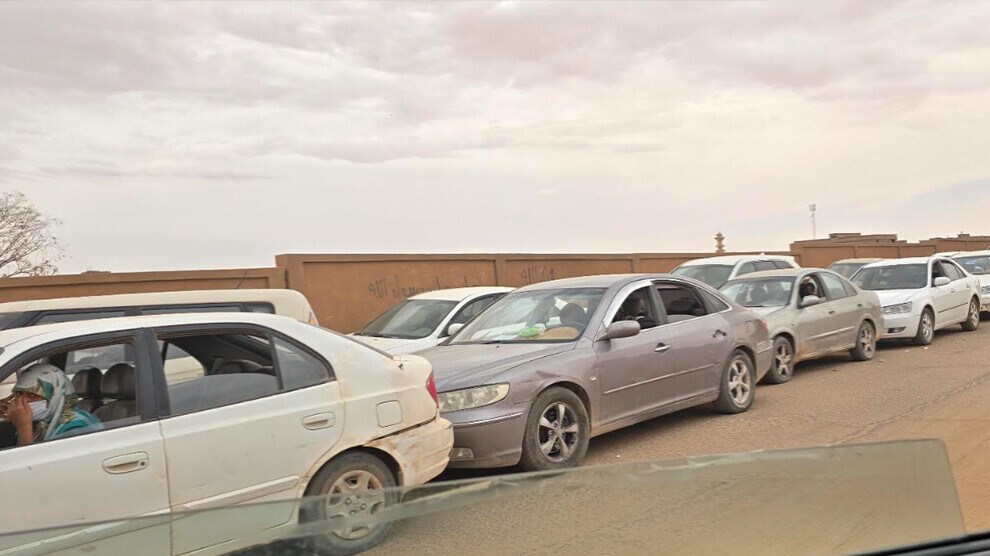
Libya – With the continued disruption of fuel supplies in southern Libya during September, the process of obtaining gasoline has become for many women a task that drains an entire day, especially with some stations allocating one day for filling women's cars, amid complaints of limited quantities, long waits, and the absence of basic services.
This suffering comes at a time when the "Brega" Oil Marketing Company announced the continuation of fuel supplies to the southern region, with the distribution of about one million liters per day according to available quantities and distribution programs. On 24 September, about 1.31 million liters were transferred to the Sabha depot, while on 26 of the same month, the company announced the allocation of five million liters from a new shipment to support the needs of the south.
But the arrival of new shipments does not mean, for women in the queues, that the impact of the crisis is over; for them, the problem is also related to the method of distribution, the length of waiting, and the disruption it causes to work and daily life.
A Full Day to Obtain Fuel
Citizen Aisha Abdel Rahim says that allocating a day for women did not end the problem, given the limited quantities and long waiting hours. She explains that some women reach fuel stations from seven in the morning and may remain until noon or evening, while others come from distant areas and villages, which adds long distances and additional costs to the waiting journey.
Aisha Abdel Rahim works as a nurse in the vaccination department and believes that spending long hours in front of the fuel station may directly reflect on her work, and on patients whose health service depends on her reaching the workplace.
She says that obtaining a limited amount of fuel is not always enough to cover daily mobility needs, especially for women who travel distances between residential areas, work, and schools. She adds that some women are forced to buy fuel from the parallel market when needed, especially when it comes to caring for patients who need regular access to the hospital.
She points to the case of a patient who needs kidney dialysis sessions, explaining that regular mobility to the hospital becomes more difficult with the unstable availability of fuel.
For Aisha Abdel Rahim, the car is not a luxury for many women in the south, but is linked to work, access to health and educational institutions, and securing family needs. She says that some women travel long distances to reach their workplaces, while others bear the responsibility of transporting children to schools or caring for sick individuals and the elderly.
She believes that organizing supply according to residential areas can reduce women's suffering, suggesting that a woman could fill fuel at a station near her place of residence instead of traveling long distances to reach a station allocated to her.
Long Waiting in Unprepared Conditions
Aisha Ben Yaqa, a member of the Teachers' Union in Women's Affairs, describes the fuel crisis as having become a growing source of concern for women in Sabha and the southern regions. She says that allocating one day a week for women, with a specified filling quantity, does not guarantee they obtain fuel, as a woman may spend long hours waiting and then return home without being able to fill her car.
She points out that women from distant areas and villages are forced to reach Sabha and wait for hours that may exceed 12 hours, amid the absence of public restrooms and basic services that women can use while waiting. She notes that there are women suffering from chronic diseases, including diabetes and high blood pressure, which makes long waiting, especially under the sun, more exhausting for them.
Aisha Ben Yaqa says that the impact of the crisis goes beyond the difficulty of obtaining fuel to threatening the ability of some women to continue their work and secure their families' income. She notes that some women work in delivering orders or transporting children to schools, which makes the fuel shortage a direct obstacle to their continuation in work.
From a Fuel Crisis to a Social Burden
Women's testimonies reveal that the fuel crisis in the south is not only about the availability of a basic material, but about how its shortage reflects on daily life.
A working woman may be forced to choose between waiting hours and committing to her job; a breadwinner may face the risk of losing her income if she is unable to move; and a caregiver may find herself facing difficulty reaching a patient who needs regular treatment.
These burdens appear more in a geographically vast area like the south, where the car represents for many families an essential means of access to work, education, and health services.
From this perspective, managing the fuel crisis becomes also linked to women's needs and conditions, including organizing distribution, reducing waiting periods, providing clear information, and preparing waiting areas with basic services.
Stability of supplies is not measured only by the quantities reaching the Sabha depot, but by the ability of residents, including women, to access fuel without obtaining it turning into a lost day of work, care, or source of income.
For the women who spoke about their experience, what is required is not a special privilege, but a more organized distribution mechanism that takes into account the conditions of working women, breadwinners, and caregivers, and limits the time and effort the crisis consumes from their daily lives.