
From Sudan To Aleppo: Our Vioce Is One.
Sudanese women activists affirmed that women are primary war victims, their bodies used as tools of revenge through rape, killing, and mutilation, reflecting extremist policies and false religious-political narratives worldwide.
Mirvat Abdel Qader
Sudan — Women across the world continue to bear the heaviest burden of wars, as retaliatory attacks are directed at their bodies. Despite differences in geography and time, the violations committed against them remain strikingly similar. Regardless of their form, such practices amount to war crimes and crimes against humanity.
In Syria, the city of Aleppo is witnessing a rapidly deteriorating humanitarian situation day after day, particularly in the neighborhoods of Sheikh Maqsoud and Ashrafieh. These areas have been subjected to escalating security tensions between the Syrian interim government forces and the Syrian Democratic Forces (SDF), exacerbating civilian suffering and further destabilizing the already fragile humanitarian conditions.
The escalation has resulted in a large number of casualties, including deaths and injuries, most of whom are women and children, who were directly targeted—reflecting the magnitude of the humanitarian catastrophe engulfing the area.
Mutilation of Women’s Bodies
The bloody crimes witnessed in Sheikh Maqsoud and Ashrafieh—ranging from killing, mutilation, and forced displacement of civilians, to systematic violations targeting women and children—bear a striking resemblance to what occurred in the city of El Fasher after it fell under the control of the Rapid Support Forces in Darfur, western Sudan. In both cases, women were violated and subjected to the most horrific forms of sexual violence, beatings, and forced marriages, in addition to abduction and being sold in markets specifically designated for trafficking women. These scenes rise to the level of war crimes and crimes against humanity, repeated despite differences in time and place.
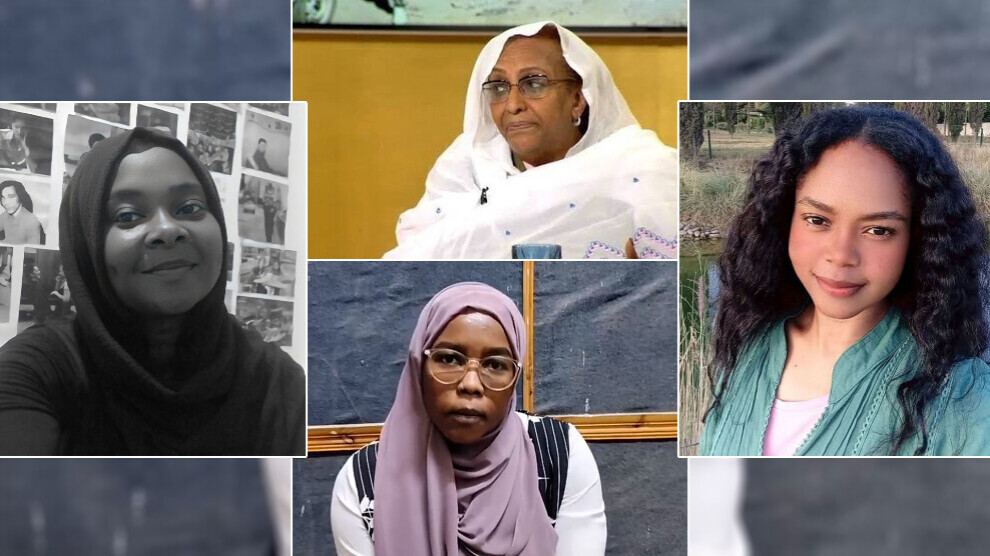
Feminist activist Ilaf Mahjoub confirms that the conflict in Sudan is no different from what is happening in Syria and several other countries, where women are used as a frontline and as weapons of war. Their most basic rights are stripped away, and they are subjected to grave violations during armed conflicts. She stressed that women’s rights are an inseparable part of human rights, and that violating them constitutes a blatant assault on universal human values.
Regarding the similarity of crimes committed against women during wars, she referred to the killing of a female member of the Internal Security Forces in Aleppo by jihadists from Hay’at Tahrir al-Sham. Circulating videos showed them throwing her body and mutilating it while chanting and celebrating their heinous crime. Such practices reflect the scale of systematic violations targeting women in armed conflicts and confirm that their bodies are used as arenas for settling scores and terrorizing communities.
She pointed out that this incident closely resembles violations committed against women in Sudan, where the Rapid Support Forces killed a woman and hung her body from a tree in Darfur in a scene of brutal mutilation. The violations did not stop there but extended to individual and gang rapes, even inside displacement and refugee camps, reflecting the magnitude of the humanitarian tragedy faced by women there.
She emphasized that wars across different countries are not fought solely with weapons, but also on the bodies of women, who are the greatest victims. However, the conflict in Sudan has been marked by a significant rise in sexual violence, especially in recent periods, with serious violations in the form of individual and mass rapes carried out by the Rapid Support Forces in an attempt to break women’s will and undermine their resilience.
Sudanese girls have also been abducted and taken to locations that remain unknown to this day. Others were subjected to forced marriages, in addition to the trafficking of women in Darfur and their sale to other countries. Despite the severity of these violations, organizations documenting crimes against women indicate that they represent only 2% of the total unreported violations.
Violence and Wars as a Result of Extremist Governments
Feminist activist Munira Moussa attributed the violence and violations faced by women during wars to the nature of extremist governments ruling those countries. She affirmed that such governments practice their extremism directly against women, as seen in Syria, Yemen, Iran, and most recently Sudan. She added that “the conflict in Khartoum is merely a reflection of the policies of an extremist government with terrorist Islamic orientations—the Bashir regime that was overthrown in 2019.”
She stressed that all laws enacted during Bashir’s Islamist rule were aimed at breaking women’s power and restricting them. Among the most notable was the Public Order Law, which was enforced in Khartoum before the outbreak of the conflict and posed a major obstacle to women’s freedoms. These policies also included personal status laws that institutionalized discrimination and weakened women’s position in society.
Munira Moussa stated that she herself was among the victims of these unjust laws, having been subjected to legal questioning and harassment simply for wearing trousers at a time when authorities prohibited women from doing so. She explained that the violations women face are a direct reflection of the policies of an extremist, dictatorial government with Nazi-like tendencies—a patriarchal, woman-hostile government that does not recognize women’s value or respect their fundamental rights.
False Rules of Victory
Feminist activist and academic researcher Rahma Jaber pointed out that the violations women endure during wars—ranging from rape, detention, and abduction to killing and mutilation of bodies, as seen in Sudan and Syria—ultimately reflect how these societies view women. She added that scenes such as hanging a woman from a tree or throwing her from a high place after killing her are not merely acts of brutality, but messages sent by fighters to the opposing side to demonstrate power and dominance.
She explained that groups committing such crimes do not see women as independent individuals, but as extensions of the men on the opposing side, treating them as tools of war rather than human beings with inherent value and rights. She emphasized that women are always the most prominent victims of conflicts, as wars are waged on their bodies and their suffering is exploited to convey messages of power and control.
She added, “Many fighters believe that the rules of victory in war include killing men and raping women and violating their bodies, in order to break society, humiliate it, and indulge in a sense of dominance and triumph.”
Religious and Political Narratives as a Cover for Violations
Sudanese activist Nimat Koko, a specialist in development issues, alternative policies, and gender, condemned the crimes and violations committed against women. She affirmed that what happened to the residents of Sheikh Maqsoud and Ashrafieh in Aleppo, as well as the crime of mutilating the body of a member of the Internal Security Forces, constitutes a blatant violation of human rights.
She stressed that justice and citizenship must be the cornerstone of any future change, away from policies of domination through weapons and radical rhetoric that justify the shedding of Syrian blood under flimsy pretexts—foremost among them religious and political narratives used as a cover to commit crimes and violations against humanity in general, and against women in particular