
Femicide rises in Kurdistan amid absent punishment and dominant partriarchal mentality
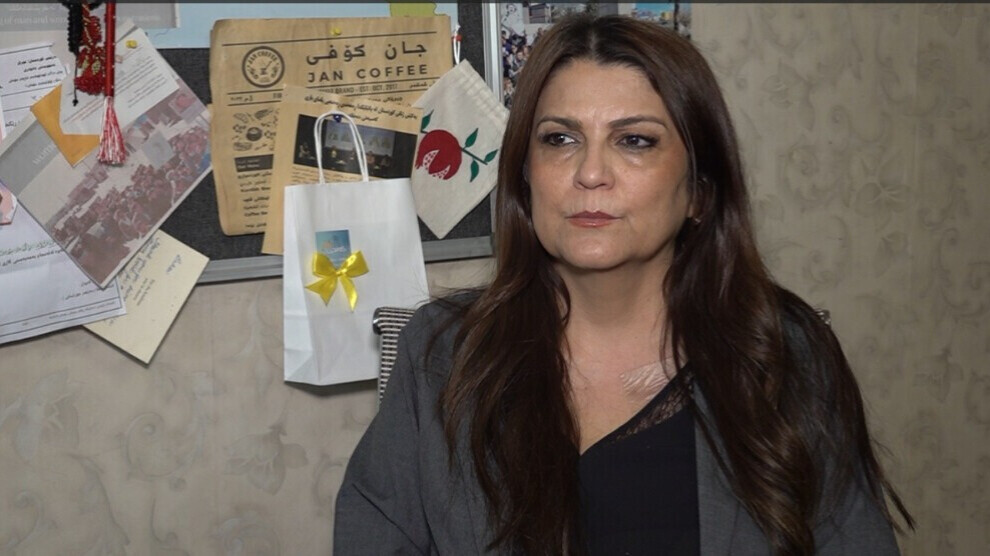
Activist Bahar Munzir says femicide persists mainly due to absent deterrent punishment, noting prisons are nearly empty of perpetrators because penalties don’t match their crimes’ gravity.
DARIN RAHIM
Sulaymaniyah – The majority of killings in the Kurdistan Region are committed using weapons, and a large portion of them are unlicensed weapons. At the beginning of 2022, the Ministry of Interior submitted a new weapons bill to parliament, aimed at preventing the carrying of unlicensed weapons, as well as preventing places for their sale and purchase within cities and towns. The bill was approved on 1 March 2022.
However, despite the existence of this law, killings are still increasing and have not decreased. The phenomenon of killing women, as a product of a patriarchal authoritarian mentality, also continues within society under various pretexts, while the government, courts, organizations, and institutions have not been able to put an end to it.
Laws That Undermine Women
Activist Bahar Munzir said that the main reason for killing women is that they are women, because women in society enjoy a weak status. There are customs and traditions that undermine them, in addition to the authority of the administration and governance, which should have the primary role in enhancing their status. She noted that the laws include aspects of inequality between women and men, which undermine women's rights, and that many articles and paragraphs of the laws include provisions that constitute main factors in the continuation of this problem.
Among the factors that also contribute to the continuation of this phenomenon, according to her, is the absence of deterrent punishment for perpetrators of femicide crimes. "We reject the killing of women in all its forms, and we seek to build a society free of gender-based violence. However, prisons are almost empty of perpetrators of femicide crimes, as if there is a law criminalizing these crimes and capable of dealing with cases fairly, those who commit them should find themselves facing penalties proportionate to the gravity of their actions. But the number of those actually punished inside prisons remains limited."
In some cases, perpetrators of murder crimes have been sentenced to prison terms ranging between 15 and 20 years, but some of them were released after serving about seven years, within the framework of general amnesty. Since 1991, the killing of women has become a recurring phenomenon within society, simultaneously with the ease of spread of weapons and their presence inside homes. Many murder cases presented before courts reveal a clear disparity in the way femicide crimes are handled compared to the killing of men.
"Institutions and Government Departments Bear Great Responsibility in the Field of Protection"
Bahar Munzir pointed out that "women burning themselves has become a recurring phenomenon in the Kurdistan Region, and we do not see that there is sufficient work being done about it, except for some organizations, especially those working in the field of women's issues, and some journalists who consider this issue important."
She explained that there are unknown cemeteries in the Region where a woman is killed without her name being known, and this is also an important point that should be worked on. She added: "The families of the victims do not insist on following up on the cases. There are some cases of killing women that occur with the complicity of the family and are covered up. Sometimes the murder case is recorded as a suicide. Therefore, one of our biggest problems when we go to courts is the inability to follow up on cases as required."
She noted that institutions and government departments bear great responsibility in the field of protection, but this issue does not receive sufficient attention, and there is no integrated and effective service that a girl or woman exposed to violence can resort to in order to reach a safe place. She pointed to the fact that some media outlets played a negative role, as they publish statements and programs that lead to making the belittling of women a normal matter in society, and the promotion of polygamy continues.
She added: "They do not want us to have a free woman in society; they want her to remain submissive to their desires. Therefore, change must occur within society, and this requires the feminist movement to be stronger and to advance forward with courage. We need that change that makes women strong, pushes women's issues forward more, and gives us a society that is safe for them."
"Some Statements Change the Course of Things"
Bahar Munzir said: "In the past period, we launched a comprehensive campaign. We did not limit it to the 16-day campaign against violence, but we want it to continue and have an impact. The campaign is represented from Kirkuk city, and activists from Duhok, Halabja, Hawler, and the towns surrounding Sulaymaniyah participate in it. This is important for us, because we want the campaign to be large with everyone participating."
She added: "We do not stand idly by waiting for government statistics to know the scale of this phenomenon or whether the data is available in the first place. A group from the March 8 Network has begun working on documenting killing cases, so that anyone can register cases with us, with the aim of creating a reliable and comprehensive record that can be relied upon."
According to government statistics, 40 women were killed during 2024. However, when this figure is compared to what is actually circulated and documented through social media, we find that the number of cases is much larger. According to what the March 8 Network documented, the number of femicide cases reached 56 cases during 2025.
She explained that these figures do not include cases of women burning themselves; in 2024, 136 women set themselves on fire in the Kurdistan Region, alongside other burning cases. Some of these cases also witnessed changes in the statements of the parties or in the account of the incident, and in some cases work on reconciliation began from the first days of the case.
At the end of her interview, Bahar Munzir explained that the burning cases recorded in these cases are essentially self-immolation cases, but they may also include forms of incitement or pressure from family members or husbands. She added: "We carried out an activity in front of the Burns Hospital in Sulaymaniyah city, after workers there noticed the increasing numbers of burn cases arriving at the hospital daily, which raised their concern. We also witnessed in hospitals, on many occasions, cases in which men burned their wives. Therefore, we chose the hospital as a site to carry out our activity and shed light on this issue."