
The Sabri Garment: A Living Memory of Authentic Yemeni Heritage
Facing the decline of traditional dress, women's initiatives in Yemen are reviving the Sabri garment and its authentic embroidery, protecting heritage while providing income for women.
RANIA ABDULLAH
Yemen — The "Sabri garment" was never just a piece of fabric woven with threads; it was a living memory encapsulating the authenticity of place and a symbol of identity. Women have long created its unique and diverse embroideries.
At a time when traditional clothing is threatened by modern fashion, the weaving of the Sabri garment is returning to the forefront through women's initiatives seeking to preserve cultural heritage and the Sabri traditional dress, restoring the splendor and prestige of the Sabri garment with its diverse details and embroideries—remaining a testament to its beauty and a source of livelihood for women in Sabr villages.
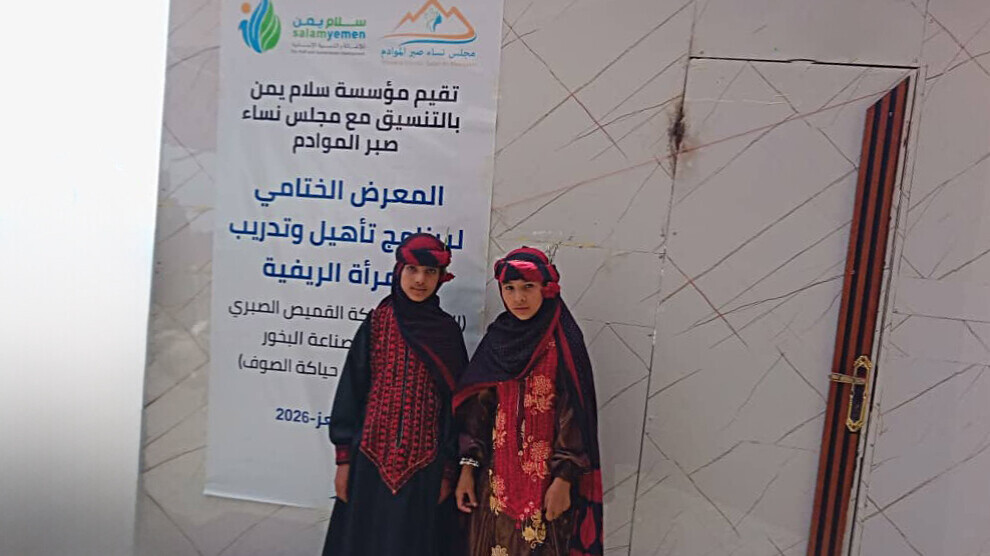
The "Sabr Women's Council" has been keen to restore the Sabri garment and the quality of its weaving by organizing a training workshop for women from various villages in the Jabal Sabr district. The training covered the introduction of different embroidery patterns and training in hand and machine weaving, culminating in an exhibition of the garments produced by the women. This activity was organized in cooperation with the "Yemen Peace" organization and ran from August 12 to 24, with the garments receiving admiration from visitors amazed by the diverse embroideries.
Identity and Source of Income
Khadija Shamsan, one of the trainees, says: "We seek to hold onto this craft and never abandon it, because it represents our heritage. We love and are proud of this heritage. We wished we could continue this training course, but the designated days ended before we could fully master all the embroidery patterns and details, because the Sabri garment has various distinct patterns, each unique from the other."
She calls for support and assistance to continue practicing her craft and applying these traditional embroideries, as she faces the problem of fabric shortages and the lack of a dedicated workspace in their homes. "The fabric provided during the training was not enough, and we used our own efforts to provide it without giving up. We hope to receive sufficient support, including fabric and a suitable workspace, after this project ends."
For her part, trainee Ghazal Ali Muhammad said: "We returned to sewing the Sabri garment to revive this heritage that was about to disappear, remaining only as a memory. We hope the relevant authorities will provide support and a dedicated space for practicing this craft to ensure its continuity for future generations."
She adds: "My work in weaving the garment aims first to provide a source of income, and second to preserve heritage from being lost. We urgently need support with a dedicated space and work supplies to continue."
Diverse Embroideries
Ghaneya Al-Hamidi, President of the Sabr Women's Council, said: "The Council has been keen to revive the weaving of this garment to protect the heritage that was on the verge of extinction. To preserve it, we coordinated with the 'Yemen Peace Foundation' to organize this activity, contributing to restoring the splendor of Taiz and Sabr heritage, rather than replacing it with modern embroideries foreign to our customs and traditions."
She adds: "The trainees were remarkably creative, even though they had forgotten the details of weaving the garment. Thanks to the training, we achieved excellent results, whether in hand weaving or machine sewing." She noted that the primary goal is to revive Sabr heritage. She hopes that all trainees will wear the authentic Sabri garment on various occasions so that everyone can recognize its importance and beauty, and for this piece to regain its fame and splendor among Yemeni traditional garments.
Regarding the nature of weaving, its types, and prices, she explained: "Weaving is divided into two types: hand weaving and machine weaving. Hand weaving is much more beautiful, and its precious value makes hand-woven garments very expensive. The demand for buying and wearing them is much greater than for machine-woven or computer-made garments."
Ghaneya Al-Hamidi explained a style favored by mothers and grandmothers, saying: "My mother always wore garments with the 'Muhammadi' weave, which is a garment with sleeves wrapped to the back, and this design is very popular. There are also various embroideries and decorations depending on the Sabr regions. There is the Hadnani, an excellent type closed at the front without a side opening, and there are the Hasbani, Masrakh, Teer, and Wadi al-Beer patterns. This diversity confirms that the Sabri garment is not a single type but is rich with multiple designs and embroideries that highlight the diversity of Sabr heritage."
Mothers Who Insist on Wearing the Garment
Our agency also met with mothers who insist on wearing the Sabri garment and do not abandon it, with their wardrobes featuring various shapes and embroideries. Safia Ali, in her seventies, said: "We have been accustomed since ancient times to our adornment being completed by the beauty of the Sabri garment. Women wear it and adorn themselves to look their best. In the past, we completely refused to wear any modern alternatives and only wore these traditional garments, which I love very much."
For her part, Jamila Ahmed explained why they hold onto these garments: "They are an integral part of our community's traditions, occasions, and everything that concerns women. We older women still adhere to and love this garment, unlike the new generation, which has turned to modern clothing."
She calls on those who possess the skill of weaving the garment—teachers and trainers—to continue training young and older girls in the weaving of the Sabri garment so that this taste remains present and desired by all and does not disappear.
For Zafaran Muhammad, the Sabri garment represents the essence of adornment and joy. "Unfortunately, this garment has begun to disappear due to some people's preference for modern imported garments over traditional sewing, in addition to the spread of modern face veils and covers that have overshadowed our traditional dress."
She hopes that women will return to wearing Sabri garments in all their forms—long and short—and encourages young girls to learn this craft so that this heritage is not lost.