
Gaza in a Poet's Suitcase... Walaa Al-Batta Writes from Exile
Palestinian poet Walaa Al-Batta carries her homeland in her poems, and writes about war, absence, motherhood, and exile. Between fear for her family and trying to build a new life, she recovers poetry as a voice of memory and belonging.
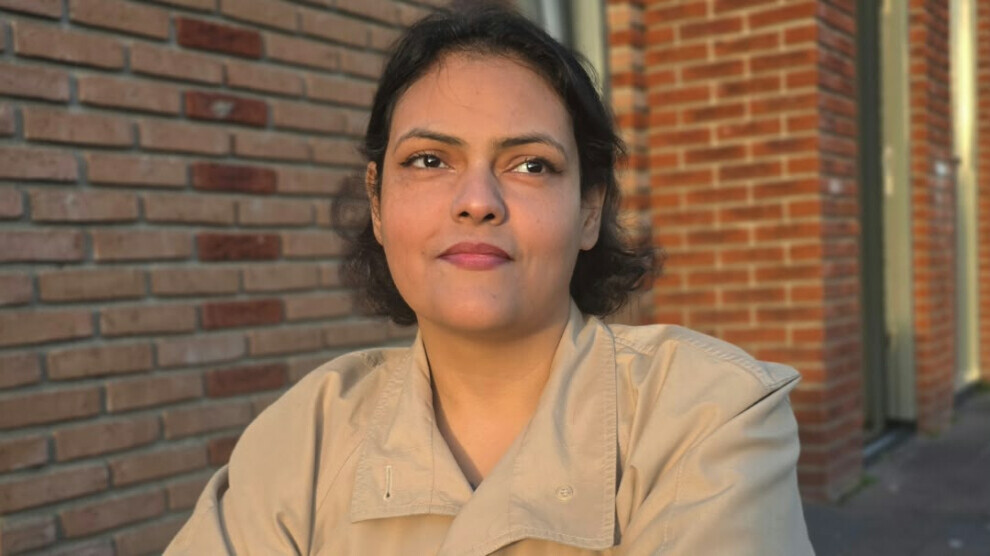
MONA TUKA
LIBYA – Gaza does not disappear from the memory of the poet Walaa Al-Batta; rather, it becomes more present in her poems, as a homeland, a memory, and a family she left behind. From exile, she tries to rebuild her life as a mother and a woman, while poetry turns for her into a means of resisting absence and preserving what remains of the homeland.
"I call to the cold of my song to sleep on the pain of the pillow from my sleep
I shout, and I am the one slaughtered with longing
And sorrow squeezes from my heart
And it goes on, savoring some of my wound
And I delude it that the matter is normal"
Walaa Al-Batta reads her verses, and fear returns to its first place: Gaza. She pauses at the image of family and homeland, then completes her poem: "For I will not remain as I am, if a touch befalls them."
In her voice, Gaza does not appear as a distant place only, but is present in the poem, the memory, the daily fear for those she left behind. Since her arrival in Europe in 2025, the homeland has become more present in her writing, while she tries, as a woman and a mother, to build a new life away from her family.
Walaa Al-Batta is a Palestinian poet from the Gaza Strip and a mother of a child. She studied a master's in literature and criticism at the Institute of Arab Research and Studies, and began writing poetry at the age of fourteen. She won poetry competitions at the Islamic University in Gaza, and in 2014 she participated in a joint poetry collection about the family, issued by the Palestinian Ministry of Culture, alongside fifty male and female poets from the West Bank and the Gaza Strip, and the participants were honored.
Today, Walaa Al-Batta carries a manuscript of a new poetry collection awaiting publication, but her relationship with poetry has changed.
"Writing Has Become a Duty"
Before the war, poetry for Walaa Al-Batta was a space for expressing the self, life, and human experience. But after the last war, she says that writing acquired another meaning. "Writing after the last war has become a national duty and not a luxury as it was before."
Therefore, Gaza is strongly present in her poems. She writes about the homeland and longing for it, about her family whom she left there, and about the exile in which she found herself. She also writes about herself and her experiences as a woman and mother living outside the place to which she belongs.
For Walaa Al-Batta, Gaza is not an abstract political issue. It is childhood, family, school, memory, and everything that made her relationship with the place. Therefore, she believes that the homeland is bigger than a poem or a collection, no matter how wide the space of writing.
A Woman in Exile
Walaa Al-Batta describes her existence in Europe as exile, because she did not leave her homeland as a personal choice separate from the circumstances of war and refuge. "We are here by force and not by choice." The most she wishes for is that her homeland becomes safe, and that she can return and live in it.
For alienation does not mean losing the place only, but also being away from the network of relationships that support women in their daily lives; from the mother who can help, the family to whom one can resort, and the friends who form part of the life they are used to.
Loneliness... The Other Face of Refuge
Walaa Al-Batta does not talk about loneliness as a passing feeling, but about the loss of the support network that a woman was accustomed to in her homeland. A woman who raises her child away from her mother and family bears her daily responsibilities without the family circle that could have supported her.
From her experience, Walaa Al-Batta believes that talking about refuge also needs to look at the special experience of women, and the responsibilities and family and emotional burdens resulting from it. Despite the harshness of exile, she found in Europe a space that encouraged her to recover her poetic voice.
She wants to write about her homeland, about Palestinian women in the homeland and exile, and about women living difficult conditions, and to help women express themselves and their experiences.
She hopes that her alienation will bear fruit in the future, and that the distance from the homeland will turn into a space for work, writing, and achieving dreams.
A Poem Is Not Enough to Describe the Homeland
Walaa Al-Batta returns to poetry. This time, she does not try to define the homeland. She believes it is bigger than words.
In her poem, fear for the family overlaps with fear for the land, and the image of the mother approaches the image of the homeland, while poetry becomes a space in which she says what is difficult to say in ordinary conversation.
"I am afraid, so calm me
Now I am afraid
So surround livers
On your back walking
In the soil of your glory
From bombardment, from death"
The poem for Walaa Al-Batta appears to be more than a space for writing; it is the path she can take toward the homeland whenever the distance widens.