
50 Women’s Films Light Up the Screen of the Rojava Film Festival
Qamishlo city is preparing to host the sixth edition of the Rojava International Flim Festival, in the period extending between 13 and 20 November, under the slogan “Shared Strories, Free Cinema.
NAGHAM JAJAN
QAMISHLO_ Kurdish cinema continues to entrench its presence as a space for preserving culture, identity, and history, and a platform for conveying Kurdish voices and experiences to the world. In this context, the Rojava Film Commune is preparing to organize the sixth edition of the Rojava International Film Festival in Qamishlio city, between 13 and 20 November, under the slogan "Shared Stories, Free Cinema," with the participation of cinematic works from several regions and countries.
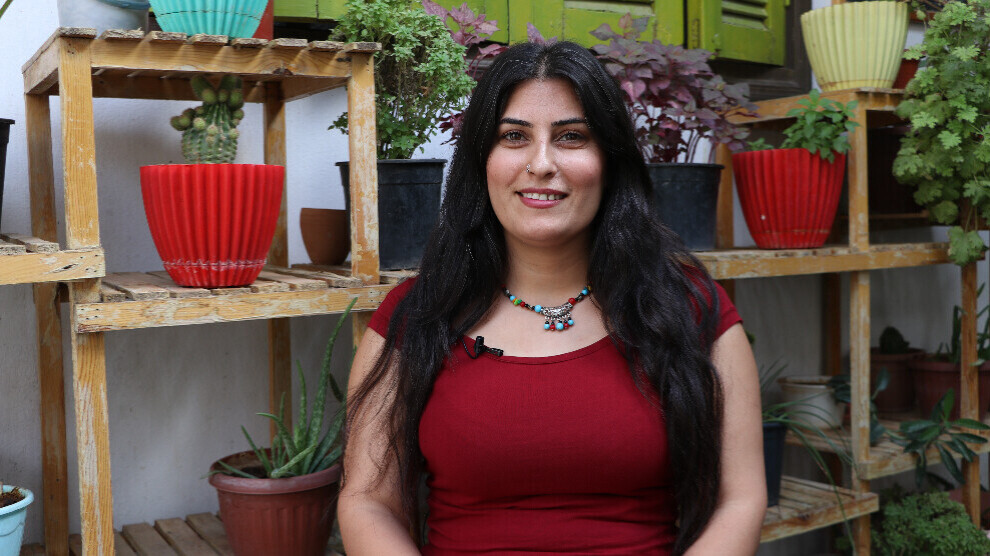
Member of the coordination of the sixth edition of the festival, Nadia Darwish, confirmed that preparations for organizing this edition began some time ago, noting that holding an international film festival in Rojava, under the conditions and events the region is witnessing, carries special importance.
She said that the international character of the festival allows receiving guests and films from different countries, which opens the field for participants to learn about Rojava's culture and the reality of Kurdish cinema, alongside enhancing relations and expanding opportunities for screening Kurdish films. She added that the organizers are making great efforts to ensure the festival is held successfully. "Work on preparations has been ongoing for a long time."
243 Cinematic Works and Screenplays in Competition
Nadia Darwish explained that the sixth edition will witness a diverse cinematic presence, with the participation of films from the four parts of Kurdistan alongside works from Egypt, Morocco, Saudi Arabia, Spain, Ukraine, and a number of European countries.
She noted that the committee received 243 works including short films, documentaries, and screenplays, explaining that the selection process will take place from among these works, and the selected films will be screened within the festival's activities.
The current edition will also witness the organization of competitions for writing short and feature film screenplays, alongside a diverse cultural and artistic program including workshops, discussion circles, seminars, and exhibitions related to cinema, with special attention to the topic of women's role in cinema. The program will also include film screenings and specialized competitions, enhancing the artistic and cultural character of the festival.
Kurdish Cinema Advances Despite Challenges
Speaking about the reality of Kurdish cinema, Nadia Darwish noted that Kurdish cinematic production in various parts of Kurdistan has reached a good level, but still faces challenges requiring the provision of more capabilities and support for filmmakers and producers. She explained that economic difficulties constitute one of the most prominent obstacles to film production, alongside the need to develop training and education fields and supply the sector with specialized cadres and expertise.
Despite these challenges, she confirmed that Kurdish works have achieved remarkable progress, considering that overcoming obstacles requires more cooperation and joint work with the aim of reaching more developed and present cinematic productions.
More Than 50 Films Directed by Women
Women's presence stands out as one of the remarkable features of this edition, as Nadia Darwish revealed that more than 50 films among the works submitted to the festival were directed by women, alongside the participation of female writers who submitted their screenplays to the festival.
She said that this presence reflects women's participation in the cinematic field and their ability to present their works and convey their vision through the seventh art. She noted that the preparatory committee for the sixth edition includes a large number of women who hold important positions and responsibilities, confirming that their presence constitutes a fundamental part of the ongoing work to prepare for the festival.
She believes that women are capable, through their vision and special experience, of presenting their voice, knowledge, and strength to the world through directing and filmmaking.
The festival carries this year the slogan "Shared Stories, Free Cinema," a slogan that reflects, according to Nadia Darwish, the desire to document the shared stories and experiences of the people through cinema.
She concluded her interview by emphasizing that the goal is to document the shared stories of the people through free cinema, and to transform cinematic art into a space for expressing experiences, memory, and identity, and a window through which these stories reach a wider audience in the world.