
Yemeni Women Conclude "Peace Tracks" Workshop and Pledge to Break Symbolic Representation
Taiz hosted the closing ‘Peacs Tracks’ workshop with 30 women leaders, aiming to strengthen women’s decision-making roles and peacebuilding participation.
RANIA ABDULLAH
Yemen — Participants in the workshop affirmed their commitment to continue pressing for women's empowerment within sovereign structures, activating their presence in peace tracks, and breaking the state of symbolic representation, in a way that enhances Yemeni women's ability to influence decision‑making during the current phase.
In the city of Taiz, yesterday, Monday, September 14, the closing workshop of the Women's Leadership and Influence in Peace Tracks project concluded, with the participation of 30 first‑tier leaders from political parties, local authority, and civil society institutions.
The closing workshop comes within a project aimed at enhancing women's political participation and activating their role in building comprehensive and sustainable peace. The project focuses on supporting women leaders and empowering them to have an effective presence at the negotiating table and decision‑making centers, and pushing toward implementing the women's quota in sovereign structures at no less than 30 percent—ensuring the transcendence of symbolic representation and achieving a real response to Yemeni women's aspirations and entrenching security and stability in the country.
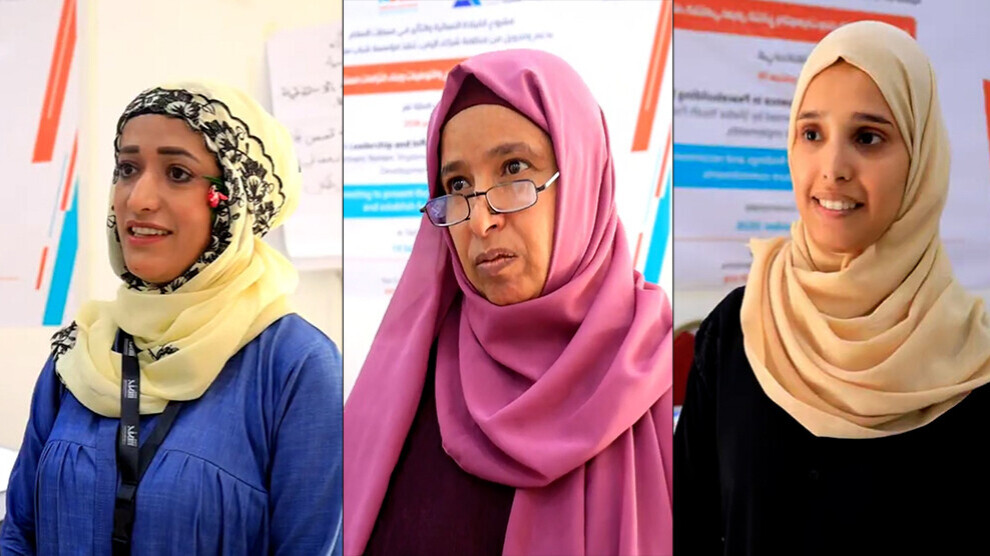
On the sidelines of the workshop, member of the Nasserist Unionist Organization Huda Al‑Haidari said: "Yemeni women within political parties face great challenges, most notably the absence of effective implementation mechanisms aimed at empowering them and elevating them to decision‑making centers and ensuring their actual integration within organizational structures. With the continuation of the conflict, women's bases are besieged by a state of security chaos that hinders their participation, in addition to political activists being subjected to media attacks and systematic defamation campaigns from all conflicting parties, without party strategies to protect them or limit these fierce campaigns that have made women the first victim of the conflict, which reflects negatively on their level of awareness and ability to make decisions in political and societal participation."
She explained that women within civil society provide humanitarian services to alleviate the suffering of displaced people, including nutrition, shelter, and medical and psychological support, along with their active participation in awareness campaigns, seminars, and open workshops to highlight that the country's fundamental issue is ending the conflict and restoring the state and security. She affirmed women's ability to reach various sectors, stand firm against anti‑government projects, and stand on the frontlines to support efforts to confront violations.
To enhance this role, Huda Al‑Haidari aspires to establish a consensus women's entity comprising various parties to create a single working bloc that pressures toward involving women capable of dialogue in political mediations to reach real peace. "We demand the achievement of comprehensive transitional justice through the formation of a declared committee to investigate the violations of all parties, and the use of this file as a pressure tool through international human rights organizations to accelerate the resolution of the crisis."
For her part, Maha Aoun, director of the "Kan" Foundation for Peace and Development, said: "The challenges facing Yemeni women are multiple and are linked to patriarchal obstacles and regulatory bylaws within parties and institutions, which limit women's elevation and aspirations to reach parliament, electoral lists, or decision‑making positions in local authorities and political entities, in addition to the tangible trust gap in women's competence within the party environment."
She adds: "The escalation of digital violence targeting women participating in the political track constitutes one of the most important obstacles, along with the societal view based on restrictive customs and traditions, as well as the general repercussions of military expansion and the escalation of armed conflict."
She affirmed that the continuation of these conditions leads to a significant reduction in women's role, especially those directly affected in hot zones, so that their presence is often limited to humanitarian response fields, mobilization through social media, drafting media discourse, supporting displaced men and women, and covering humanitarian needs only.
For her part, Najah Al‑Sufyani, project officer for Women's Leadership and Influence in Peace Tracks at the "Sheba Youth Foundation," explained that the project's goal is to enhance women's actual participation and implement the women's quota at no less than 30 percent within the sovereign structures of parties and political entities, while rejecting symbolic representation and working to enhance women's role in decision‑making centers. She noted that the project aims to qualify and train women leaders to enable them to provide real and tangible treatment of the various conflicts and disputes witnessed in Taiz and various Yemeni cities.