
Women Whom History Attempted to Erase... The Baciyân-ı Rûm as an Example
The thirteenth-century Baciyân-ı Rûm in Anatolia, one of history's earliest women's organizations, saw women lead in production, education, solidarity, and defense—but how did it evolve?
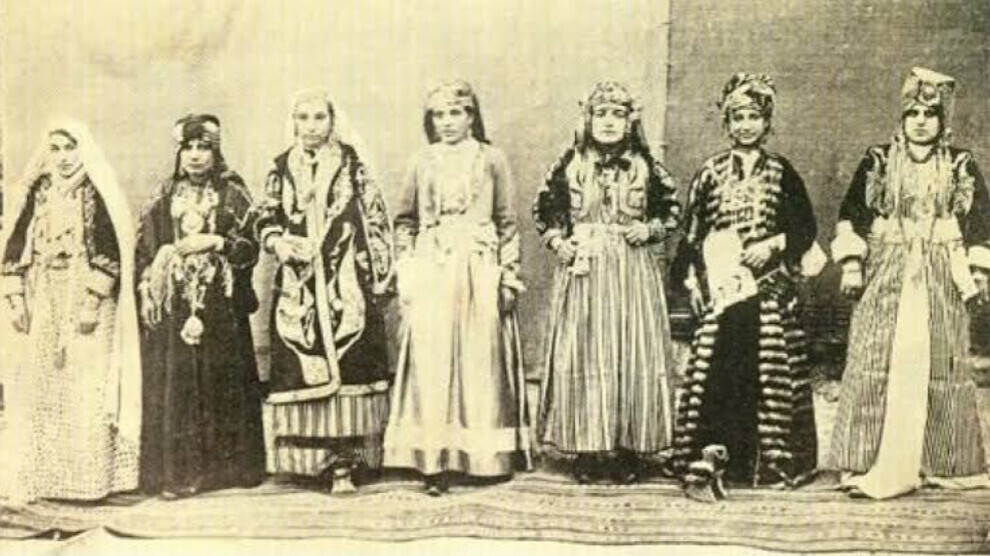
News Center — Throughout history, the role of women in social, economic, and political life has often remained obscured within official historical narratives. Historiography based on a patriarchal perspective has rendered women's contributions invisible in many fields, from warfare to state-building.
The "Baciyân-ı Rûm" (Sisters of Anatolia), considered one of the earliest organized women's organizations in Anatolia, stands among the models that suffered centuries of oblivion or neglect.
Emerging in Anatolia during the thirteenth century, the Baciyân-ı Rûm represented a model of women's organization that engaged in wide-ranging activities encompassing production, education, solidarity, and defense. It was not merely a professional guild but also a distinctive social structure that made women active agents in public life.
An Independent Women's Organization
This organization contributed to enhancing the role of women's labor in economic production and establishing solidarity networks for women. Some sources also indicate its participation in defensive and military activities. These facts compel a re-evaluation of traditional perceptions regarding women's presence in the public sphere in Anatolian history.
Today, historians and researchers do not view the Baciyân-ı Rûm merely as a women's branch of the Akhi (brotherhood) organization but as an independent women's organization that fulfilled economic, social, and cultural functions. It can be considered an early form of civil society organization.
The Baciyân-ı Rûm in Historical Writings
The name "Baciyân-ı Rûm" entered modern historical sources as a result of research conducted in the late 1980s. In ancient historical sources, it was first mentioned in the book History of the Ottoman Dynasty (1481) by the Ottoman historian Aşıkpaşazade, as one of the four foundational elements of Turkoman societies.
Thereafter, it disappeared from historical writings for a long period, until historian Fuad Köprülü referred to it in the late nineteenth century in his work on the establishment of the Ottoman state. The most comprehensive study was conducted by Professor Mikail Bayram, relying on state archives and Syriac archives in Mardin, in addition to historical sources of other peoples.
Women's Will and the Establishment of the Organization
Documents indicate that the Baciyân-ı Rûm was a women's structure similar to the Akhi organization. It is believed to have been established as a women's branch of the Akhi due to the exclusion of women from the original organization. However, some researchers suggest the possibility that women established this organization through their own independent will.
The Baciyân-ı Rûm was first established in the city of Kayseri in Anatolia during the thirteenth century, in the same period and place where the Akhi organization was founded. Fatma Bacı, described as the spiritual daughter of Hacı Bektaş Veli, is considered the first known leader of the organization.
Sources indicate that the organization spread in the early thirteenth century to the cities of Kayseri, Konya, Kırşehir, and Ankara, before extending to most regions of Anatolia.
The Sisters' Armed Units
The Baciyân-ı Rûm resembled the Akhi organization in terms of educational and professional structure, encompassing the traditional craft ranks of apprentice, assistant, craftsman, and master. The sheikh (spiritual leader) of each craft in the Akhi organization was also considered the sheikh of the women working in the same field.
Members excelled in the fields of spinning, weaving, and knitting. However, the most interesting aspect is that they were not limited to crafts but were also associated with the armed forces of their era.
Although sources do not highlight this aspect extensively, they indicate that the Baciyân-ı Rûm had their own armed units. Historical accounts mention that women directly participated in resisting Mongol invasions and in popular defense movements during the period of the Seljuk Sultanate of Anatolia's decline.
Some sources also refer to the existence of independent women's military units comprising thousands of women alongside the armies of Turkish emirates.
The Exclusion of the Sisters
Early Ottoman historical writings show that the organization was known as "the Poor" or "the Dervishes," yet its members insisted on calling themselves "the Sisters."
Some historians believe that women were unable to form an independent Sufi order and that they were part of a religious community headed by a male sheikh. Nevertheless, it is known that women participated with men in dhikr (remembrance) circles, sama' (listening) sessions, and religious assemblies.
As the influence of Islam increased in Turkoman society, the Sisters were first disarmed, then excluded from the Akhi organization and the councils of dialogue. The women who had borne arms, participated in local councils, and enjoyed the right of expression and opinion gradually transformed during the Ottoman era into virtuous wives of male elites or figures within the imperial harem.
An Example of Women's Exclusion
The story of the Baciyân-ı Rûm does not merely narrate the history of one of the earliest women's organizations in Anatolia but also reveals how women were systematically excluded from public life.
The Sisters, who had participated in production, defense, and public decision-making mechanisms, were erased from historical memory for centuries. Nevertheless, the limited sources that have reached our time reassert the foundational role women played in the social and economic life of Anatolia.
For historians, the Baciyân-ı Rûm remains an important example for understanding the organizational power women possessed in the past, as well as for understanding how their place in history was altered and their presence attempted to be erased over time.